
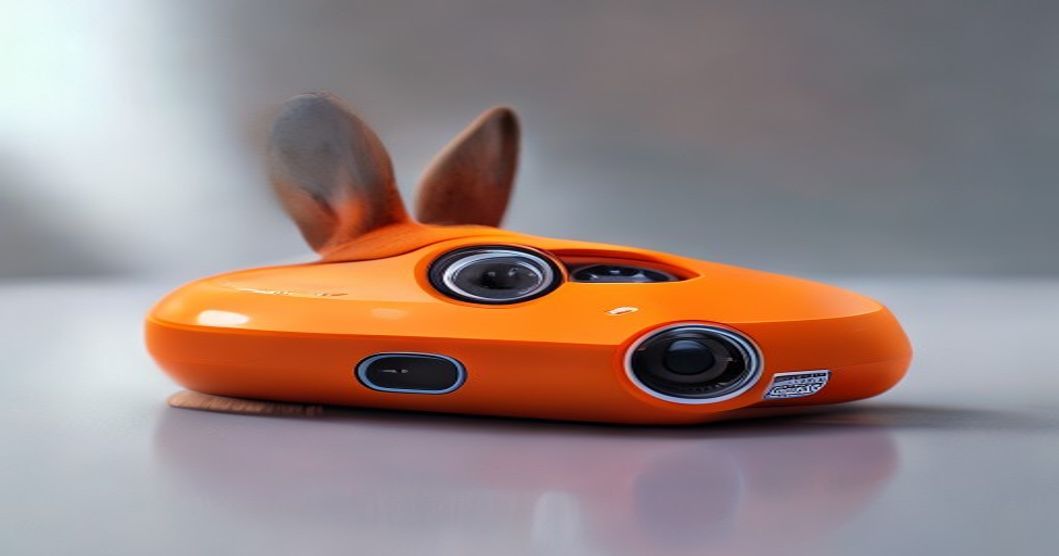
The world of technology is constantly evolving, presenting us with gadgets that promise to redefine our interaction with the digital realm. Among the most talked-about innovations recently is the Rabbit R1, a standalone AI-powered device that aims to revolutionize how we manage our digital lives. Far from being just another smartphone accessory, the R1 positions itself as a new category entirely, a dedicated AI companion designed to streamline tasks and reduce our reliance on endless apps.
Understanding the Rabbit R1’s Vision
At its core, the Rabbit R1 is an attempt to simplify the increasingly complex digital landscape. In an era where our smartphones are brimming with countless applications, each demanding our attention and input, the R1 proposes a different approach. Instead of navigating through apps, you simply tell the R1 what you want to do, and its underlying AI handles the execution. It’s a bold vision, aiming to be your single point of contact for everything from ordering food to playing music, booking travel, or sending messages.
Design and Physicality: A Distinctive Gadget
Unlike the sleek, minimalist designs often associated with modern tech, the Rabbit R1 boasts a striking, almost retro-futuristic aesthetic. Designed in collaboration with Teenage Engineering, it features a vibrant orange casing, a small 2.88-inch touchscreen, and a scroll wheel that doubles as a button. It fits comfortably in the palm of your hand, reminiscent of a miniature walkie-talkie. A unique push-to-talk button facilitates voice commands, while a rotating camera, dubbed the “Rabbit Eye,” offers visual interaction capabilities. This physical design choice reinforces its identity as a dedicated tool, distinct from the ubiquitous smartphone.
The Heart of the R1: The Large Action Model (LAM)
The true innovation behind the Rabbit R1 lies in its proprietary artificial intelligence: the Large Action Model (LAM). Unlike traditional large language models (LLMs) that generate text or answer questions, the LAM is designed to learn and perform actions across various applications and services. Instead of integrating directly with APIs, Rabbit trains its AI by observing human interaction with applications. Essentially, it learns how to use apps just like a human would, understanding user interfaces, button presses, and navigation. This approach allows the R1 to interact with almost any web-based service, regardless of whether it has a dedicated API.
How It Works: Your AI Operating System
Interacting with the Rabbit R1 is designed to be intuitive and conversational. You activate the device, hold down the push-to-talk button, and articulate your request. For example, you might say, “Order me a pizza from [restaurant] with pepperoni,” or “Play my favorite playlist on Spotify.” The LAM then interprets your command, identifies the necessary applications, and executes the sequence of actions to fulfill your request. The device uses what Rabbit calls a “rabbithole” — a web-based portal — where users can link their existing accounts (e.g., Spotify, Uber, DoorDash) to grant the R1 permission to act on their behalf. This linking process is crucial, as the R1 doesn’t store your login credentials directly but acts as an authorized agent for your services.
Potential Use Cases and the Promise of Simplicity
The potential applications for the Rabbit R1 are vast. Imagine seamlessly booking a flight, sending a complex email, or coordinating a group order for dinner, all with simple voice commands without ever opening a smartphone app. For those who feel overwhelmed by app clutter and notification overload, the R1 promises a more focused, efficient, and less distracting way to get things done. It could be particularly appealing to individuals seeking to reduce screen time or those who prefer voice-first interactions over touch-based interfaces. The R1 aims to be a proactive assistant, learning your preferences and routines over time to anticipate your needs.
Challenges and Skepticism: Navigating a New Paradigm
Despite its ambitious vision, the Rabbit R1 faces significant hurdles. A primary concern is security and privacy; users must trust Rabbit with access to their linked accounts, raising questions about data handling and potential vulnerabilities. The device’s reliance on a cellular connection (or Wi-Fi) for its AI functionality also means it’s not always “on-demand” in remote areas. Furthermore, the R1’s battery life, the speed and accuracy of the LAM in real-world scenarios, and its ability to consistently understand diverse commands in various accents and contexts will be critical for its success. Many observers also question if it can truly replace or significantly reduce smartphone usage, given that a smartphone can already do much of what the R1 promises, albeit with more user input.
The Future of AI Hardware: A New Category or a Niche Product?
The Rabbit R1 represents a bold experiment in the evolving landscape of AI hardware. It challenges the smartphone’s dominance by proposing a dedicated, single-purpose AI device. Whether it carves out a new product category or remains a niche gadget will depend on its ability to deliver on its promises consistently and securely. Its existence signals a broader trend: the move towards more intelligent, intuitive interfaces that abstract away the complexities of current digital interactions. Even if the R1 itself doesn’t become a mainstream success, its innovative approach to AI-driven action and its unique design are sure to inspire future developments in personal AI companions.
The Rabbit R1 is more than just another gadget; it’s a statement about the future of human-computer interaction. It invites us to imagine a world where technology is less about endless scrolling and more about seamless execution, driven by an intelligent assistant that understands our intent. Its journey will be a fascinating case study in how we embrace — or resist — the next wave of AI-powered personal tech.