
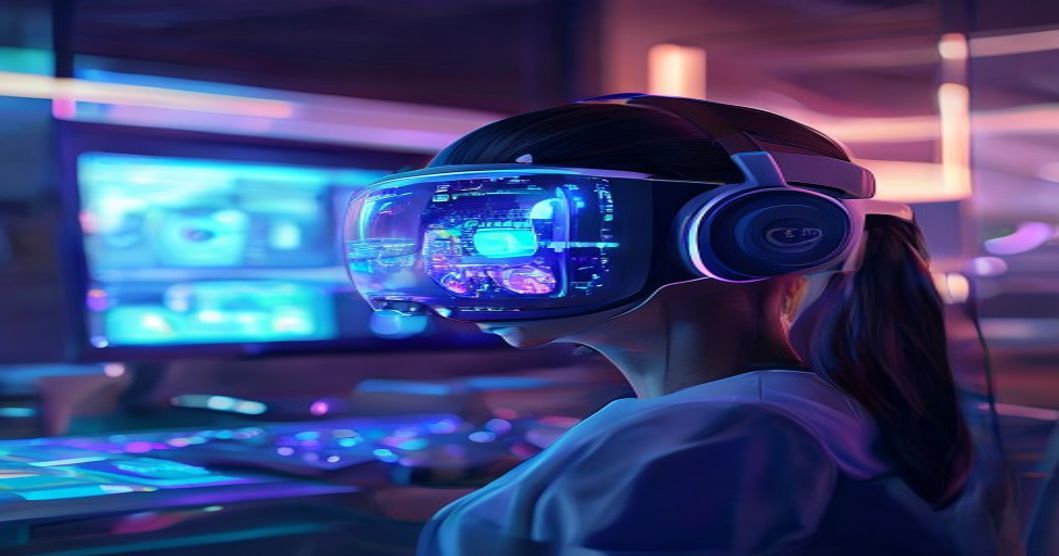
The technological landscape is constantly evolving, pushing the boundaries of innovation. Among the most transformative recent developments is “spatial computing,” a revolutionary paradigm that seamlessly blends digital content with our physical world. At the forefront of this innovation stands a device that has captured global attention: the Apple Vision Pro. This groundbreaking headset isn’t just another gadget; it’s a bold step into a future where our digital lives effortlessly overlay and interact with the real world, promising to redefine personal computing as we know it.
What is Spatial Computing?
Spatial computing represents a fundamental shift from interacting with flat screens to experiencing digital content within a three-dimensional environment. Instead of looking at a display, you look through a display into an augmented reality where digital objects appear to coexist with your physical surroundings. It creates an immersive, intuitive interface that leverages natural human instincts, using gestures, eye movements, and voice commands to navigate a boundless digital workspace or entertainment landscape.
Apple Vision Pro: A New Paradigm
Apple’s entry into this nascent field with the Vision Pro has set a new benchmark for what spatial computing devices can achieve. Apple prefers the term “spatial computer,” emphasizing its multifaceted capabilities for work, communication, and entertainment, rather than just a virtual reality headset.
Design and Interface
The Vision Pro boasts a sleek, goggle-like design, crafted from premium aluminum and glass. Its interface, termed “visionOS,” is navigated primarily through eye-tracking, hand gestures, and voice commands. Users simply look at an app icon to select it, pinch their fingers to open it, and move their hands to scroll or resize windows. This intuitive, controller-free interaction aims to make the technology feel like a natural extension of the user.
Key Technologies Powering the Experience
Beneath its elegant exterior, the Vision Pro is packed with cutting-edge technology. Dual micro-OLED displays deliver an astonishing 23 million pixels across two panels, offering visuals sharper than a 4K TV for each eye. This is complemented by an advanced eye-tracking system and a sophisticated array of cameras and sensors. Powering this immersive experience are Apple’s M2 chip (for core computing) and the new R1 chip (dedicated to processing sensor input with near-zero latency), ensuring a seamless blend of digital and physical realities through its high-fidelity passthrough video.
User Experience: Immersion and Productivity
The promise of the Vision Pro lies in its ability to transport users into immersive environments or augment their real-world workspace. Imagine expanding your Mac desktop across multiple virtual screens in your living room, collaborating with colleagues as realistic avatars, or watching a movie on a massive virtual display. It’s designed to blur the lines between realities, offering unparalleled immersion for entertainment and a revolutionary new canvas for productivity.
Beyond Entertainment: Practical Applications
While entertainment and personal media consumption are obvious use cases, the Vision Pro’s potential extends far into professional and educational domains, promising to transform how we work and learn.
Professional Workflows and Collaboration
For architects, designers, and engineers, spatial computing offers a new dimension for visualizing and manipulating 3D models directly in their workspace. Teams can collaborate on virtual prototypes, conducting immersive reviews and making real-time adjustments as if physically present with the object. This could significantly streamline design cycles and enhance project understanding.
Education and Training
Imagine medical students performing virtual surgeries, history students exploring ancient Rome, or mechanics learning to repair complex machinery through interactive 3D simulations. The Vision Pro could transform learning into a deeply engaging, experiential process, making abstract concepts tangible and accessible to a wider audience.
Healthcare and Therapy
In healthcare, spatial computers hold promise for surgical planning, patient education, and even therapeutic interventions. Therapists might use immersive environments to help patients overcome phobias or manage stress, while surgeons could overlay critical patient data directly onto their field of view during complex procedures, enhancing precision and safety.
Challenges and Considerations
Despite its groundbreaking nature, the Vision Pro faces several hurdles to widespread adoption and success, primarily related to its initial market position and technological maturity.
Cost and Accessibility
With an initial price point of $3,499, the Vision Pro is positioned as a premium, niche device, placing it out of reach for most consumers. This high cost limits its immediate market and slows the rapid development of a broad, diverse app ecosystem necessary for mass appeal.
Comfort and Ergonomics
Wearable technology, especially head-mounted devices, must prioritize comfort. Early reviews indicate that the Vision Pro’s weight and battery life (around 2-2.5 hours on an external pack) can be a factor for extended use, potentially causing discomfort or fatigue during prolonged sessions.
Privacy Concerns and Data Security
As a device constantly observing its user’s environment and eye movements, privacy is a significant concern. The collection of such sensitive data raises questions about how it’s stored, used, and protected, necessitating robust privacy safeguards and transparent policies from Apple.
The “Walled Garden” Ecosystem
Apple’s traditional approach of tightly controlling its hardware and software ecosystem, while offering a polished user experience, could also limit developer creativity and user choice. Whether this strategy will fully embrace the open, exploratory nature required for spatial computing to flourish remains a key question.
The Future of Spatial Computing
The Vision Pro is merely the first iteration of what promises to be a transformative category of technology. Its arrival signals the beginning of an exciting era for human-computer interaction.
Catalyst for Competition and Innovation
Apple’s entry legitimizes spatial computing and will undoubtedly spur greater investment and innovation from competitors. This increased competition will drive down costs, accelerate technological advancements, and rapidly expand the range of available applications, benefiting consumers globally.
Evolution of Interaction
Future generations of spatial computers will likely feature even more advanced interaction methods. This could include more sophisticated gesture recognition, enhanced haptics, and perhaps even early forms of brain-computer interfaces, making interactions even more intuitive and seamless over time.
Broader Adoption and Miniaturization
As the technology matures, becomes more affordable, lighter, and more discreet, spatial computing devices will integrate seamlessly into daily life. They could eventually replace or significantly augment smartphones and traditional computers, becoming indispensable tools for work, communication, and immersive entertainment experiences.
The Apple Vision Pro stands as a monumental achievement, not just as a piece of hardware, but as a clear declaration of intent for the future of computing. It offers a powerful glimpse into a world where our digital and physical realities are no longer separate but beautifully intertwined. While challenges persist, the innovation it represents is undeniable, paving the way for a new era of human-computer interaction that promises to be as profound as the advent of the personal computer itself. The journey has just begun, and the possibilities for spatial computing appear limitless.