
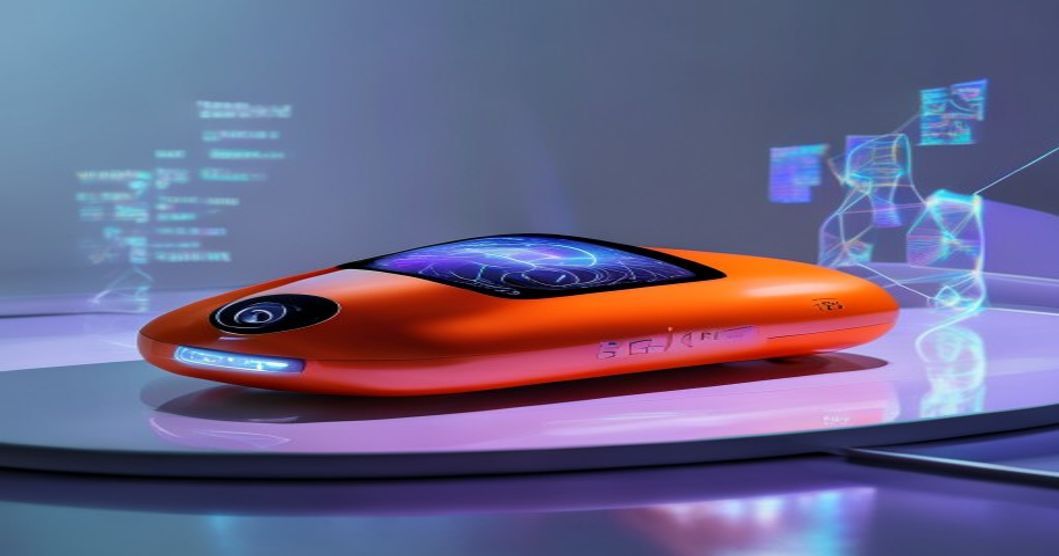
The world of personal technology is constantly evolving, with new devices promising to simplify our lives and enhance our digital interactions. In an era dominated by smartphones, a new wave of AI-powered gadgets is emerging, seeking to redefine how we engage with technology. Among the most talked-about recent innovations is the Rabbit R1, a striking orange device that aims to move beyond app-centric interfaces and offer a more intuitive, AI-driven experience. Is this a mere novelty, or does it signal a significant shift in our tech landscape?
What is the Rabbit R1?
At its core, the Rabbit R1 is a compact, standalone AI device designed to act as a universal controller for your digital services. Unlike a smartphone that relies on individual apps, the R1 introduces the concept of a “Large Action Model” (LAM) AI. This model is trained not just on language, but on how humans interact with applications and interfaces. The goal is to understand your intent and execute tasks across various services — ordering food, playing music, booking a ride, or sending messages — without needing you to navigate through different apps or even your phone.
Developed by Rabbit Inc., the R1 immediately grabs attention with its retro-futuristic design by Teenage Engineering. It features a 2.88-inch touchscreen, a scroll wheel for navigation, a push-to-talk button for voice commands, a rotatable camera (dubbed the “Rabbit Eye”), and a USB-C port. Its vibrant orange casing and distinctive form factor set it apart from the sleek, minimalist aesthetics of modern smartphones, positioning it as a dedicated, purpose-built AI companion.
Key Innovations and Features
The Rabbit R1’s appeal lies in its novel approach to digital interaction, moving away from the familiar grid of app icons. Here are some of its standout features:
- Large Action Model (LAM): This is the brain of the R1. Instead of acting as a simple chatbot, the LAM learns how to operate applications. When you ask it to play a song on Spotify, it doesn’t just link you to the app; it “knows” how to open Spotify, search for the song, and play it, mimicking human interaction with the interface.
- Universal Controller: The R1 aims to centralize your digital life. Through a web portal called the “Rabbit Hole,” you grant the device access to your existing services like Uber, Spotify, DoorDash, and more. Once linked, the R1 can execute commands across these platforms.
- Push-to-Talk Interface: Interaction is primarily voice-driven, initiated by pressing a dedicated button. This mimics traditional walkie-talkie communication, aiming for a more direct and less distracting engagement than constantly tapping on a screen.
- Rabbit Eye Camera: The rotatable camera has interesting potential. It can be used for video calls, but more intriguingly, it’s designed to eventually perform AI vision tasks, such as identifying objects or even providing contextual information about your surroundings.
- Portability and Simplicity: Its small size and focused functionality encourage users to carry it as a secondary device, perhaps leaving their smartphone aside for less demanding tasks.
How the LAM Changes the Game
The LAM concept is arguably the most significant innovation. Current voice assistants like Siri or Google Assistant often rely on specific commands or integrations. If a service isn’t explicitly integrated, they might struggle. The LAM, however, aims to be more adaptable. By observing and learning how users interact with graphical user interfaces (GUIs), it can theoretically operate almost any web-based application. This promises a much broader range of capabilities without requiring developers to build specific APIs for the R1.
Imagine telling your R1, “Find me a recipe for chicken tikka masala and add the ingredients to my grocery list on Instacart,” and it handles all the necessary steps, even if it’s the first time you’ve asked it to combine those specific actions across different services.
Potential Benefits for Users
The vision behind devices like the Rabbit R1 suggests several compelling advantages:
- Reduced Screen Time: By handling tasks efficiently through voice, the R1 could help users spend less time staring at their smartphone screens, fostering more present interactions with the real world.
- Simplified Digital Life: Consolidating various app functionalities into a single, intuitive interface can reduce cognitive load and the friction associated with switching between apps.
- Enhanced Accessibility: For individuals who struggle with complex smartphone interfaces, a voice-first, action-oriented device could offer a more accessible way to interact with digital services.
- Focused Productivity: By limiting distractions, the R1 could become a valuable tool for specific tasks, allowing users to remain focused without the constant pull of notifications from their primary smartphone.
Challenges and Considerations
While promising, the path for the Rabbit R1 and similar AI companions is not without hurdles:
- Privacy and Security: Granting a device access to multiple personal accounts raises significant privacy concerns. Secure handling of credentials and data will be paramount for user trust.
- Reliability and Accuracy: The LAM’s ability to consistently understand intent and execute tasks flawlessly across countless applications will be a critical test. AI “hallucinations” or misinterpretations could lead to frustration.
- User Adoption: Shifting ingrained habits from smartphone-centric interactions to a new paradigm requires a compelling user experience and clear value proposition. It’s a new device to carry and charge.
- Ecosystem Integration: The R1’s success hinges on its ability to seamlessly integrate with a vast and ever-changing ecosystem of web services and applications. Maintaining these integrations will be an ongoing challenge.
- The “Why Not My Phone?” Question: Many of the R1’s promised capabilities could theoretically be integrated into existing smartphones. The device needs to prove it offers a significantly superior or unique experience to justify its existence as a separate gadget.
Impact on the Tech Landscape
The Rabbit R1 represents a bold experiment in human-computer interaction, pushing the boundaries of what a personal AI can be. It challenges the smartphone’s supremacy as the sole gateway to our digital lives, suggesting a future where specialized AI companions handle specific types of interactions. Whether it becomes a niche product or paves the way for a new category of devices, its development sparks important conversations about interface design, AI capabilities, and our relationship with technology.
It’s not about replacing smartphones overnight, but rather exploring how we can offload cognitive burdens and regain focus in an increasingly complex digital world. The R1 asks us to imagine a future where AI isn’t just a feature within our devices, but a dedicated entity capable of proactive, intelligent action on our behalf.