
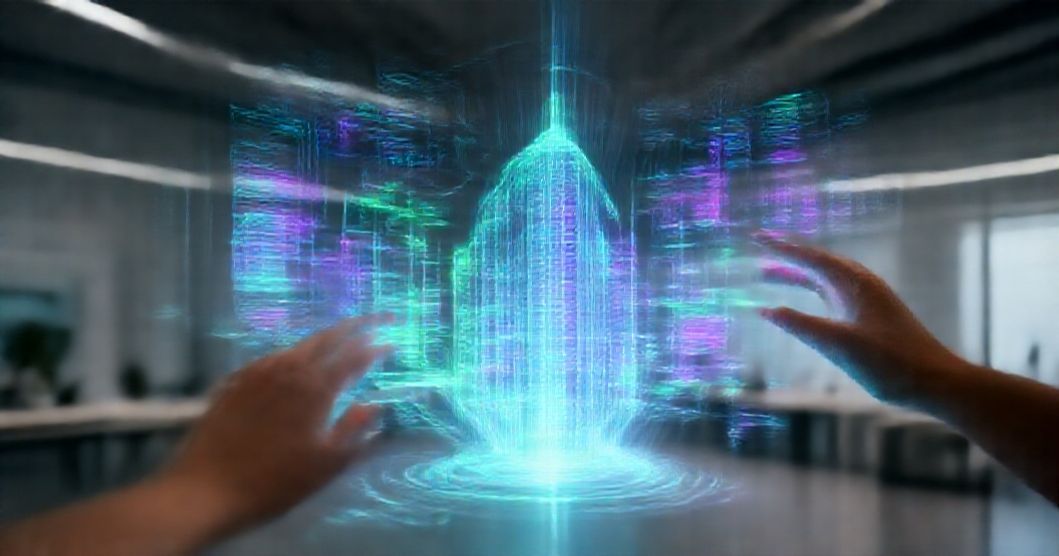
For years, virtual reality (VR) and augmented reality (AR) have captivated our imaginations, largely confined to the realms of gaming and niche industrial applications. However, a significant paradigm shift is underway, propelled by remarkable advancements in hardware and software. We are now entering the era of spatial computing, where digital content seamlessly integrates with our physical world, promising to redefine how we work, learn, play, and interact with information.
This isn’t merely about wearing a headset; it’s about a fundamental change in how we perceive and interact with digital information, moving it from flat screens into a dynamic, three-dimensional space. The latest wave of devices is blurring the lines between the real and virtual, introducing us to a rich, immersive experience known as mixed reality (MR).
What is Mixed Reality (MR)?
Mixed reality stands as a crucial bridge between augmented reality (AR) and virtual reality (VR). While VR immerses users entirely in a digital world, blocking out the physical environment, and AR overlays digital information onto the real world (think Pokémon Go or Snapchat filters), MR takes it a step further. With MR, digital objects don’t just appear in your physical space; they interact with it.
Imagine placing a virtual monitor on your actual desk, seeing it persist there even when you walk away and return, or collaborating with a remote colleague’s avatar sitting across from you in your living room. MR devices achieve this by using advanced sensors to understand your environment – mapping surfaces, detecting objects, and tracking your movements – to anchor virtual content realistically within your surroundings. This blending creates a powerful sense of presence and interactivity, opening up possibilities far beyond traditional gaming experiences.
Technological Leaps Powering the Shift
The transition to practical spatial computing has been enabled by a confluence of rapid technological advancements:
- High-Resolution Displays and Optics: Newer headsets feature incredibly sharp displays with wider fields of view, making virtual objects look more realistic and reducing the “screen door effect.” Advances in pancake optics have also allowed for lighter, more compact designs.
- Advanced Sensors and Cameras: Integrated cameras not only provide a pass-through view of the real world but also perform sophisticated environmental mapping. Depth sensors, eye-tracking, and precise hand-tracking algorithms allow for intuitive interactions without traditional controllers.
- Powerful Processors: Modern mobile chipsets are capable of rendering complex 3D environments and processing vast amounts of sensor data in real-time, all within a self-contained headset.
- Spatial Audio: Immersive audio that adapts to your head movements and the placement of virtual objects further enhances the sense of presence and realism.
These hardware innovations, combined with sophisticated software algorithms for spatial anchoring and scene understanding, are collectively paving the way for truly compelling mixed reality experiences.
Transforming Industries and Daily Life
While entertainment remains a significant draw, the true potential of spatial computing lies in its ability to revolutionize various sectors:
The Future of Work and Collaboration
Spatial computing promises to redefine the modern workspace. Imagine:
- Creating multiple virtual monitors around you, independent of physical limitations, to boost productivity.
- Conducting truly immersive remote meetings where colleagues appear as realistic avatars in a shared virtual space.
- Collaborating on 3D models and designs with team members from anywhere in the world, manipulating virtual prototypes as if they were physically present.
- Providing remote assistance to technicians by overlaying instructions directly onto their field of view.
Industries like architecture, engineering, and manufacturing are already exploring “digital twins” – virtual replicas of physical assets – within MR environments for design review, maintenance, and training.
Revolutionizing Education and Training
From complex surgical procedures to intricate machinery operation, spatial computing offers unparalleled training opportunities. Students can:
- Practice delicate tasks in a risk-free virtual environment.
- Embark on virtual field trips to historical sites or distant galaxies.
- Interact with 3D models of human anatomy or complex chemical structures.
- Experience immersive simulations that make learning more engaging and effective.
Enhancing Healthcare
The medical field stands to benefit immensely. Surgeons can plan complex operations by visualizing patient data in 3D space, therapists can conduct immersive rehabilitation exercises, and medical students can gain hands-on experience without risking patient safety. Remote consultations could also be enhanced by visually sharing and discussing medical imagery in a shared virtual space.
Everyday Applications and Entertainment
Beyond the professional sphere, spatial computing holds promise for everyday life:
- Personalized Information: Overlaying navigation directions on city streets, viewing real-time restaurant reviews as you walk past, or getting instant translations of foreign text.
- New Forms of Entertainment: Interactive stories that blend with your surroundings, board games played on your living room floor with digital pieces, or immersive concerts that feel like you’re truly there.
- Social Connection: Deeper, more engaging virtual hangouts with friends and family, transcending geographical barriers.
Challenges and the Road Ahead
Despite the immense promise, spatial computing faces several hurdles. Cost remains a significant barrier for mainstream adoption, with many advanced headsets priced at a premium. Comfort and design are also crucial; devices need to become lighter, less bulky, and offer longer battery life to be truly integrated into daily life. The development of a robust and compelling content ecosystem, with practical applications beyond tech demos, is vital for sustained interest.
Furthermore, concerns around privacy and data security are paramount, given that these devices map and understand our personal spaces. Ethical considerations regarding digital identity and accessibility also need careful navigation.
However, the pace of innovation is relentless. As technology matures and becomes more accessible, spatial computing is poised to move from a niche curiosity to an indispensable tool, fundamentally changing how we interact with technology and each other. It’s not just a new gadget; it’s a new medium, ready to redefine our perception of reality.