
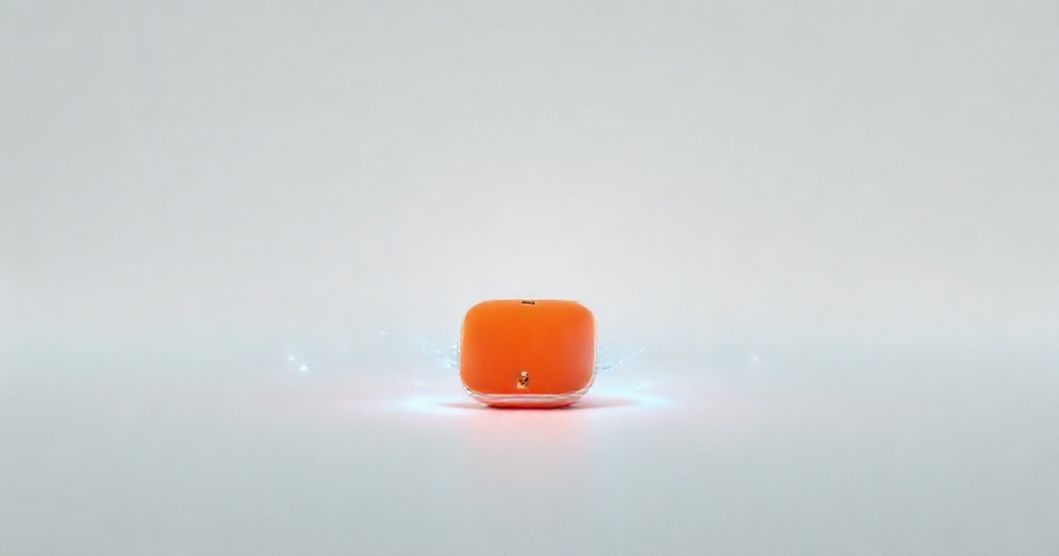
In an era brimming with smart devices and AI assistants, the tech world often seeks the next big leap forward. Enter the Rabbit R1 – a compact, orange-hued gadget that promises to redefine how we interact with technology. Launched with considerable hype and an intriguing premise, the R1 isn’t just another smartphone accessory or a glorified smart speaker; it’s a dedicated AI device aiming to liberate us from the tyranny of apps and complex interfaces. But what exactly is this curious device, and does it truly offer a glimpse into an AI-first future?
Understanding the Rabbit R1: More Than Just a Gadget
At its core, the Rabbit R1 is a pocket-sized AI companion designed by the startup Rabbit Inc. Its primary goal is to simplify digital interactions by allowing users to control various services and applications through natural language commands. Imagine booking a ride, ordering food, playing music, or sending a message without ever opening a specific app. That’s the promise of the R1, leveraging its unique operating system and an underlying artificial intelligence model.
Unlike traditional AI assistants embedded in smartphones or smart speakers that primarily respond to queries or perform basic tasks, the R1 is engineered to understand intent and take action on your behalf across different platforms. It’s a bold vision that challenges the app-centric paradigm that has dominated mobile computing for over a decade.
The Power of the Large Action Model (LAM)
The secret sauce behind the Rabbit R1 is its proprietary Large Action Model (LAM). While Large Language Models (LLMs) like ChatGPT excel at understanding and generating human-like text, the LAM takes this a significant step further. Rabbit’s LAM is trained not just on vast amounts of text and code, but also on how humans interact with digital interfaces – clicking buttons, navigating menus, and inputting data.
This training allows the LAM to learn and replicate complex workflows across different applications. When you tell your R1 to “order a pizza for dinner,” it doesn’t just search for pizza places; it can theoretically navigate a food delivery app, select your preferred restaurant, customize your order, and complete the transaction, all without you having to touch your phone. The LAM essentially becomes your digital proxy, learning from demonstrations and executing tasks across a multitude of services, aiming for a seamless, app-agnostic experience.
Design and Core Features
The Rabbit R1 itself is a distinctive piece of hardware. Designed in collaboration with Teenage Engineering, it features a vibrant orange casing, a 2.88-inch touchscreen display, a rotating camera (dubbed the “Rabbit Eye”), and a push-to-talk button. The compact size makes it highly portable, fitting comfortably in the palm of your hand or a small pocket.
- Rabbit Eye Camera: The rotating camera can be used for various tasks, from video calls to object identification and even acting as a visual assistant, interpreting surroundings based on your commands.
- Push-to-Talk Button: This central interaction method simplifies commands, allowing for quick, natural voice input, akin to a walkie-talkie.
- Scroll Wheel: For navigating menus and content on the small screen.
- Connectivity: Equipped with Wi-Fi, Bluetooth, and a SIM card slot for always-on connectivity, ensuring its AI capabilities are accessible wherever you go.
The design clearly emphasizes direct, intuitive interaction over complex multi-touch gestures, aligning with its mission to simplify digital tasks.
Revolutionizing Interaction: The Promise of an App-Free Future
Rabbit Inc. envisions a future where you don’t need to download, update, or even open individual apps. Instead, the R1 acts as a universal interface for all your digital needs. By centralizing interactions through a single AI, the device promises to reduce digital clutter, save time, and make technology more accessible. The idea is to move beyond mere information retrieval to intelligent task execution, transforming abstract commands into concrete actions.
This approach could be particularly beneficial for users overwhelmed by the sheer number of apps on their smartphones or those seeking a more streamlined, distraction-free digital experience. It suggests a paradigm shift where the focus moves from where an action is performed (which app) to what action needs to be performed.
Potential Challenges and Criticisms
While the vision is compelling, the Rabbit R1 faces significant challenges. Initial reviews and public reception have been mixed. Critics point to the R1’s reliance on cloud processing, which means it’s effectively a “brick” without an internet connection. There are also concerns about its speed, accuracy, and the learning curve for the LAM to truly integrate with a user’s diverse digital life.
Furthermore, privacy and security are paramount. Giving a single AI model access to various accounts and services raises questions about data handling and potential vulnerabilities. The R1’s ability to “learn” by observing user actions also brings up ethical considerations regarding surveillance and autonomous decision-making.
Many also argue that a modern smartphone, with its vast processing power and mature app ecosystem, can already perform many of these tasks, often more reliably, through integrated AI assistants or shortcuts. The R1’s value proposition as a standalone device, rather than a powerful software layer on existing hardware, remains a subject of debate.
Who is the Rabbit R1 For?
Initially, the Rabbit R1 appears to target early adopters, tech enthusiasts, and individuals looking for a novel way to interact with their digital world. It might appeal to those seeking to minimize screen time on their smartphones or anyone frustrated by the fragmented experience of managing countless apps. It’s less a replacement for your smartphone and more a companion device offering an alternative mode of interaction.
The Future of Dedicated AI Devices
Regardless of the R1’s ultimate commercial success, its existence sparks an important conversation about the future of AI in consumer electronics. Dedicated AI hardware, designed from the ground up to leverage advanced models, could represent a significant shift from general-purpose computing devices like smartphones. It highlights a growing trend towards specialized gadgets that excel in specific, AI-driven tasks, pushing the boundaries of what personal technology can achieve.
The Rabbit R1 is a fascinating experiment, a tangible representation of a future where AI isn’t just a feature, but the very interface. Its journey will undoubtedly influence how we think about and design the next generation of smart devices, whether they succeed in replacing apps or simply complement our existing digital lives.