
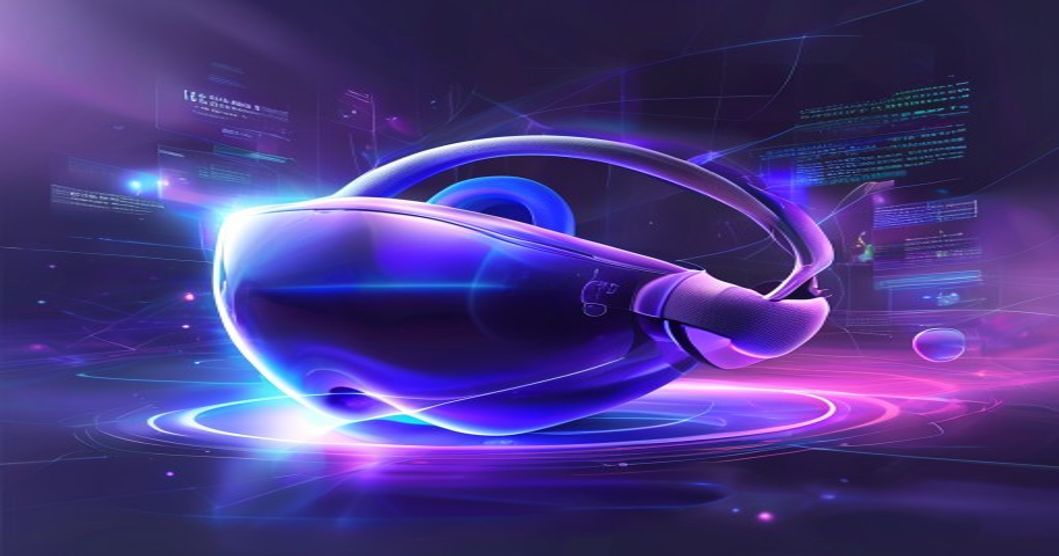
In a world constantly reshaped by technological leaps, Apple has once again captured global attention with the introduction of its Vision Pro. Unveiled as a “spatial computer,” this groundbreaking device promises to redefine how we interact with digital content, blending it seamlessly with our physical surroundings. It’s not merely another gadget; it represents Apple’s ambitious foray into a new era of personal computing, a vision that could fundamentally alter our daily lives and professional endeavors.
The Vision Pro emerges at a pivotal moment, pushing the boundaries of what augmented and virtual reality can achieve. While competitors have explored similar territories, Apple’s meticulous attention to detail, integration of advanced technologies, and a user-centric approach aim to set a new standard. This device isn’t just about experiencing virtual worlds; it’s about making digital content feel inherently present in our own.
What Exactly is Apple Vision Pro?
At its core, the Apple Vision Pro is a mixed-reality headset designed to merge digital content with your physical space, allowing you to see, hear, and interact with digital elements as if they were truly there. Apple refers to this as spatial computing. Unlike traditional VR headsets that fully immerse you in a digital environment, Vision Pro uses pass-through video to keep you connected to your real-world surroundings, while simultaneously projecting apps and media into your field of view.
The device is powered by a dual-chip design, featuring Apple’s M2 chip for robust performance and a brand-new R1 chip specifically engineered to process input from its twelve cameras, five sensors, and six microphones. This intricate system minimizes latency, ensuring that digital content appears to react instantaneously to your movements, a crucial factor for a believable spatial experience.
Design and Ergonomics: A Premium Experience
Apple’s renowned design philosophy is immediately evident in the Vision Pro. Crafted with an aluminum frame, custom optical inserts for vision correction, and a modular Light Seal that conforms to the user’s face, the device prioritizes both aesthetics and comfort. The front features a single piece of three-dimensionally formed laminated glass, giving it a sleek, futuristic appearance.
Comfort, however, remains a key challenge for any head-mounted device. Apple has addressed this with a soft, flexible head band and an external battery pack that helps distribute weight, aiming to reduce strain during extended use. While lighter than some professional VR rigs, its weight is still noticeable, a common trade-off for the advanced technology it houses. The external battery connects via a braided cable, promising up to two hours of general use or significantly more when plugged into power.
Key Features and Capabilities Redefining Interaction
visionOS: The Operating System of Spatial Computing
Central to the Vision Pro experience is visionOS, a custom-built operating system based on macOS, iOS, and iPadOS. It offers a familiar yet entirely new three-dimensional interface where apps float freely in your physical space. This intuitive environment allows for resizing, repositioning, and interacting with multiple windows simultaneously, truly transforming your workspace into an infinite canvas.
Intuitive Control: Eye and Hand Tracking
One of the Vision Pro’s most revolutionary aspects is its control scheme. Forget clunky controllers; interaction is primarily achieved through your eyes, hands, and voice. Users simply look at an element to select it, then pinch their fingers together to click, and flick their wrist to scroll. This “look and pinch” interaction feels remarkably natural and responsive, making digital navigation feel almost telepathic.
Immersive Entertainment and Productivity
The device boasts two micro-OLED displays, each delivering more pixels than a 4K TV to each eye, creating an incredibly sharp and vibrant visual experience. This clarity is perfect for watching movies, which can expand to fill your entire vision, transforming any room into a personal theater. For productivity, the Vision Pro can project your Mac’s display into a massive virtual monitor, allowing you to multitask with unprecedented flexibility.
Persona and Spatial Photos & Videos
For communication, the Vision Pro introduces “Persona,” a hyper-realistic digital avatar generated by the device’s external cameras. During video calls, your Persona represents you, mimicking your facial expressions and head movements, aiming to foster a sense of presence. Additionally, the device can capture and display “Spatial Photos and Videos,” allowing you to relive memories with incredible depth and immersion, as if stepping back into the moment.
Potential Use Cases: From Play to Professional
The applications for the Vision Pro span a wide spectrum. In entertainment, it promises unparalleled cinematic experiences and immersive gaming. For professionals, architects could walk through their designs, doctors could visualize patient data in 3D, and educators could create interactive learning environments. Collaboration tools could allow remote teams to feel truly present in a shared virtual workspace, overcoming geographical barriers.
Challenges and the Road Ahead
Despite its impressive capabilities, the Vision Pro faces hurdles. The initial price point is substantial, making it a luxury item for most. The ergonomic challenges of wearing a device on your head for extended periods, along with battery life concerns, are practical considerations for daily adoption. Furthermore, the success of any new computing platform hinges on its app ecosystem, which will take time to mature and offer compelling reasons for widespread adoption.
Social acceptance and privacy implications of constant camera usage also spark ongoing debate. Integrating such a device into public life will require shifts in cultural norms and careful consideration of ethical guidelines.
The Future of Spatial Computing
The Apple Vision Pro is undoubtedly a bold step towards a future where digital content is not confined to screens but exists all around us. It represents more than just a new product; it’s a foundational piece for what Apple believes will be the next major computing platform. While it may not instantly replace your iPhone or MacBook, it lays the groundwork for a fascinating evolution in how we interact with technology, the world, and each other. The journey of spatial computing has just begun, and the Vision Pro is a compelling invitation to explore its vast potential.