
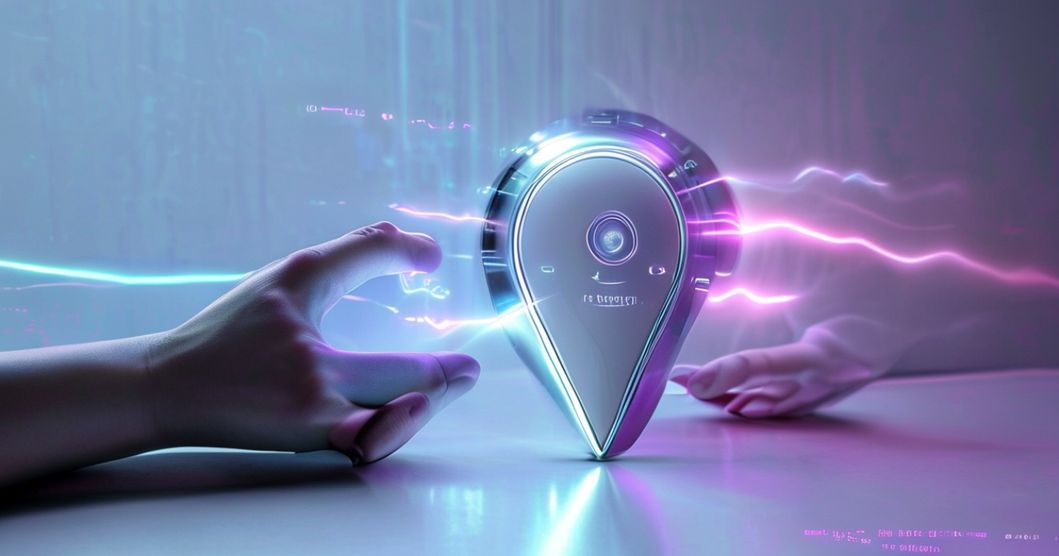
In a world increasingly dominated by screens, from smartphones to smartwatches, a new contender has emerged with a radical vision: to free us from our digital confines. The Humane AI Pin, a highly anticipated and much-talked-about wearable device, aims to redefine how we interact with technology. It promises a future where artificial intelligence seamlessly integrates into our lives, offering assistance without the constant need to tap, swipe, or stare at a display. But can this ambitious gadget deliver on its futuristic promise?
What is the Humane AI Pin?
Conceived by ex-Apple executives Imran Chaudhri and Bethany Bongiorno, the AI Pin is not another smartphone accessory; it’s designed to be a standalone, primary computing device. It’s a small, square device that magnetically attaches to your clothing, powered by a Snapdragon processor. Its most striking features are its lack of a traditional screen and its reliance on a suite of AI models and a unique laser ink projection system.
Instead of an interface you hold in your hand, the AI Pin projects information onto your palm or any nearby surface, creating a green monochrome display. Interactions are primarily voice-controlled, but also involve gestures, touch, and a built-in camera. It aims to be an ambient, ever-present assistant that anticipates your needs rather than waiting for your commands.
Key Innovations and Features
The AI Pin is packed with innovations designed to set it apart:
- Laser Ink Display: This groundbreaking projector allows you to view calls, messages, and other information directly on your hand. It’s a novel approach to visual feedback, aiming to minimize digital distraction.
- AI-First Operating System (Cosmos): Unlike traditional operating systems that rely on apps, the Pin’s Cosmos OS is built around generative AI. It’s designed to understand your intent and perform tasks across various services without needing to open specific applications.
- Trust Light: A physical indicator light illuminates when the device is actively recording or sensing, addressing privacy concerns directly and transparently.
- Always-On Assistant: The Pin can answer questions, summarize emails, translate languages in real-time, identify objects through its camera, and manage basic communications.
- Standalone Connectivity: It has its own cellular connection, meaning it doesn’t need to be tethered to a smartphone.
The Promise Versus Reality
The vision behind the AI Pin is compelling: a more present, less distracted existence, augmented by intelligent technology. Humane paints a picture of effortlessly interacting with the world, with the Pin serving as a subtle, powerful co-pilot. This vision, however, clashes with the immediate reality of a first-generation product pushing the boundaries of what’s possible.
Initial reviews have been a mixed bag. While praise has been given for the sheer ambition and the potential of a screenless future, many reviewers have highlighted significant challenges. The AI capabilities, though impressive in concept, often fall short in speed and accuracy compared to established smartphone AI. The laser display, while innovative, can be difficult to read in bright light, and the overall interaction can have a steep learning curve.
Potential Use Cases and Target Audience
Who exactly is the AI Pin for? Humane suggests it’s for anyone looking to reduce screen time and engage more with their environment. Imagine a chef using it for quick conversions without touching a screen, or a tourist getting instant translations and directions hands-free. Professionals needing quick, focused information without the distraction of a full smartphone could also find value. It’s particularly appealing to early adopters and tech enthusiasts eager to explore the next frontier of human-computer interaction.
Beyond niche applications, the long-term goal is to make AI ubiquitous, accessible, and intuitive. The Pin represents a bold experiment in making that future a reality, by embedding AI so deeply that it almost disappears into the background of our daily lives.
Challenges and Criticisms
Despite its visionary approach, the AI Pin faces several hurdles. Performance is a common concern, with tasks sometimes taking longer than expected. Battery life, a crucial factor for any wearable, has also received criticism, often requiring frequent charging. The price point, coupled with a mandatory monthly subscription for cellular data and AI services, places it in a premium category.
Furthermore, the reliance on voice commands and gestures means a change in user habit, which isn’t always easy. Privacy, while addressed by the Trust Light, remains a persistent concern for any always-on camera and microphone device. As with any pioneering technology, there’s a fine line between innovation and inconvenience.
The Future of Wearable AI
The Humane AI Pin is more than just a gadget; it’s a statement about the direction of technology. It represents a significant step in the evolution of wearable AI, pushing us towards a more ambient computing paradigm. While it might not be a perfect product in its current iteration, its existence alone prompts important conversations about our relationship with technology, digital wellness, and the potential of AI.
It’s a testament to the idea that innovation often involves experimentation, and not every first attempt will be flawless. Whether the AI Pin becomes a mainstream success or a stepping stone for future devices, it has undeniably opened a fascinating chapter in the quest for a more intelligent and integrated technological future.