
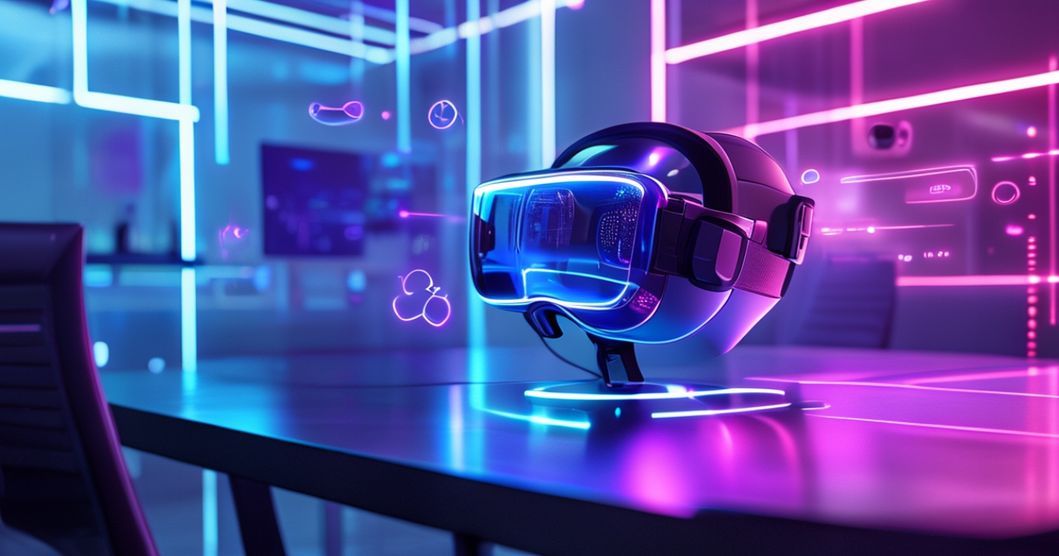
In the rapidly evolving landscape of technological innovation, few announcements have captured as much global attention as the reveal of the Apple Vision Pro. Heralded by Apple as a revolutionary “spatial computer,” this device promises to redefine how we interact with digital content, blending it seamlessly with our physical surroundings. It’s not just another gadget; it’s a bold step into a future where our digital lives aren’t confined to screens but are interwoven with the world around us. This innovative headset represents years of research and development, aiming to deliver an unprecedented immersive experience that goes beyond traditional augmented reality (AR) and virtual reality (VR) devices.
What is Apple Vision Pro?
At its core, the Apple Vision Pro is a mixed-reality headset designed to merge digital content with your physical space, allowing you to see, hear, and interact with digital elements as if they are present in your room. Unlike conventional VR headsets that fully immerse you in a digital world, Vision Pro prioritizes “spatial computing.” This means applications don’t just appear on a screen; they exist in your physical environment, responding to your gaze, hand gestures, and voice. It’s an entirely new operating system, VisionOS, built from the ground up to support this three-dimensional interface.
Key Features and Groundbreaking Innovations
The Vision Pro is packed with cutting-edge technology that distinguishes it from its predecessors and competitors. Understanding these innovations is key to appreciating its potential impact.
Stunning Displays and Optics
Perhaps the most talked-about feature is its display system. The Vision Pro boasts a micro-OLED display for each eye, packing more pixels than a 4K TV into an area the size of a postage stamp. This delivers an astonishing 23 million pixels across two displays, resulting in incredibly sharp text, vibrant colors, and an unparalleled visual fidelity for a wearable device. The custom catadioptric lenses and advanced eye-tracking system ensure that content is always rendered clearly, adjusting dynamically to your gaze.
Intuitive VisionOS and User Interface
Apple developed VisionOS specifically for spatial computing. This operating system allows apps to float freely in your physical space, scale to your desired size, and even cast shadows, making them feel remarkably real. The UI is designed to be intuitive, leveraging your natural movements and senses rather than complex controllers. This emphasis on natural interaction is a cornerstone of the Vision Pro’s design philosophy.
Eye Tracking, Hand Gestures, and Voice Control
Interaction with the Vision Pro is entirely hands-free and controller-free. You navigate by simply looking at an element, tapping your fingers together to select, and using your voice for commands. An array of cameras and sensors continuously track your eye movements and hand gestures, translating them into seamless inputs. This revolutionary input method aims to make the digital experience feel more direct and less cumbersome, blurring the lines between thought and action.
Seamless Passthrough Video and Mixed Reality
Unlike traditional VR headsets that isolate you, the Vision Pro utilizes advanced passthrough video to constantly show you the real world around you in high definition. Digital content is then overlaid onto this real-world view. When fully immersed in a virtual environment, a feature called “EyeSight” subtly shows your eyes to people in the room, and when someone approaches, the Vision Pro automatically dims virtual content, allowing you to see and interact with them – a thoughtful detail addressing the social isolation often associated with VR.
Immersive Spatial Audio
Complementing the visual experience is an advanced Spatial Audio system. The Vision Pro’s audio pods precisely place sounds in your environment, making it seem as though they are coming from specific points in space. This adds another layer of realism to the digital content, whether it’s the roar of a virtual dinosaur or the voice of a FaceTime caller appearing in your living room.
Potential Use Cases: A World of Possibilities
The applications for the Vision Pro are vast and extend beyond mere entertainment.
- Entertainment: Experience movies and TV shows on a massive virtual screen, play immersive games, or relive cherished memories with spatial photos and videos.
- Productivity: Create a multi-monitor workspace anywhere, collaborate with colleagues in virtual meeting rooms, or use a vast canvas for creative tasks without physical limitations.
- Communication: Engage in FaceTime calls where participants appear lifelike in your space, sharing content and collaborating in a truly interactive manner.
- Education and Training: Surgeons could practice complex procedures, students could explore historical sites, and engineers could visualize designs in 3D.
Challenges and Considerations
While the Vision Pro is undeniably groundbreaking, it faces several hurdles to widespread adoption.
- Price: The initial price point of $3,499 makes it a premium device, inaccessible to many consumers.
- Comfort and Ergonomics: The device’s weight and design, though refined, may still pose comfort challenges for extended wear.
- Battery Life: The external battery pack, offering only about two hours of use, limits its untethered portability.
- Developer Adoption: The success of Vision Pro hinges on a robust ecosystem of apps and experiences, requiring significant developer investment.
- Privacy Concerns: The extensive array of cameras and sensors continuously mapping your environment raises valid questions about data privacy and security.
Shaping the Future of Computing
The Apple Vision Pro is more than just a new product; it’s a declaration of intent for the future of personal computing. It represents Apple’s vision for a world where digital experiences are deeply integrated into our physical reality, making technology feel less like a tool and more like an extension of our natural perception. While it might be a niche product for now, its innovative approach to spatial computing, natural user interfaces, and seamless mixed reality sets a new benchmark. It challenges us to rethink what a computer can be and how we will interact with information and each other in the decades to come. As the technology matures and becomes more accessible, devices like the Vision Pro could fundamentally alter our daily lives, transforming everything from work and entertainment to education and communication.