
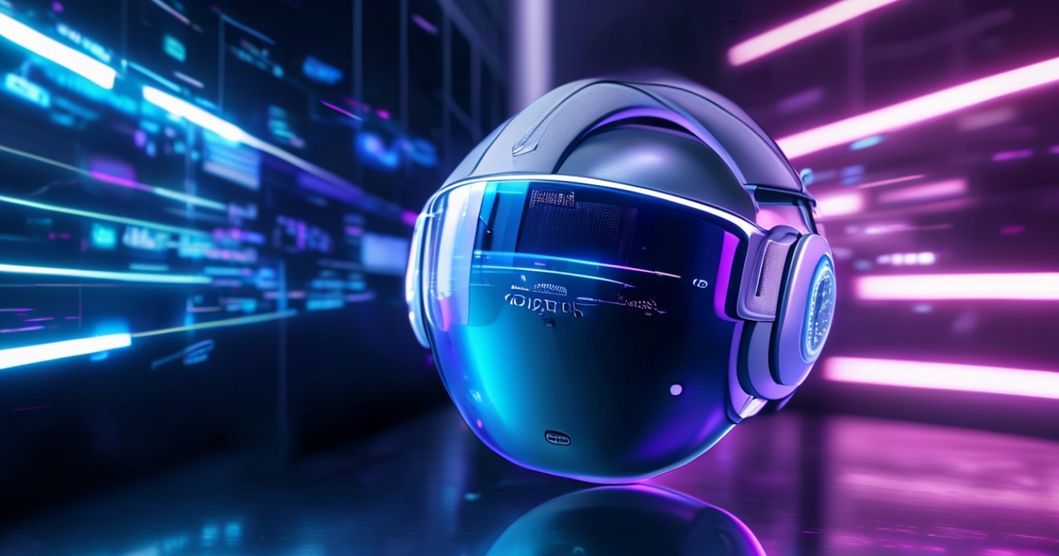
In a world constantly pushing the boundaries of what’s possible, a new device has emerged from Apple, promising to redefine our interaction with technology. The Apple Vision Pro isn’t just another gadget; it’s being hailed as the dawn of spatial computing, a revolutionary step that blends digital content with the physical world in a way never before experienced. This groundbreaking device invites us into an immersive reality, where our digital lives seamlessly integrate with our surroundings, offering a glimpse into the future of human-computer interaction.
Understanding Spatial Computing: Beyond Screens
For decades, our primary interaction with computers has been through flat screens – be it a monitor, smartphone, or tablet. Spatial computing, as envisioned by Apple Vision Pro, shatters these two-dimensional constraints. It’s a paradigm shift where digital content no longer lives *on* a screen but *within* your space, around you, and integrated with your physical environment. Imagine your favorite apps floating freely in your living room, or a massive virtual monitor extending across your desk, all while you can still see and interact with the real world.
This innovation moves beyond traditional virtual reality (VR), which typically isolates users, and augmented reality (AR), which overlays digital elements onto the real world. Spatial computing aims for a more harmonious blend, making digital content feel inherently part of your environment, not just an overlay. The Vision Pro is designed to achieve this by understanding your space, tracking your movements, and rendering digital objects with such realism that they appear to exist alongside physical ones.
Key Innovations Driving the Vision Pro Experience
The Apple Vision Pro is a marvel of engineering, packed with cutting-edge technology that makes its spatial computing promise a reality. Several core innovations work in concert to deliver this unprecedented experience.
Revolutionary Displays and Optics
At the heart of the Vision Pro’s immersive capability are its micro-OLED displays. These are no ordinary screens; they pack an astonishing 23 million pixels across two displays, delivering more than 4K resolution to each eye. This pixel density is so high that individual pixels are virtually indistinguishable, creating hyper-realistic visuals that are crisp, vibrant, and incredibly detailed. Coupled with custom-designed three-element lenses, the optics ensure unparalleled clarity and minimize distortion, providing a truly immersive field of view.
Furthermore, the device features EyeSight, an external display that shows your eyes to people in the room when you are using apps and can still perceive the environment. When fully immersed, the external display subtly indicates your focus. This thoughtful design element addresses a common critique of VR headsets: their tendency to isolate the user from their immediate social environment.
Effortless Interaction: Eyes, Hands, and Voice
One of the most radical aspects of the Vision Pro is its intuitive interaction model. Gone are the physical controllers; your eyes, hands, and voice are your primary input devices. You simply look at an element to select it, tap your fingers together to click, and use natural hand gestures to scroll or manipulate content. Siri is always available for voice commands, allowing you to open apps, search for information, or dictate text effortlessly.
This naturalistic approach to interaction makes using the Vision Pro feel incredibly intuitive and removes the learning curve often associated with new technologies. It’s designed to be an extension of yourself, making the digital world feel as tangible and controllable as the physical one. This emphasis on seamless, organic interaction is crucial for fostering broad user adoption and making spatial computing truly accessible.
The Dual-Chip Powerhouse: M2 and R1
Powering this sophisticated experience is a dual-chip architecture featuring Apple’s formidable M2 chip, responsible for the device’s exceptional performance and graphic rendering. Complementing the M2 is the brand-new R1 chip, specifically designed to process input from 12 cameras, five sensors, and six microphones in real-time. This specialized chip ensures that digital content appears seamlessly integrated with the physical world, with virtually no lag.
The R1 chip’s ability to stream new images to the displays within 12 milliseconds – eight times faster than an eye blink – is pivotal for creating a comfortable and believable experience, significantly reducing the potential for motion sickness. This powerful combination of general and specialized processing ensures that every interaction is smooth, responsive, and incredibly lifelike.
visionOS: Crafting a New Operating System
To orchestrate this complex interplay of hardware and software, Apple developed visionOS, a completely new operating system built from the ground up for spatial computing. Based on the foundations of macOS, iOS, and iPadOS, visionOS introduces a three-dimensional interface that allows apps to break free from traditional boundaries. Apps can be scaled to any size, placed anywhere in your space, and interact with each other in new and meaningful ways.
visionOS is designed to feel familiar yet revolutionary, bringing Apple’s renowned user experience principles into a spatial dimension. It provides developers with a robust platform to create immersive applications, paving the way for a rich ecosystem of content that will define the future of spatial computing.
Transforming Industries: Vision Pro’s Impact Across Sectors
The implications of the Apple Vision Pro extend far beyond personal entertainment, promising to revolutionize numerous industries.
Entertainment and Immersive Storytelling
Imagine turning any room into a personal movie theater with a 100-foot screen, complete with spatial audio that makes sound feel like it’s coming from your environment. The Vision Pro offers an unparalleled entertainment experience, from watching 3D movies to playing immersive games that blend with your surroundings. It opens new avenues for content creators to tell stories in ways that were previously confined to science fiction, pulling viewers directly into the narrative.
Redefining Productivity and Collaboration
For professionals, the Vision Pro could eliminate the need for physical monitors, offering an infinite workspace where multiple virtual displays can be arranged to suit any workflow. Remote collaboration could reach new heights, with colleagues appearing as spatial personas in a shared virtual workspace, fostering a stronger sense of presence and teamwork than traditional video conferencing.
Education, Training, and Beyond
In education, the Vision Pro could transform learning into highly interactive and immersive experiences, from virtual field trips to intricate simulations for medical students or engineers. Its potential in design, architecture, and manufacturing is immense, allowing for detailed 3D modeling and prototyping in a spatial environment. The applications are truly boundless, limited only by imagination.
Navigating the Path Forward: Challenges and Opportunities
Despite its revolutionary potential, the Apple Vision Pro faces several challenges. Its initial high price point positions it as a premium device, making it inaccessible for many. The need for an external battery pack, connected via a cable, also raises questions about comfort and convenience during extended use. Furthermore, its weight and fit will be critical factors for user adoption.
However, these challenges also represent significant opportunities for future iterations and the broader spatial computing market. As technology evolves, costs will likely decrease, and designs will become more streamlined. The success of the Vision Pro will heavily rely on developer adoption and the creation of compelling, must-have applications that showcase its unique capabilities. Public acceptance and integration into daily life will also be a gradual process, but one that Apple is uniquely positioned to drive.
The Apple Vision Pro stands as a monumental leap forward, not just for Apple, but for the entire technology landscape. It’s more than a new device; it’s an invitation to a new way of interacting with the digital world, blurring the lines between what’s real and what’s rendered. While the journey of spatial computing has just begun, the Vision Pro offers a compelling vision of a future where technology is no longer confined to screens but seamlessly interwoven into the fabric of our lives, promising to unlock unprecedented possibilities for creativity, connection, and exploration.