
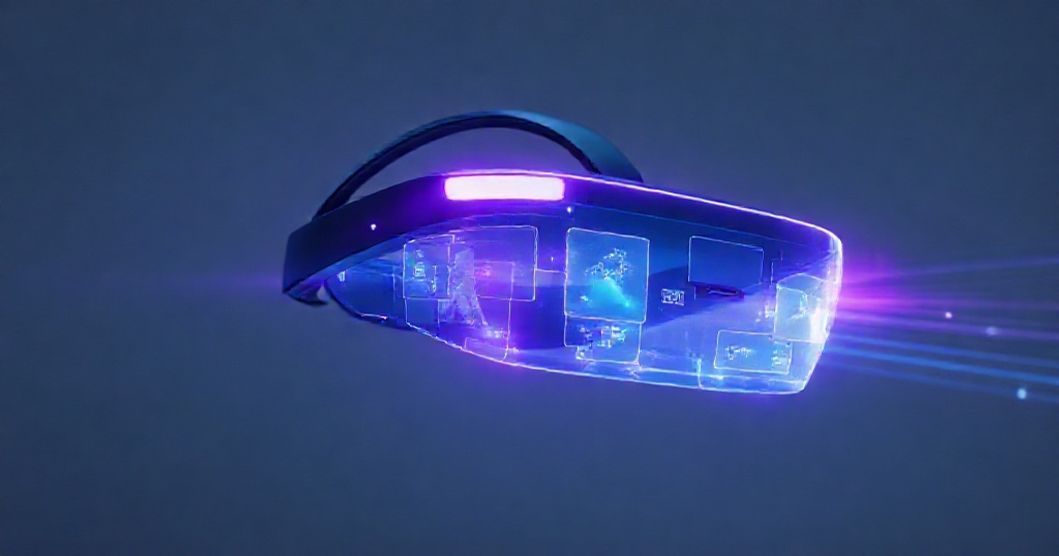
In a world constantly evolving with technological marvels, few innovations capture the imagination quite like Apple’s venture into spatial computing. The Apple Vision Pro is not just another gadget; it represents a bold leap into an immersive future, promising to transform how we interact with digital content and the world around us. Launched to significant anticipation, this groundbreaking device aims to blend the digital and physical realms seamlessly, offering an experience unlike anything seen before.
What is Spatial Computing?
At its core, the Apple Vision Pro introduces us to the concept of spatial computing. Unlike traditional virtual reality (VR) headsets that isolate users in a fully digital world, or augmented reality (AR) devices that overlay digital elements onto the real world, spatial computing with Vision Pro seeks a deeper integration. It allows digital content to exist and interact within your physical space, making it feel less like an overlay and more like an integral part of your environment. Imagine your favorite apps, movies, or even colleagues appearing as lifelike, resizable windows floating in your living room or office.
This paradigm shift means that your digital workspace can extend beyond the confines of a physical monitor, and entertainment can transcend the boundaries of a screen. It’s about breaking free from the limitations of two-dimensional displays and embracing a three-dimensional, interactive experience that responds intuitively to your presence and movements.
Key Technologies Powering the Vision Pro
To achieve this seamless blend, the Vision Pro is packed with an array of cutting-edge technologies:
Revolutionary Display System
- Micro-OLED Displays: Each eye sees more pixels than a 4K TV, delivering an astonishing 23 million pixels across two micro-OLED displays. This results in incredibly sharp text, vibrant colors, and stunning clarity, making digital content appear remarkably real.
- High Refresh Rate: Smooth motion and reduced latency contribute to a comfortable and fluid visual experience, minimizing motion sickness often associated with early VR devices.
Dual-Chip Performance
The Vision Pro is powered by a unique dual-chip architecture:
- M2 Chip: This powerful chip handles the core computing tasks, running visionOS, executing complex applications, and rendering graphics with incredible efficiency.
- R1 Chip: Specifically designed for real-time processing, the R1 chip handles input from 12 cameras, five sensors, and six microphones. It processes this data in just 12 milliseconds – eight times faster than a blink of an eye – ensuring a lag-free, real-time view of the world around you and instantaneous responsiveness to your interactions.
Intuitive Interaction Methods
Forget controllers; the Vision Pro offers a more natural way to interact:
- Eye Tracking: Simply looking at an icon or element highlights it, ready for selection.
- Hand Gestures: Pinching your fingers to select, scroll, or manipulate objects is remarkably intuitive.
- Voice Commands: Siri integration allows for hands-free control and dictation, further enhancing the natural interaction.
Immersive Audio and Passthrough Capabilities
- Spatial Audio: Custom-designed audio pods precisely deliver sound that adapts to your environment, making digital sounds appear to come from their virtual locations in your space.
- Eyesight: This innovative feature displays your eyes on the front of the device when someone approaches, allowing you to remain connected to people in your physical space. When you’re fully immersed, Eyesight visually indicates your focus, making interactions more intuitive for others.
- High-Resolution Passthrough: The Vision Pro uses high-resolution cameras to project a live video feed of your surroundings, allowing you to see your physical environment clearly while digital content is overlaid, making it feel less like a screen and more like a window.
User Experience and Applications
The potential applications of Vision Pro span various aspects of daily life:
- Entertainment: Watch movies in a personal cinema environment on a massive virtual screen, play immersive games that extend into your room, or relive memories through spatial photos and videos.
- Productivity: Create an infinite workspace with multiple virtual monitors, collaborate with colleagues in shared virtual environments, or conduct presentations with digital content floating around you.
- Communication: Engage in FaceTime calls where participants appear as lifelike “Personas” in your space, breaking down geographical barriers for more personal interactions.
- Education and Training: Experience interactive learning modules, explore historical sites virtually, or undergo realistic simulations for professional training.
The Road Ahead: Challenges and Opportunities
While the Apple Vision Pro is a marvel of engineering, it faces challenges. Its premium price point makes it inaccessible for many, and its design, while sleek, still requires users to wear a headset, which some may find cumbersome for extended periods. Furthermore, the success of any new platform heavily relies on developer adoption and the creation of compelling applications that truly leverage its unique capabilities.
Despite these hurdles, the Vision Pro represents a significant step towards a future where technology is woven more deeply and intuitively into our lives. It opens up new avenues for creativity, communication, and interaction that were once confined to science fiction. As developers begin to explore the vast possibilities of visionOS, we can expect to see an explosion of innovative applications that redefine what’s possible with spatial computing.
The Apple Vision Pro isn’t just a gadget; it’s a foundational piece of technology that offers a tantalizing glimpse into how we might live, work, and play in the years to come. Its arrival marks the beginning of an exciting new chapter in human-computer interaction, promising a future where our digital and physical worlds are more connected and immersive than ever before.