
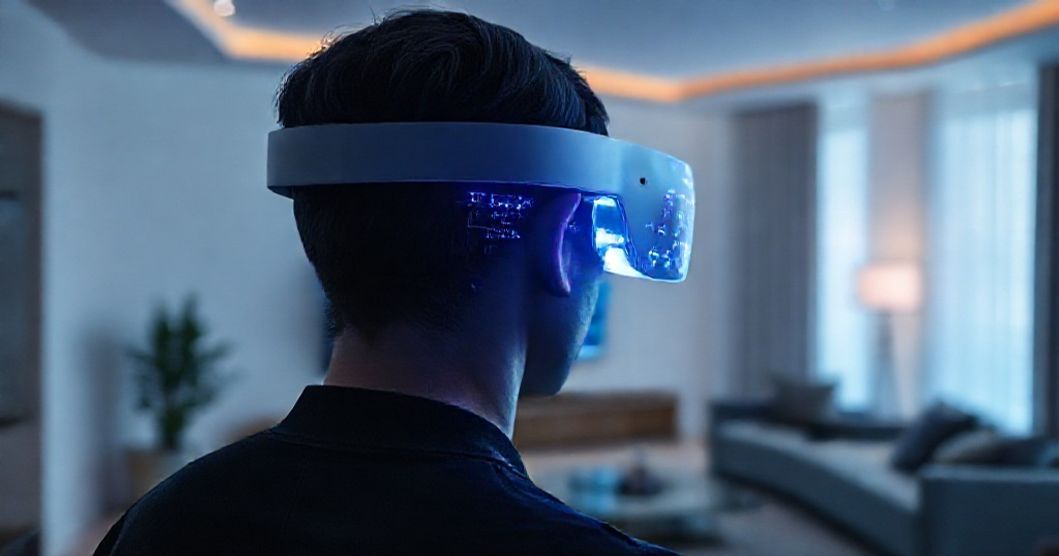
The world of technology is constantly evolving, pushing the boundaries of what we once thought possible. Among the most recent and groundbreaking innovations, Apple’s Vision Pro stands out as a pioneering device, heralding a new era of “spatial computing.” Far beyond a simple VR headset, the Vision Pro aims to seamlessly blend digital content with your physical space, transforming how we interact with technology, work, and entertain ourselves. This isn’t just another gadget; it’s a bold vision for the future of personal computing.
What is Apple Vision Pro?
At its core, the Apple Vision Pro is a revolutionary mixed-reality headset designed to merge the digital and physical worlds. Unlike traditional virtual reality (VR) headsets that isolate users in fully immersive digital environments, Vision Pro emphasizes augmented reality (AR) capabilities, allowing digital elements to appear as if they exist within your real-world surroundings. Apple refers to this paradigm as spatial computing, suggesting a shift from interacting with flat screens to engaging with three-dimensional interfaces that respond to your gaze, hand gestures, and voice commands.
Launched initially in the U.S., the device has sparked immense curiosity and discussion, setting a new benchmark for immersive experiences and human-computer interaction. It’s a testament to years of research and development, aiming to deliver an experience that feels intuitive, powerful, and deeply personal.
Key Innovations and Features
The Vision Pro is packed with cutting-edge technology that sets it apart from existing AR/VR solutions:
- VisionOS: The Spatial Operating System: This entirely new operating system is built from the ground up for spatial computing. It allows apps to appear in your physical space, scale to any size, and interact with light and shadows realistically. This creates a truly immersive and natural user interface.
- Stunning Displays: Vision Pro boasts two micro-OLED displays, each no larger than a postage stamp, yet packing an astonishing 23 million pixels – more than a 4K TV for each eye. This delivers incredibly sharp text, vibrant colors, and an unparalleled visual fidelity for both digital content and passthrough video of your real environment.
- EyeSight: Connecting You to Others: A unique outward-facing display, EyeSight, intelligently reveals your eyes when someone approaches you, making you appear present and connected. When you’re fully immersed in an app, EyeSight shows a subtle visual cue to others, indicating you’re occupied. This thoughtful feature addresses a common social isolation critique of head-mounted devices.
- Intuitive Input System: Interaction with Vision Pro is remarkably natural. Users navigate by simply looking at elements, tapping their fingers together to select, and dictating with their voice. There are no controllers needed, making the experience feel direct and unencumbered.
- Dual-Chip Architecture (M2 and R1): The device is powered by two formidable Apple silicon chips. The M2 chip handles the core computing, while the brand-new R1 chip processes input from 12 cameras, five sensors, and six microphones, ensuring ultra-low latency. This dedicated processing power virtually eliminates motion sickness and makes the passthrough video feel incredibly real-time.
User Experience and Potential Applications
Using the Apple Vision Pro is designed to be an experience unlike any other. Imagine having multiple large monitors for productivity floating around you in your living room, or watching a movie on a screen that feels 100 feet wide, all while remaining aware of your physical surroundings. The device promises to redefine entertainment, professional workflows, and communication.
Entertainment and Immersive Content
For entertainment, Vision Pro offers a personal movie theater experience, complete with spatial audio that makes sounds feel like they’re coming from the right direction within your environment. Gaming can take on new dimensions, and immersive educational content could transport students to historical events or distant galaxies.
Productivity and Collaboration
Professionals can leverage Vision Pro to create expansive virtual workspaces, collaborating on 3D models, reviewing complex data, or conducting virtual meetings with lifelike Persona representations of participants. Designers, architects, and engineers could visualize their creations in real-world scale, fostering a new level of creativity and efficiency.
Communication and Connection
FaceTime calls on Vision Pro introduce “spatial Persona” – realistic digital representations of users. This aims to make virtual interactions feel more personal and engaging, bringing people closer despite physical distances.
The Future of Spatial Computing
While the Apple Vision Pro carries a premium price tag and has some initial limitations, such as external battery pack reliance and device weight, its introduction marks a significant leap forward in wearable technology. It’s not just about a new product; it’s about establishing a new category of personal electronics that could fundamentally alter our relationship with digital information.
The Vision Pro lays the groundwork for a future where technology is less intrusive and more integrated into our lives, existing not just on screens but within our very environments. As developers begin to unlock its full potential, we can expect to see an explosion of innovative applications that tap into the unique capabilities of spatial computing, making our digital experiences more intuitive, immersive, and interconnected than ever before.
Apple’s entry into this space lends significant credibility and momentum to the mixed reality market. It challenges competitors to innovate further and pushes the entire industry towards a future where digital content seamlessly coexists with our physical world, promising a truly magical computing experience for generations to come.