
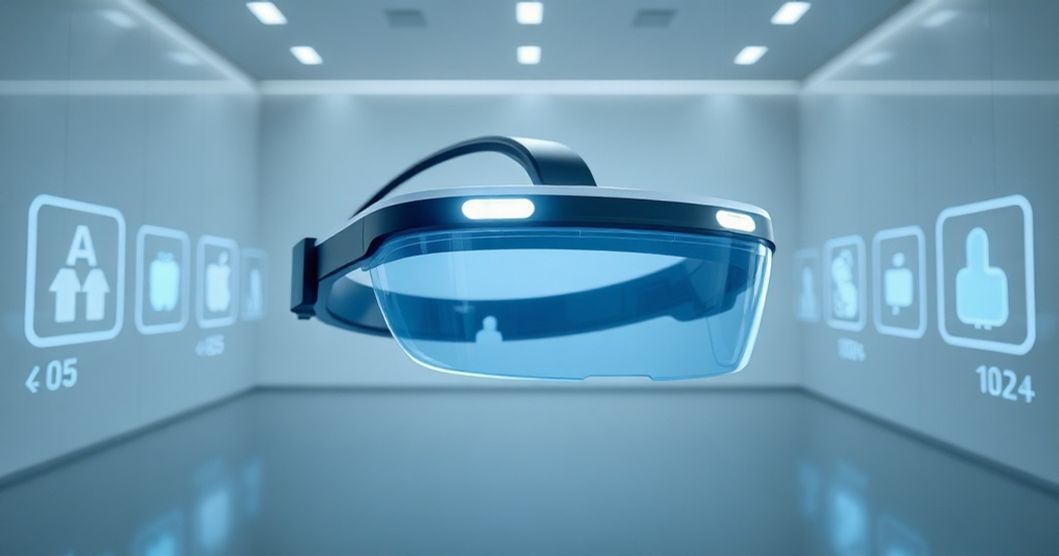
In the rapidly evolving landscape of technology, certain innovations emerge that promise to redefine our interaction with the digital world. The Apple Vision Pro, unveiled with much anticipation and recently released, stands as one such groundbreaking device. Dubbed Apple’s first “spatial computer,” it transcends traditional screens and devices, inviting users into an immersive environment where digital content seamlessly blends with their physical surroundings.
Far more than just another virtual reality headset, the Vision Pro represents a bold leap into what Apple terms “spatial computing.” This paradigm shift fundamentally alters how we perceive and engage with information, entertainment, and productivity tools. It’s not merely about wearing a device; it’s about stepping into an entirely new dimension of digital interaction.
Understanding Spatial Computing
At its core, spatial computing moves beyond the flat, two-dimensional interfaces we’ve grown accustomed to. Instead of looking at a screen, users look through the Vision Pro, interacting with apps and content that appear to exist in their physical space. Imagine a sprawling virtual desktop extending across your living room, or a movie screen that fills an entire wall, all while you remain fully present in your real-world environment.
This is achieved through a sophisticated blend of augmented reality (AR) and virtual reality (VR) technologies. While it can offer fully immersive VR experiences, its primary focus is on AR, layering digital elements onto your view of the real world. This approach aims to keep users connected to their surroundings, fostering a sense of presence that traditional VR often diminishes.
Key Features and Design Philosophy
The Apple Vision Pro is a marvel of engineering, packing an array of advanced technologies into a sleek, albeit somewhat substantial, form factor. Its standout features include:
- Dual Micro-OLED Displays: Each eye is treated to more pixels than a 4K TV, delivering incredibly sharp visuals and vibrant colors. This high fidelity is crucial for making digital content feel real.
- Eye and Hand Tracking: Interaction is remarkably intuitive. Users navigate and select by simply looking at elements and performing natural hand gestures, eliminating the need for traditional controllers.
- visionOS: A brand-new operating system built from the ground up for spatial computing. It provides a familiar yet revolutionary interface, designed for intuitive navigation in three dimensions.
- Powerful Chipset: Driven by both the M2 chip and the new R1 chip, the Vision Pro ensures seamless performance, processing input from its numerous cameras and sensors in real-time.
- Optic ID: A secure authentication system that uses iris recognition, akin to Face ID for spatial computing.
From a design perspective, Apple has strived for a premium feel. The device features a laminated glass front, an aluminum frame, and modular light seals to conform to different face shapes. While its weight has been a point of discussion, the intention is clear: to deliver an unparalleled visual and interactive experience.
A Glimpse into the User Experience
Interacting with the Vision Pro feels genuinely futuristic. Upon donning the device, the user’s surroundings are immediately visible, augmented by a gentle overlay of the visionOS interface. Apps don’t just open; they expand into your space. You can resize them, move them around, and even pin them to specific locations in your room. This creates an “infinite canvas” for productivity and creativity.
Watching movies on the Vision Pro is transformative, with environments that transport you to a private cinema or even the surface of the moon. For communication, FaceTime takes on a new dimension, using “spatial personas” that create realistic digital avatars, making video calls feel more personal and immersive than ever before.
Beyond Entertainment: Practical Applications
The potential applications of the Vision Pro extend far beyond media consumption:
- Productivity: Imagine multiple virtual monitors for work, eliminating the need for physical screens. Collaborate with colleagues in shared virtual spaces, no matter their physical location.
- Education: Immersive learning experiences, from dissecting virtual anatomy to exploring historical sites as if you were there.
- Healthcare: Surgeons could overlay patient data during operations, or medical students could practice complex procedures in a risk-free environment.
- Design and Architecture: Designers can visualize and interact with 3D models at true-to-life scale, streamlining the creation process.
Challenges and the Road Ahead
Despite its innovative prowess, the Apple Vision Pro faces several hurdles. Its initial price point of $3,499 positions it as a premium device, primarily targeting early adopters and professional users. The device’s weight and external battery pack also present comfort and portability considerations for extended use.
The success of any new computing platform hinges on its ecosystem. Developer adoption and the creation of compelling apps specifically designed for spatial computing will be crucial. While Apple has laid a robust foundation with visionOS, the breadth and depth of content will determine its long-term appeal.
Furthermore, the social acceptance of wearing such a device in public or even in group settings remains to be seen. Apple has attempted to address this with features like EyeSight, which subtly reveals the user’s eyes when others are nearby, but the social etiquette of spatial computing is still very much in its infancy.
The Future of Digital Interaction
The Apple Vision Pro is not just a gadget; it’s a foundational step towards a future where our digital lives are seamlessly integrated with our physical world. While the first iteration has its limitations, it offers an unprecedented look at what spatial computing can achieve. It signals a shift away from traditional screens towards a more natural, intuitive, and immersive way of interacting with technology.
As the technology matures, becomes lighter, more affordable, and boasts a richer application ecosystem, spatial computers like the Vision Pro could fundamentally alter how we work, learn, communicate, and entertain ourselves. It marks the beginning of a new chapter in personal technology, one where the boundaries between the digital and physical realms become increasingly blurred, ushering in an era of truly immersive digital experiences.