
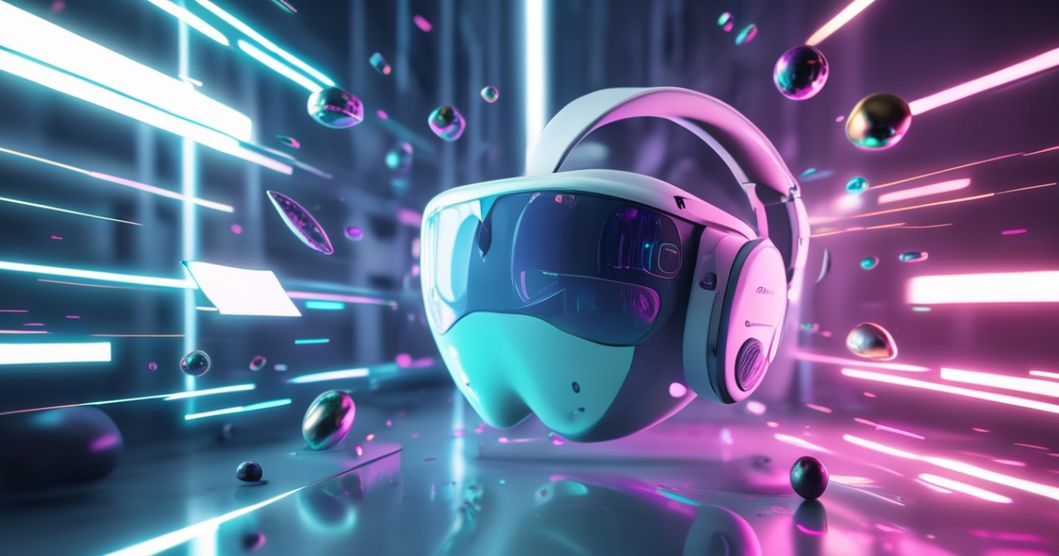
In a world constantly evolving with technological marvels, few innovations capture the imagination quite like Apple’s venture into spatial computing. The launch of the Apple Vision Pro marks a significant leap, promising to redefine how we interact with digital content and the physical world around us. Far from being just another gadget, it introduces us to a new paradigm, blending augmented reality (AR) and virtual reality (VR) into what Apple terms “spatial computing.” This isn’t merely about wearing a headset; it’s about seamlessly integrating digital experiences into our living spaces, creating an entirely new canvas for work, play, and connection.
What is Spatial Computing?
At its core, spatial computing refers to technology that allows digital objects and experiences to exist and interact within a three-dimensional physical environment. Unlike traditional computing, which is largely confined to 2D screens, spatial computing liberates information, letting it float, scale, and respond naturally within your personal space. The Vision Pro is designed to make digital content feel as present as physical objects, breaking down the barriers between the real and the virtual. Imagine your favorite app windows floating across your living room, or a virtual dinosaur stomping through your backyard – all seen through the lens of advanced optics and powerful processing.
Unpacking the Vision Pro: Core Technologies
The Vision Pro’s groundbreaking capabilities are built upon a foundation of meticulously engineered hardware and software. Apple has packed an impressive array of technology into this sleek device, pushing the boundaries of what’s possible in mixed reality.
Revolutionary Displays and Optics
The visual experience is paramount, and the Vision Pro delivers with custom micro-OLED displays that pack 23 million pixels across two screens, providing more pixels than a 4K TV for each eye. This results in stunning clarity and vibrant colors, making digital content appear incredibly lifelike. Coupled with advanced optical systems, the displays ensure a wide field of view and minimize motion sickness, a common challenge in earlier VR devices. The exterior features a unique “EyeSight” display, which projects the user’s eyes to external observers, maintaining a sense of presence and connection with the outside world.
Intuitive Interaction: Eyes, Hands, and Voice
One of the most radical departures from traditional interfaces is the Vision Pro’s interaction model. There’s no separate controller; instead, users navigate and interact purely with their eyes, hands, and voice. You simply look at an app icon to select it, tap your fingers together to activate, and use your voice for commands. This natural, intuitive approach aims to make the technology disappear, allowing users to focus on the content rather than the controls. The sophisticated eye-tracking sensors and high-resolution cameras work in tandem to precisely interpret user intent, offering an unparalleled level of immersion and ease of use.
Powering the Experience: M2 and R1 Chips
Driving this complex ecosystem are two powerful Apple silicon chips: the M2 chip, familiar from MacBooks, handles the primary processing, while the brand-new R1 chip is dedicated to processing input from the headset’s 12 cameras, five sensors, and six microphones. The R1 chip processes information in just 12 milliseconds – eight times faster than a blink of an eye – virtually eliminating lag and ensuring a seamless, real-time passthrough experience. This dual-chip architecture is crucial for delivering high-fidelity spatial experiences without compromise.
A New Realm of User Experience
The Vision Pro is poised to transform numerous aspects of our daily lives, from entertainment to productivity and communication.
Entertainment Redefined
Imagine watching movies on a screen that feels 100 feet wide, perfectly optimized for your environment, or stepping into immersive spatial videos that transport you to a different time and place. The Vision Pro offers an unparalleled cinematic experience, transforming any room into a personal theater. Gaming also gains a new dimension, with titles capable of interacting with your physical surroundings.
Productivity Beyond the Desk
For professionals, the Vision Pro promises to liberate workspaces. Users can create an infinite number of virtual displays, arranging apps and documents anywhere in their physical space. This multi-display setup can significantly enhance multitasking and collaboration, providing an expansive digital canvas that adapts to your needs, whether you’re working from a small apartment or a bustling office.
Connecting in New Ways
FaceTime calls on Vision Pro are reimagined as “spatial FaceTime,” where participants appear as lifelike Personas in your space. This innovative feature uses machine learning to create realistic digital representations of users, fostering a deeper sense of connection than traditional video calls. It blurs the lines between being physically together and communicating remotely.
Navigating the Hurdles and Hype
While the Vision Pro is undoubtedly a technological marvel, it’s not without its challenges. The initial price tag, starting at $3,499, places it firmly in the premium category, making it inaccessible for many. The external battery pack, while necessary for power, adds a tether that some might find restrictive. Comfort and weight also remain key considerations for extended use. Furthermore, the success of any new platform hinges on its content ecosystem, and while Apple has a strong track record, building a rich library of spatial apps and experiences will take time.
The Road Ahead for Spatial Computing
The Apple Vision Pro represents more than just a new gadget; it’s a bold statement about the future of computing. It’s an ambitious first step into a world where digital content is interwoven with our physical reality, creating new possibilities for interaction, creativity, and connection. While it may take time for spatial computing to become as ubiquitous as smartphones, the Vision Pro lays crucial groundwork, inviting developers and users alike to explore a world where the screen is no longer a window, but an open expanse that surrounds us. Its influence will undoubtedly ripple across industries, inspiring further innovation and shaping the next generation of human-computer interaction.