
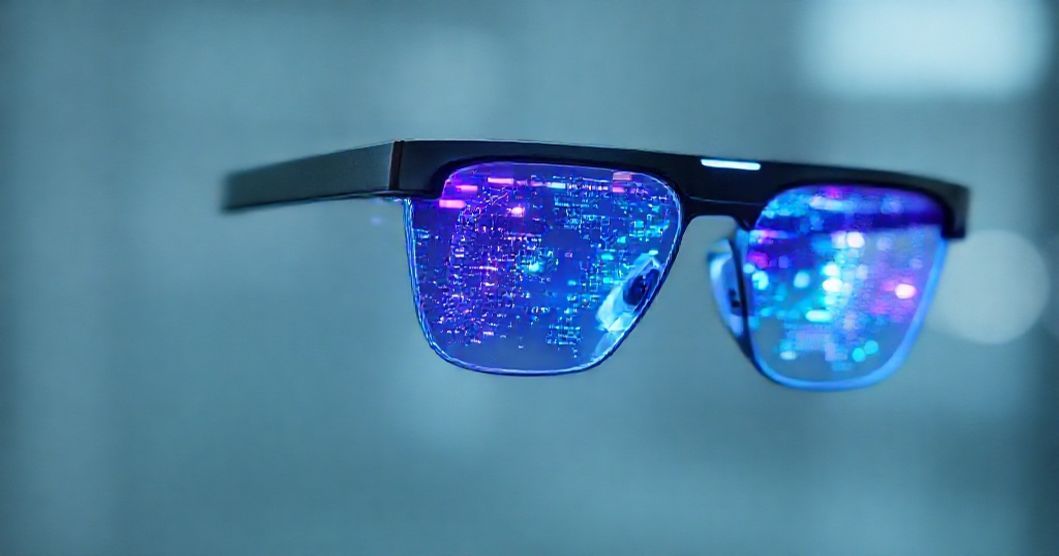
In a world increasingly dominated by screens, a new kind of wearable technology is emerging, promising to integrate digital intelligence more seamlessly into our everyday lives: AI-powered smart glasses. Far from the clunky prototypes of yesteryear, these sleek devices are subtly blending advanced artificial intelligence with fashionable eyewear, offering a hands-free portal to information, communication, and content creation. They represent a significant leap in wearable tech, aiming to enhance our perception and interaction with the world without demanding our constant attention.
The vision is simple yet profound: to augment human capabilities through intuitive, discreet technology. Imagine having a personal assistant, a camera, and a communication device all wrapped into a stylish pair of spectacles. This isn’t science fiction anymore; it’s a rapidly evolving reality that’s beginning to redefine what a “screen” can be.
What Exactly Are AI-Powered Smart Glasses?
At their core, AI-powered smart glasses are conventional eyeglasses embedded with sophisticated miniature electronics, including cameras, microphones, speakers, and, crucially, artificial intelligence processors. Unlike bulky virtual reality (VR) or augmented reality (AR) headsets that aim to immerse users in entirely digital or overlaid environments, most current smart glasses prioritize discreet functionality. They focus on audio-first interactions, voice commands, and subtle visual cues, making them an extension of your smartphone rather than a replacement for it.
These devices are designed for convenience and integration. They allow users to stay connected, capture moments, and access information without ever needing to pull out a phone. This “always-on, always-ready” approach is what truly sets them apart, moving technology from our pockets to our faces in a more natural, less intrusive way.
Key Features Redefining Interaction
The capabilities packed into these seemingly ordinary frames are impressive and varied, pushing the boundaries of what wearable technology can achieve:
- Hands-Free Capture: Integrated cameras allow users to snap photos and record videos from a first-person perspective, capturing life’s moments exactly as they see them. This is a game-changer for content creators, adventurers, and anyone wanting to document experiences authentically.
- Immersive Audio: Open-ear audio technology delivers rich sound directly to your ears while still allowing you to hear your surroundings. This means private calls, music, podcasts, or even audio navigation without blocking out the world.
- Voice-Activated AI Assistance: With built-in microphones and AI, users can ask questions, get real-time information, send messages, or even control smart home devices using natural language commands. This transforms your glasses into a proactive digital assistant.
- Real-time Information & Translation: Some advanced models offer nascent augmented reality overlays, providing turn-by-turn directions, identifying objects, or even translating languages in real-time, displaying text directly on the lens. While this is still an emerging feature, its potential is immense.
- Seamless Connectivity: They connect wirelessly to your smartphone, enabling access to your apps, contacts, and notifications, ensuring you’re always connected without being tethered to a screen.
Transforming Daily Life and Experiences
The implications of AI smart glasses extend far beyond mere convenience. They have the potential to subtly but significantly alter how we interact with the digital and physical worlds:
Enhanced Communication
Imagine having a conversation with someone in a foreign country and seeing real-time translations appear subtly in your field of vision, or taking a call without fumbling for your phone. Smart glasses make communication more fluid and less disruptive.
Effortless Content Creation
For vloggers, journalists, or even just parents wanting to capture precious family moments, the ability to record video from a true first-person perspective offers unparalleled authenticity and ease. No more missed shots because you were busy holding a camera.
Augmented Learning and Travel
Travelers could receive discreet historical facts about landmarks as they look at them, or learners could get contextual information about objects they’re studying. The world becomes an interactive textbook.
Accessibility Innovations
For individuals with disabilities, smart glasses offer incredible potential. Visual cues for the hearing impaired, audio descriptions for the visually impaired, or real-time assistance for those with cognitive challenges could be revolutionary.
The Technology Under the Hood
Achieving this level of integration requires incredible engineering. Miniaturization is key, fitting powerful processors, high-resolution cameras, multiple microphones, and speakers into lightweight frames. Battery life remains a significant challenge, as these devices must last for a full day of use. Advanced AI algorithms process data on-device or leverage cloud computing for more complex tasks, balancing performance with power consumption and privacy.
Challenges and the Road Ahead
Despite their promise, AI smart glasses face hurdles. Privacy concerns are paramount; the idea of someone discreetly recording in public spaces raises ethical questions. Social acceptance is another factor; people are still getting used to the idea of “always-on” cameras. Battery life needs further improvement, and the display technology for true, pervasive augmented reality overlays is still developing. Manufacturers are actively working on these issues, iterating rapidly to refine the user experience and address societal impacts.
As AI continues to advance and components become even smaller and more efficient, smart glasses are poised to become an indispensable part of our technological ecosystem. They promise a future where technology is less of a distraction and more of an intuitive extension of ourselves, offering a new lens through which to experience and interact with the world.