
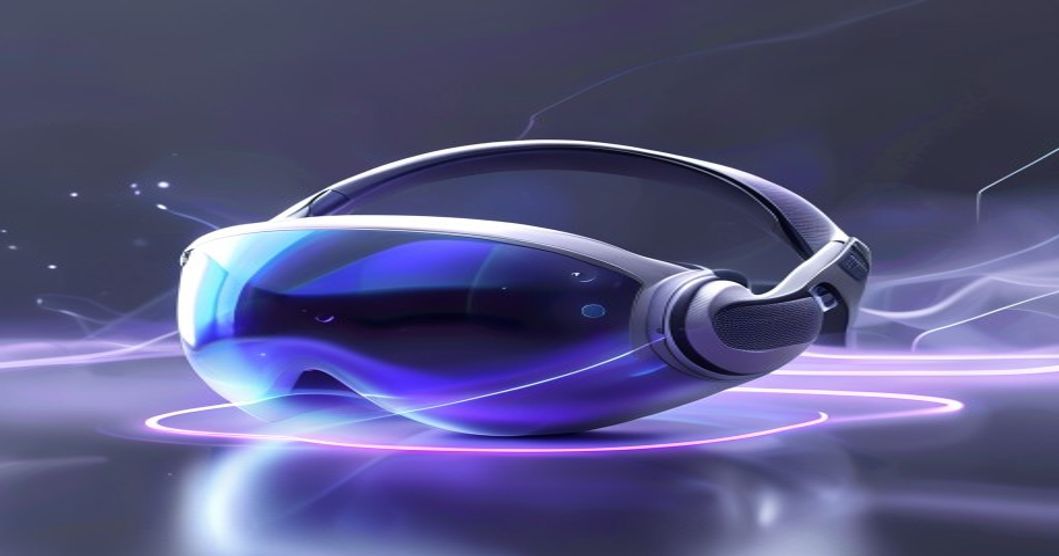
The world of technology is constantly evolving, pushing the boundaries of what we once thought possible. Among the most talked-about recent innovations, the Apple Vision Pro stands out as a pioneering step into the realm of spatial computing. It’s not just another gadget; it’s a bold vision for how we might interact with digital content and each other within our physical environments. This groundbreaking device promises to redefine everything from how we work and play to how we connect with others, merging the digital and physical worlds in ways previously confined to science fiction.
Defining Spatial Computing
Before diving into the specifics of the Vision Pro, it’s crucial to understand what spatial computing entails. Unlike traditional virtual reality (VR) which fully immerses you in a digital world, or augmented reality (AR) which overlays digital information onto your real-world view, spatial computing aims for a seamless blend. It’s about designing and interacting with digital content that understands and responds to the three-dimensional space around you. The Apple Vision Pro positions itself at the forefront of this evolution, offering a “mixed reality” experience where digital objects appear to coexist with your physical surroundings, maintaining a sense of presence in both worlds simultaneously.
At the Core: The Apple Vision Pro Experience
Apple has engineered the Vision Pro with a focus on delivering an unparalleled user experience, leveraging sophisticated hardware and a dedicated operating system.
Revolutionary Display Technology
Central to the Vision Pro’s immersive capabilities are its cutting-edge displays. Each eye is treated to a micro-OLED display, packing more pixels than a 4K TV into an area the size of a postage stamp. This results in an astonishingly sharp, vibrant, and lifelike visual fidelity that makes digital content feel truly present in your space. The incredibly high pixel density virtually eliminates the “screen door effect” often associated with earlier VR headsets, providing a crystal-clear window into the digital realm.
Intuitive Interaction: Eyes, Hands, Voice
One of the most remarkable aspects of the Vision Pro is its natural and intuitive interface. There are no controllers to hold; instead, you navigate and interact using your eyes, hands, and voice. Eye-tracking technology allows you to simply look at an app icon or an interface element to select it. A subtle pinch gesture with your fingers acts as a click, while voice commands via Siri handle more complex requests. This direct and effortless interaction method makes the technology fade into the background, allowing users to focus on the content itself rather than the mechanics of interaction.
VisionOS: The Operating System of the Future
Powering this innovative experience is visionOS, Apple’s first spatial operating system. Built on the foundations of macOS, iOS, and iPadOS, visionOS is designed from the ground up for spatial computing. It allows applications to exist side-by-side in your physical space, scale to any size, and be positioned anywhere you desire. The system intelligently blends digital content with your environment, adjusting lighting and shadows to make virtual objects feel truly integrated. This creates a flexible and personal canvas for productivity, entertainment, and communication.
Transforming Everyday Realities
The implications of the Apple Vision Pro and spatial computing are vast, promising to reshape various aspects of our daily lives.
Productivity Reimagined
Imagine your desk extending infinitely, with multiple virtual monitors floating around you, accessible just by looking. The Vision Pro offers an expansive workspace that transcends the limitations of physical screens. Professionals can collaborate on 3D models, review documents, or manage complex projects with unprecedented spatial awareness. It can transform any room into a personalized, limitless office, enhancing focus and efficiency for remote and hybrid work models.
Entertainment and Immersive Storytelling
For entertainment, the Vision Pro is nothing short of a personal cinema. Users can watch movies and TV shows on a screen that feels 100 feet wide, complete with spatial audio that makes sound appear to come from its source in the virtual environment. It also opens up new avenues for immersive storytelling, allowing users to step inside films, games, and interactive experiences, blurring the lines between observer and participant.
Connecting in New Dimensions
Communication also receives a significant upgrade. Through “Personas,” the Vision Pro creates a lifelike digital representation of you, capturing your facial expressions and hand movements in real-time. This allows for more engaging and personal FaceTime calls, where participants feel like they are sharing the same physical space, even when miles apart. It’s a step towards more humanistic digital interactions.
Challenges and the Horizon
While the Apple Vision Pro represents a monumental leap, it’s not without its challenges. The initial price point places it firmly in the premium category, making it inaccessible to many. Factors like weight, battery life (especially when untethered), and the comfort of extended wear are areas where future iterations will likely see significant improvements. Furthermore, the success of any new platform hinges on its content ecosystem, and while Apple has a strong start, the full potential will be realized as developers create more compelling spatial experiences.
Despite these initial hurdles, the Vision Pro paves a clear path forward for spatial computing. It’s a powerful testament to technological ingenuity, offering a glimpse into a future where our digital lives seamlessly merge with our physical one. As the technology matures and becomes more refined and accessible, we can anticipate a world where the boundaries between reality and the digital realm become increasingly fluid, fundamentally changing how we interact with information and each other.