
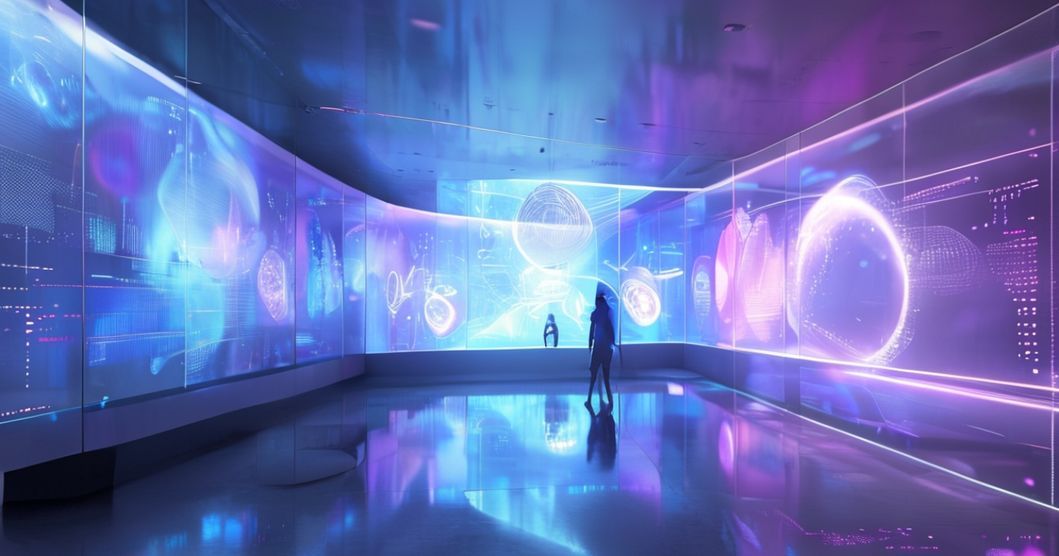
Imagine a world where your television screen is a seamless pane of glass, revealing the wall behind it when off, or where your car’s windshield doubles as an interactive display, projecting navigation and alerts directly into your field of vision. This isn’t just a scene from a science fiction movie anymore; it’s the rapidly emerging reality of transparent display technology. These innovative screens are poised to revolutionize how we interact with information and our environment, blending digital content with the physical world in ways previously unimaginable.
From smart homes to automotive design and retail, transparent displays are no longer a distant dream but a tangible innovation making its way into our daily lives. This article delves into what these captivating displays are, how they work, their current applications, and the exciting future they promise.
What Exactly Are Transparent Displays?
At its core, a transparent display is a screen that allows light to pass through it, enabling users to see what’s behind the display while simultaneously viewing digital content projected onto its surface. Unlike traditional opaque screens, which block vision, transparent displays offer a unique blend of functionality and aesthetic appeal, providing both information and an unobstructed view.
The magic behind this technology primarily lies in advanced panel designs, most notably leveraging OLED (Organic Light-Emitting Diode) and MicroLED technologies. These self-emissive display types do not require a separate backlight unit, unlike traditional LCDs. This inherent characteristic allows for the creation of pixels that can be made largely transparent when not emitting light, or even designed with microscopic gaps between light-emitting elements, creating the illusion of a clear pane.
The Core Technology: OLED and MicroLED
In transparent OLEDs, individual pixels can be turned on or off with incredible precision. When a pixel is off, it becomes transparent, allowing you to see through the screen. When it’s on, it emits light to form an image. This selective illumination is crucial for achieving high transparency levels. Similarly, MicroLED technology, which uses microscopic LEDs, offers tremendous potential for transparent displays due to its high brightness, energy efficiency, and scalability, allowing for more light to pass between the tiny LED elements.
Current Applications and Early Adopters
While still in its nascent stages for widespread consumer adoption, transparent display technology is already finding its niche in several exciting areas, showcasing its immense potential.
- Consumer Electronics: Perhaps the most buzz-worthy example is LG’s Signature OLED T, unveiled at CES 2024. This groundbreaking television transforms from a sleek, transparent panel into a vibrant 4K OLED screen at the touch of a button. It serves as a true design statement, integrating seamlessly into any living space by making the “black box” TV disappear when not in use.
- Automotive Industry: Transparent displays are revolutionizing car interiors. Imagine windshields acting as augmented reality (AR) heads-up displays (HUDs), projecting navigation directions, speed, and safety alerts directly onto the road ahead, without obstructing the driver’s view. This enhances safety and provides a futuristic driving experience.
- Retail and Advertising: High-end retail stores are employing transparent OLED screens for captivating product displays. These screens can overlay digital information, promotions, or engaging visuals onto physical products, creating an immersive and dynamic shopping experience. Store windows themselves can become interactive digital billboards.
- Architecture and Interior Design: Architects are exploring transparent displays for smart windows and dynamic partitions in modern buildings. These can switch between transparent and opaque states, display environmental data, or even project ambient lighting patterns, transforming spaces with unparalleled flexibility.
The Road Ahead: Future Innovations
The potential applications for transparent displays extend far beyond current implementations. We can anticipate a future where our environments are fluid and interactive:
- Interactive Surfaces Everywhere: Every glass surface – from mirrors to tabletops – could potentially become an interactive display, offering information, entertainment, or control over smart home devices.
- Enhanced Augmented Reality: Transparent displays could provide a more seamless and less obtrusive way to experience augmented reality, layering digital content onto our direct view of the world without requiring bulky headsets.
- Dynamic Public Spaces: Imagine bus stops with transparent screens displaying real-time schedules and local information, or museum exhibits that overlay historical context directly onto artifacts.
Challenges and Considerations
Despite their dazzling promise, transparent displays face several hurdles before widespread adoption. Cost remains a significant barrier, as the advanced manufacturing processes for transparent OLED and MicroLED panels are complex and expensive. Brightness and contrast are also critical; ensuring content remains easily visible against varying backgrounds and ambient light conditions is a technical challenge. Furthermore, power efficiency for large transparent surfaces and the overall durability of these sophisticated panels require continuous improvement.
The “content visibility” paradox is another interesting challenge: what happens when the background behind the display is cluttered or distracting? Designers and content creators will need to innovate to create experiences that are visually compelling without being overwhelming.
Transforming Our World, One Clear Screen at a Time
Transparent display technology is more than just a novelty; it represents a significant leap in how we integrate digital information into our physical spaces. By dissolving the traditional boundaries of screens, these innovations offer a more intuitive, aesthetic, and functional way to interact with technology. As manufacturing processes mature, costs decrease, and technical challenges are overcome, we can expect transparent displays to become an increasingly common and transformative element in our homes, vehicles, workplaces, and public environments.
The future is looking remarkably clear, and it’s filled with screens that reveal as much as they display.