
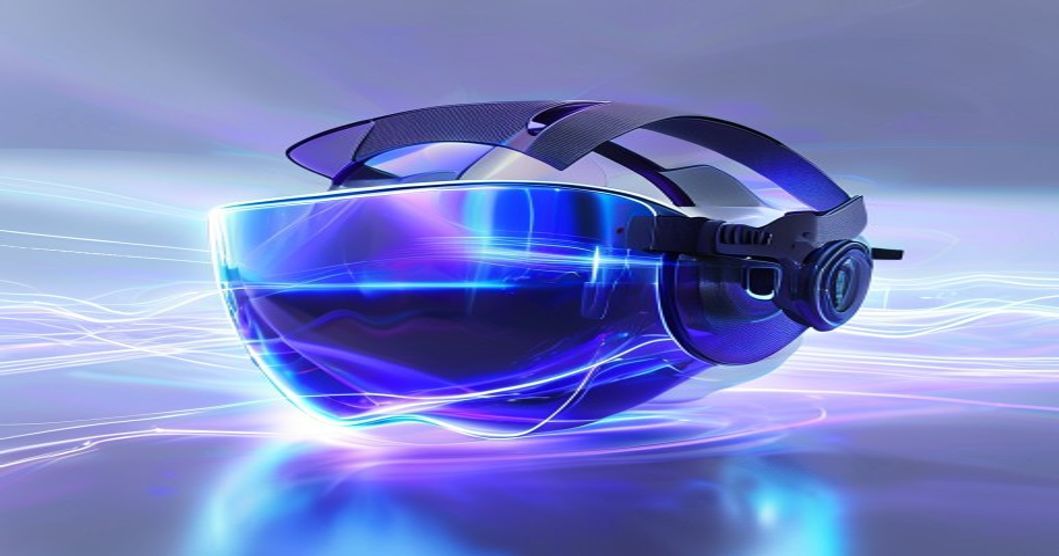
In the rapidly evolving landscape of technology, every few years, a product emerges that promises to redefine our interaction with the digital world. The Apple Vision Pro is precisely that kind of innovation. Billed not just as an augmented reality (AR) or virtual reality (VR) headset, but as a “spatial computer,” this groundbreaking device from Apple aims to seamlessly blend digital content with the physical world, offering an experience that transcends traditional screens and interfaces. It represents a significant leap forward, potentially charting the course for the next generation of personal computing.
For decades, our digital lives have been confined to flat screens – phones, tablets, and monitors. Spatial computing seeks to liberate us from these boundaries, allowing digital information to exist and interact within our real-world environment. The Vision Pro is Apple’s ambitious entry into this frontier, promising an intuitive and immersive way to work, play, communicate, and create.
What Exactly is Spatial Computing?
Spatial computing is a paradigm shift where digital content is integrated into three-dimensional space, allowing users to interact with it as if it were physically present. Unlike traditional computing, which is largely two-dimensional, spatial computing acknowledges and utilizes the depth and context of our physical surroundings. Think of it as your computer screen, apps, and even videos floating around you, anchored in your environment, rather than being confined to a device in your hand or on your desk.
The Vision Pro enables this by overlaying digital information onto your view of the real world (augmented reality) or by creating entirely new digital environments (virtual reality). This blending allows for novel interactions, from having multiple app windows floating around your living room to collaborating with colleagues in a shared virtual space, all while maintaining a sense of presence in your physical surroundings.
Apple Vision Pro: A Closer Look at the Device
The Apple Vision Pro is a marvel of engineering, packed with cutting-edge technology designed to deliver an unparalleled spatial computing experience.
Design and Comfort
Crafted with Apple’s signature attention to detail, the Vision Pro features a sleek, sophisticated design. It combines a laminated glass front with an aluminum alloy frame. The modular design allows for a personalized fit, with a Light Seal that conforms to the user’s face and interchangeable head bands for comfort during extended use. The battery pack is external, connected by a cable, which helps reduce the weight on the user’s head, though it introduces another tether.
Revolutionary Display and Optics
At the heart of the Vision Pro’s immersive experience are its micro-OLED displays. Each eye gets more pixels than a 4K TV, totaling 23 million pixels across two displays. This delivers astonishing clarity and vibrant colors, making digital content look incredibly lifelike. Custom-built three-element lenses provide sharpness and consistency across the entire field of view, while an advanced eye-tracking system ensures precise interaction and optical correction for users with vision impairments through custom-made ZEISS Optical Inserts.
Intuitive Interaction and Control
One of the most praised aspects of the Vision Pro is its natural and intuitive interface. Apple has eliminated traditional controllers, opting for a system controlled by the user’s eyes, hands, and voice. Simply look at an app icon to select it, tap your fingers together to click, and use your voice to dictate text or issue commands. This “eyes, hands, and voice” input system makes interaction feel seamless and almost magical, allowing users to focus on the content rather than the controls.
VisionOS: The Spatial Operating System
Powering this innovative hardware is VisionOS, a new operating system built from the ground up for spatial computing. VisionOS integrates familiar elements of macOS, iOS, and iPadOS, but re-imagines them for a three-dimensional interface. It allows apps to scale and float freely in space, maintaining a persistent presence even as you move around. This operating system intelligently blends digital objects with your environment, handling spatial audio, haptics, and rendering to create a truly integrated experience.
Key Features and Applications
- Productivity: Transform any space into a personalized workspace with multiple floating displays for documents, browsers, and communication apps.
- Entertainment: Enjoy movies and TV shows on a massive virtual screen with spatial audio, creating a personal cinema experience. Engage with immersive 3D content and games.
- Communication: Connect with others via FaceTime, where participants appear as “spatial personas,” creating a more engaging and present video call experience.
- Photography and Videography: Relive memories captured in “Spatial Photos and Videos,” which offer a new dimension to personal media.
Transforming Industries with Spatial Computing
The implications of the Apple Vision Pro extend far beyond personal use, promising to revolutionize various sectors:
- Healthcare: Surgeons can visualize patient data in 3D during operations, medical students can perform virtual dissections, and therapists can conduct immersive rehabilitation sessions.
- Education: Students can explore historical sites in 3D, conduct virtual experiments, or dissect virtual anatomy, making learning more engaging and interactive.
- Design and Engineering: Architects can walk through their building designs, engineers can collaborate on 3D models in real-time, and product designers can prototype virtually.
- Retail: Consumers can virtually try on clothes, visualize furniture in their homes, or interact with product demonstrations in a new way.
Challenges and the Road Ahead
Despite its revolutionary potential, the Vision Pro faces certain challenges. Its premium price point makes it inaccessible for many, positioning it as a niche product for early adopters and enterprise use initially. Battery life, currently around two hours for the external pack, requires further improvement for extended untethered use. User comfort over long periods and the social acceptance of wearing such a device in public are also factors that will influence widespread adoption.
The development of a robust ecosystem of apps and content will be crucial for the Vision Pro’s long-term success. While Apple has laid a strong foundation with VisionOS, third-party developers will play a vital role in unlocking the full potential of spatial computing.
The Future is Spatial
The Apple Vision Pro marks a pivotal moment in technology. It’s not just a new gadget; it’s a bold vision for how we might interact with computers and digital information in the coming decades. By seamlessly merging the digital with the physical, it offers a glimpse into a future where technology is no longer confined to screens but becomes an integral, immersive part of our everyday environment. While its journey has just begun, the Vision Pro has certainly opened a new chapter, inviting us all to imagine the possibilities of a truly spatial world.