
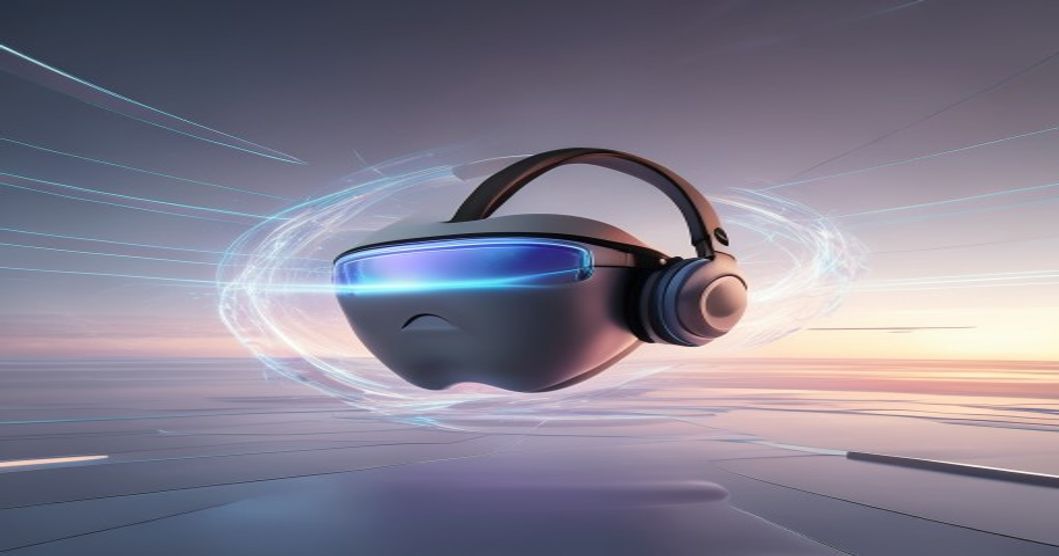
The world of technology is constantly pushing boundaries, and few innovations have captured public imagination recently quite like the Apple Vision Pro. Unveiled as Apple’s foray into “spatial computing,” this groundbreaking device promises to blend digital content with the physical world in an unprecedented way, moving beyond traditional screens to offer an immersive, intuitive experience. It’s not just an AR/VR headset; it represents a significant leap towards a future where our digital lives seamlessly integrate with our real-world surroundings.
A New Reality: What is Apple Vision Pro?
At its core, the Apple Vision Pro is a mixed-reality headset designed to allow users to interact with digital content as if it were physically present in their space. Apple prefers the term “spatial computing” over augmented or virtual reality, emphasizing its ambition to create an entirely new computing paradigm. This device isn’t about escaping reality; it’s about enhancing and interacting with it, offering a canvas where apps and entertainment exist all around you.
Unparalleled Visuals and Interaction
One of the most striking features of the Vision Pro is its display technology. It boasts a custom micro-OLED display system packing an astonishing 23 million pixels across two displays, delivering more pixels than a 4K TV for each eye. This creates an incredibly sharp and vibrant visual experience that makes digital content appear remarkably lifelike. Interaction is equally revolutionary, relying primarily on natural input methods:
- Eye Tracking: Users navigate simply by looking at elements.
- Hand Tracking: Gestures like pinching to select or scroll.
- Voice Control: For typing and issuing commands.
This intuitive control scheme aims to make the technology disappear, allowing users to focus on the content itself rather than the mechanics of interaction. The front glass also features an external display called EyeSight, which subtly reveals a user’s eyes when they are interacting with others in the room, and obscures them when fully immersed, enhancing social presence.
VisionOS: The Operating System for Spatial Computing
Powering this immersive experience is VisionOS, Apple’s dedicated spatial operating system. Built on the foundations of macOS, iOS, and iPadOS, it’s designed from the ground up to support the demands of spatial computing. VisionOS allows apps to break free from the confines of a flat screen, appearing as three-dimensional objects that can be resized, repositioned, and interacted with in your physical space. This means you can have multiple app windows open around you, watch a movie on a colossal virtual screen, or collaborate on 3D models with remarkable ease.
Powering the Experience: M2 and R1 Chips
Underneath its sleek exterior, the Vision Pro houses a formidable dual-chip architecture. The familiar Apple M2 chip provides the powerful standalone performance for VisionOS, running apps, processing graphics, and handling complex computations. Complementing this is the brand-new R1 chip, specifically engineered to process input from the device’s 12 cameras, five sensors, and six microphones. The R1’s primary role is to ensure that images and data are streamed to the displays within 12 milliseconds – eight times faster than a blink of an eye – virtually eliminating motion sickness and creating a truly seamless, real-time experience.
Beyond Entertainment: Diverse Applications
While the initial demos often highlight spectacular entertainment possibilities, the true potential of the Apple Vision Pro lies in its wide array of applications across various sectors.
Revolutionizing Work and Productivity
Imagine a workspace without limits. The Vision Pro allows users to create an infinite canvas, replacing physical monitors with virtual screens that can be scaled and arranged anywhere. This could transform remote work and collaborative environments. Professionals could:
- Work on multiple virtual displays simultaneously, enhancing multitasking.
- Collaborate on 3D designs or architectural models in a shared spatial environment.
- Conduct immersive video calls where participants appear as lifelike “Personas.”
This paradigm shift could make traditional desk setups feel restrictive, offering unparalleled flexibility and efficiency for creative and technical professionals.
Immersive Entertainment and Communication
For entertainment, the Vision Pro promises a personal cinema experience, allowing users to watch movies and TV shows on a screen that feels 100 feet wide, complete with spatial audio. Gaming also takes on a new dimension, with titles that can interact with the user’s physical environment. Furthermore, FaceTime calls become incredibly lifelike, using “Personas” – digital representations of users generated by advanced machine learning – that mimic facial expressions and hand gestures, bringing a new level of presence to virtual communication.
Expanding Horizons: Education and More
The educational sector stands to gain immensely from spatial computing. Students could explore historical sites, dissect virtual organs, or conduct complex science experiments in a safe, interactive environment. Similarly, training simulations for various industries, from healthcare to aerospace, could become far more realistic and effective. Its potential to visualize complex data in 3D also opens doors for scientific research and data analysis.
Navigating the New Frontier: Challenges and Future
As with any pioneering technology, the Vision Pro faces its share of challenges and considerations that will shape its adoption and evolution.
Price and Accessibility
With an initial price tag of $3,499, the Apple Vision Pro is clearly positioned as a premium device, targeting early adopters, developers, and enterprise users. This high cost limits its immediate mainstream accessibility, making it more of a professional tool or luxury item than a mass-market gadget at launch. Over time, as technology evolves and production scales, future iterations may become more affordable.
Design and Comfort Considerations
Despite its advanced technology, the Vision Pro’s design includes an external battery pack connected by a cable, a choice made to keep the headset itself lighter and more balanced. While innovative, managing an external battery and the overall weight of the device (approximately 600-650g depending on configuration) will be key factors for user comfort during extended use. Apple offers various light seals and head bands to customize fit, acknowledging the importance of ergonomics.
The Road Ahead for Spatial Computing
The Vision Pro is not just a product; it’s Apple’s bold statement about the future of computing. Its success will depend not only on its hardware prowess but also on the strength of its developer ecosystem. The richness of applications and experiences available will ultimately drive its utility and appeal. As more developers embrace VisionOS, the potential for truly transformative applications will multiply, pushing spatial computing into areas we can only begin to imagine.
The Apple Vision Pro marks a pivotal moment in technology, ushering in an era of spatial computing that promises to redefine how we interact with digital information and each other. While it stands at the beginning of its journey, its capabilities offer a tantalizing glimpse into a future where the lines between the digital and physical worlds become increasingly blurred, opening up boundless opportunities for innovation, productivity, and immersive experiences.