
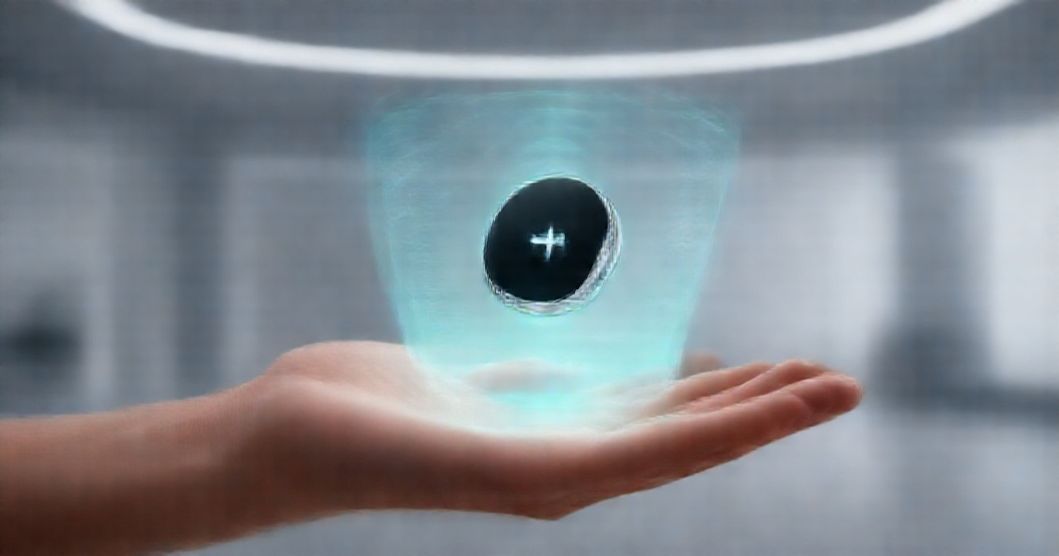
In a world increasingly dominated by screens, a new contender has emerged, striving to redefine our interaction with technology. The Humane AI Pin isn’t just another gadget; it’s a bold philosophical statement on the future of personal computing. Developed by former Apple executives Imran Chaudhri and Bethany Bongiorno, this device aims to free us from the constant gaze at our smartphones, ushering in an era of ambient, context-aware artificial intelligence. It represents a significant leap towards a screenless future, challenging conventional notions of what a personal device can be and do.
What is the Humane AI Pin?
The AI Pin is a small, standalone wearable device designed to clip onto clothing. Unlike smartwatches or smartphones, it lacks a traditional display. Instead, it leverages a combination of voice commands, gestures, and a unique laser-ink projection system that turns your palm into a temporary screen. It’s powered by an advanced AI assistant, integrating large language models (LLMs) to perform a myriad of tasks, from answering questions and composing messages to making calls and providing real-time translations. The device operates independently, meaning it doesn’t need to be tethered to a smartphone, a crucial differentiator that underscores its ambition to be a primary computing device.
Core Technologies and Design Philosophy
At its heart, the AI Pin is a marvel of miniaturization and integrated technology. It features a camera, microphones, speakers, and various sensors packed into its sleek, minimalist form factor. The device’s most distinctive feature is its “Laser Ink Display,” which projects monochrome text and graphics onto your hand, allowing for discreet interaction without pulling out a phone. This innovative approach is central to Humane’s vision of reducing screen time and fostering more present human interactions. Furthermore, it incorporates a “Trust Light,” an indicator that illuminates whenever the device’s camera or microphone is active, designed to address privacy concerns by making its data collection transparent to those around you.
How the AI Pin Aims to Change Interaction
The operational paradigm of the AI Pin is fundamentally different from what we’re accustomed to. Instead of tapping and swiping, interaction primarily occurs through:
- Voice Commands: A simple “Hey AI” or a tap-and-hold gesture activates the AI assistant, ready to respond to natural language queries.
- Gestures: Specific hand gestures can be used to navigate menus projected onto your palm, answer calls, or dismiss notifications.
- Touch: A touchpad on the device allows for basic navigation and activation.
- Laser Ink Projection: Essential information, such as messages, call details, or quick answers, is projected onto your palm, disappearing once you lower your hand.
This multi-modal interaction system is designed to be intuitive and unobtrusive, blending seamlessly into daily life. The goal is not just to provide information but to do so in a way that minimizes digital distraction, allowing users to stay engaged with their physical environment.
The Promise of a Screenless, Context-Aware Future
Humane posits that our reliance on smartphones has created a paradoxical situation: devices meant to connect us often isolate us, drawing our attention away from the present moment. The AI Pin seeks to reverse this trend by providing immediate, relevant information and assistance without the need to stare at a screen. Imagine receiving a summary of your day’s schedule, getting real-time translation during a conversation, or quickly composing a message, all without breaking eye contact or fumbling for a phone. The device’s ambient computing capabilities aim to understand your context – where you are, what you’re doing, and who you’re with – to offer proactive and truly helpful assistance.
Challenges and the Road Ahead
Despite its ambitious vision and innovative features, the Humane AI Pin faces significant hurdles. Early reviews have highlighted several areas for improvement:
- Performance Reliability: The AI’s responsiveness and accuracy have been inconsistent, leading to frustration for users expecting seamless interaction.
- Battery Life: As a standalone device, extended battery life is crucial, yet initial reports suggest it struggles to last a full day with regular use.
- Learning Curve: The entirely new interaction model requires users to adapt, which can be a barrier to adoption. Mastering gestures and voice commands takes time.
- Data Privacy and Security: While the Trust Light is a step towards transparency, the constant collection of contextual data raises broader questions about privacy, especially as the AI learns more about individual users.
- Cost and Subscription Model: The device itself carries a premium price tag, coupled with a monthly subscription required for cellular connectivity and AI services, which might deter potential buyers.
- Practicality of Projection: The palm projection works best in specific lighting conditions, limiting its utility in bright outdoor environments or dynamic settings.
These challenges underscore the complexity of launching a truly novel computing paradigm. The AI Pin isn’t merely a new product; it’s an attempt to create a new category, and with that comes the inevitable growing pains of pioneering technology.
A Glimpse into Ambient Computing’s Potential
The Humane AI Pin may not be perfect, but its existence is a powerful testament to the ongoing evolution of human-computer interaction. It represents a significant step towards ambient computing, where technology seamlessly integrates into our lives, providing assistance without demanding our full attention. Whether the AI Pin itself achieves widespread success remains to be seen, but its pioneering spirit and the discussions it has sparked are invaluable. It serves as an important experimental device, pushing the boundaries of what’s possible and paving the way for future innovations in wearable AI and screenless interfaces. The lessons learned from its development and user feedback will undoubtedly shape the next generation of intelligent, context-aware devices that promise to make technology a more natural, less intrusive part of our everyday existence.