
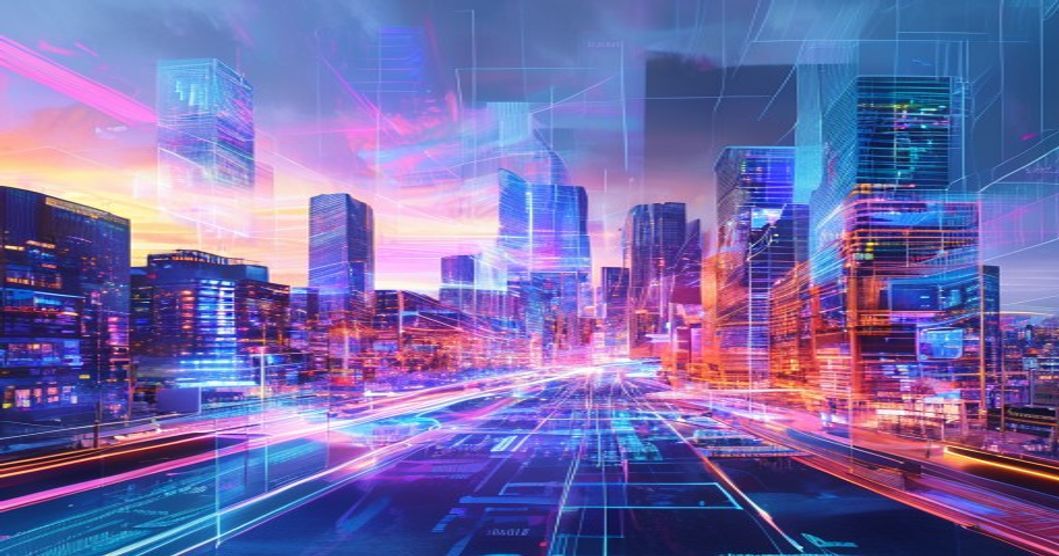
In the vast and ever-evolving landscape of technology, certain innovations emerge that promise to fundamentally redefine how we interact with digital information and the world around us. One such groundbreaking development making significant waves is spatial computing. Far more than just an upgrade to virtual or augmented reality, spatial computing represents a paradigm shift, aiming to seamlessly blend our physical and digital environments into a unified, interactive experience. It’s not just about viewing digital content; it’s about inhabiting it, manipulating it with natural gestures, and allowing digital elements to intelligently understand and react to our physical space.
Defining Spatial Computing: Beyond the Screen
At its core, spatial computing allows computers to understand and interact with the three-dimensional world, much like humans do. Instead of confining digital experiences to flat screens, it projects them into our physical space, making them tangible and interactive. This innovation is a significant leap beyond traditional graphical user interfaces (GUIs), extending your digital workspace into your living room, or transforming your gaming environment.
Unlike traditional virtual reality (VR), which transports users to entirely digital worlds, or augmented reality (AR), which merely overlays digital information, spatial computing seeks deeper integration. It enables digital objects to have persistence, interact with real-world physics, and respond contextually to their environment. Devices like the Apple Vision Pro are pioneering this frontier, demonstrating how complex digital interfaces can float in your room, be resized with a pinch, and respond to your gaze and hand movements.
The Core Technologies Powering This Revolution
The realization of spatial computing relies on a confluence of advanced technologies working in harmony, creating seamless and intuitive experiences.
Advanced Sensing and Mapping
- Lidar Scanners and Depth Sensors: These technologies accurately map physical spaces, understanding walls, furniture, and objects with precision. This is crucial for realistic placement and interaction of digital content.
- High-Resolution Cameras: Multiple cameras capture the real world, feeding visual data for “passthrough” video, allowing users to see their surroundings naturally while digital elements are overlaid.
Powerful Processors and Software Ecosystems
- Dedicated Spatial Processors: Specialized chips (e.g., Apple’s R1) process real-time sensor data with minimal latency, crucial for fluidity and preventing motion sickness. These work alongside powerful main processors (like the M2) for complex applications.
- Sophisticated Operating Systems: New operating systems are built to understand and operate within 3D space, managing digital objects and user interactions. They provide the framework for immersive application development.
Intuitive User Interfaces
- Eye Tracking: Users select and interact with digital elements simply by looking at them, reducing reliance on physical controllers.
- Hand Gestures: Pinching, swiping, and tapping in the air become primary navigation and interaction methods, making the experience more natural.
Transformative Applications Across Industries
The potential applications of spatial computing are vast, promising to reshape numerous sectors.
Revolutionizing Productivity and Work
Imagine a boundless workspace with multiple virtual monitors, or collaborating with colleagues in shared digital environments. Spatial computing liberates professionals in design, engineering, and architecture from physical screen constraints, offering unparalleled flexibility for reviewing 3D models and blueprints.
Immersive Entertainment and Gaming
For gamers and entertainment enthusiasts, spatial computing opens new frontiers. Games can extend into your physical space, or transport you to hyper-realistic digital worlds. Movies and shows can be viewed on screens of any size, seemingly floating in your room, delivering a truly cinematic personal experience.
Enhancing Education and Training
Educational institutions can create interactive simulations, allowing students to explore complex anatomical structures or conduct virtual experiments. Training programs, particularly in hands-on fields, become safer, more accessible, and highly effective through realistic simulations.
Advances in Healthcare
In healthcare, spatial computing holds immense promise. Surgeons could overlay patient data directly onto their field of view during operations. Therapists could use immersive environments for pain management or rehabilitation, offering innovative approaches to patient care.
Navigating the Challenges Ahead
Despite its revolutionary potential, spatial computing faces several hurdles for widespread adoption.
Cost and Accessibility
Pioneering spatial computing devices currently carry a premium price tag. While prices are expected to decrease as technology matures, widespread affordability will take time.
Comfort and Ergonomics
Wearing a headset for extended periods can be uncomfortable or cause eye strain. Future iterations must prioritize lighter designs, improved weight distribution, and enhanced visual comfort.
Privacy and Data Security
Devices mapping environments and tracking user movements collect unprecedented personal data. Robust privacy protocols and transparent data handling policies are critical to building trust and ensuring security.
Content Development and Ecosystem
The success of any new platform hinges on a rich ecosystem of applications. Developers need time and tools to create compelling experiences that fully leverage spatial computing’s unique capabilities.
The Future is Three-Dimensional
Spatial computing is not merely a passing trend; it represents a fundamental shift in human-computer interaction. As the technology evolves, we can anticipate more compact and powerful devices, increasingly natural interactions, and an expanding universe of applications. The initial steps demonstrate a compelling vision where the digital world no longer lives behind a screen but intertwines seamlessly with our physical reality. This innovative leap promises to unlock new forms of creativity, productivity, and connection, ushering in an era where our digital tools are as intuitive and present as the objects around us.