
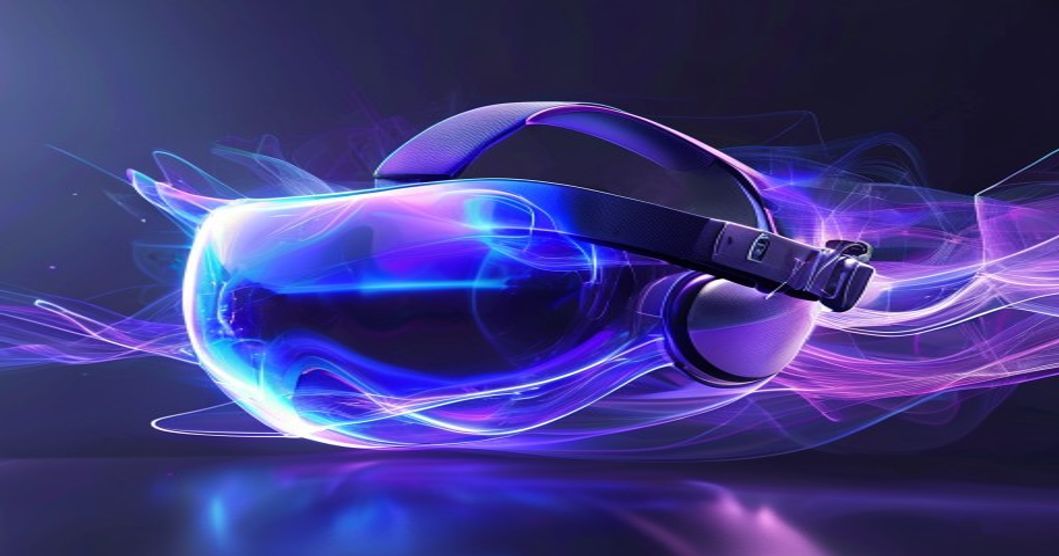
In a world increasingly defined by digital interfaces, Apple has once again pushed the boundaries of what’s possible with the introduction of the Apple Vision Pro. Heralded as a revolutionary “spatial computer,” this device doesn’t just present information; it integrates digital content seamlessly into your physical space, offering a truly immersive experience that blurs the lines between the real and virtual worlds. It’s a bold step into a future where technology doesn’t just live on a screen but surrounds us, ready to interact in three dimensions.
What is Spatial Computing?
At its core, the Vision Pro introduces us to the era of spatial computing. Unlike traditional computers that operate on a flat screen, spatial computing allows applications and content to exist in the three-dimensional space around you. Imagine working on multiple monitors that float effortlessly in your living room, or watching a movie on a screen that feels as vast as a cinema, all while still being aware of your physical surroundings. This isn’t just augmented reality (AR) or virtual reality (VR); it’s a sophisticated blend that allows for unparalleled interaction with digital elements within your personal environment.
Key Innovations and Features
The Vision Pro is packed with groundbreaking technology designed to deliver its unique spatial computing experience. Each component works in harmony to create a device that is both powerful and intuitive.
VisionOS and Intuitive Controls
Powering this marvel is VisionOS, Apple’s first spatial operating system. It’s built on the foundations of iOS, iPadOS, and macOS, ensuring a familiar yet entirely new user experience. Navigation is revolutionary: you simply look at an app icon or element to select it, then pinch your fingers to click. There are no controllers needed, making interaction feel incredibly natural and direct. Optic ID, an iris-based authentication system, ensures secure and private access, similar to Face ID on other Apple devices.
Stunning Visuals with Micro-OLED Displays
At the heart of the immersive visual experience are two custom micro-OLED displays, each no larger than a postage stamp, yet delivering more pixels than a 4K TV to each eye. This results in incredibly sharp, vibrant, and lifelike visuals that make digital content indistinguishable from the real world. Whether you’re viewing a photo, watching a video, or interacting with an app, the clarity is breathtaking, minimizing the “screen-door effect” often associated with other VR headsets.
Advanced Eye Tracking and Hand Gestures
The Vision Pro utilizes high-performance cameras and infrared illuminators to track your eyes with incredible precision. This allows for direct interaction with digital elements simply by looking at them. Complementing this is a sophisticated hand-tracking system that recognizes subtle gestures, enabling intuitive control without the need for physical input devices. This combination creates a truly hands-free, natural way to navigate and engage with the digital world.
Seamless Passthrough and EyeSight
A crucial feature is its ability to seamlessly blend the digital with the physical. The passthrough video functionality allows you to see your surroundings clearly while digital content is overlaid. This eliminates the isolation often felt with VR headsets. Furthermore, EyeSight is an innovative external display that shows your eyes to people in the room when you are not fully immersed, or displays visual cues when you are focused on an app, enhancing social connection and awareness.
Transformative User Experiences
The applications for Apple Vision Pro span a wide range of activities, promising to transform how we work, play, and connect.
Immersive Entertainment
Imagine watching your favorite movies or TV shows on a screen that feels 100 feet wide, with spatial audio that makes sound appear to come from all around you. The Vision Pro transforms any room into a personal cinema or an expansive gaming arena, offering unparalleled immersion in digital content.
Revolutionizing Productivity
For professionals, the Vision Pro could redefine the workspace. Instead of being limited by physical monitors, users can create an infinitely scalable virtual workspace. Multiple apps can float around you, allowing for unparalleled multitasking. Engineers can collaborate on 3D models, architects can walk through their designs, and creatives can manipulate digital art in new dimensions.
Connecting in New Ways
The device also aims to enhance communication. FaceTime calls can become more lifelike, with participants appearing as “spatial personas” in your room, making remote interactions feel more personal and present. This opens up possibilities for more engaging virtual meetings and social gatherings.
Challenges and the Road Ahead
Despite its incredible promise, the Apple Vision Pro faces certain challenges. The initial price point places it firmly in the premium category, limiting widespread consumer adoption in its early stages. Battery life, currently external and offering around two hours of use, and the device’s ergonomics and weight will also be key factors for user comfort during extended periods. Furthermore, the success of any new platform heavily relies on developer adoption and the creation of compelling, native spatial apps.
The Future of Spatial Computing
The Vision Pro is not just a gadget; it’s a foundational step towards a future where spatial computing becomes as ubiquitous as smartphones are today. As the technology evolves, we can expect future iterations to become lighter, more affordable, and even more integrated into our daily lives. Its potential impact across industries—from healthcare and education to manufacturing and entertainment—is immense, promising to unlock new levels of creativity, collaboration, and human-computer interaction.
The Apple Vision Pro marks a significant milestone in personal technology, offering a tantalizing glimpse into a world where digital experiences are no longer confined to flat screens but are interwoven with the fabric of our physical reality. It’s an ambitious venture that could very well set the standard for how we interact with technology in the decades to come.