
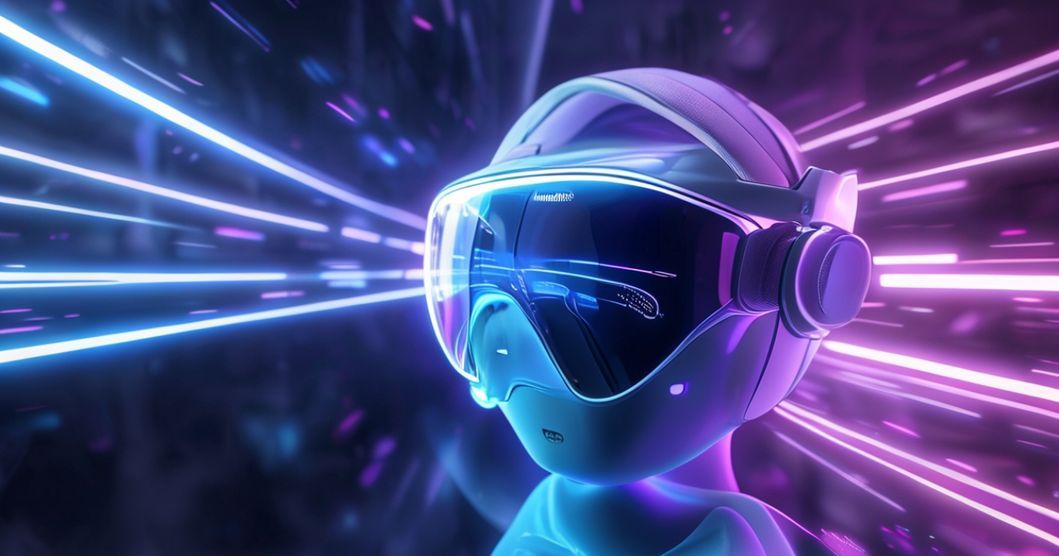
In a world constantly evolving with technological advancements, Apple has once again captured global attention with the introduction of its Vision Pro headset. Heralded as a “spatial computer,” this groundbreaking device promises to blend digital content with the physical world in a way never before experienced. Far from a mere virtual reality headset, the Vision Pro aims to usher in a new era of personal computing, transforming how we work, play, and connect.
Since its initial unveiling and subsequent release, the Vision Pro has sparked intense discussions among tech enthusiasts, developers, and the general public. It represents a significant leap from traditional screens, inviting users into an immersive environment where apps and digital elements appear to exist seamlessly within their physical surroundings. This innovation isn’t just about viewing content; it’s about interacting with it in a more intuitive and integrated manner, making the digital world feel truly tangible.
What is Spatial Computing?
At the core of the Apple Vision Pro’s philosophy is the concept of “spatial computing.” Unlike virtual reality (VR), which typically transports users entirely into a digital world, or augmented reality (AR), which overlays digital information onto the real world, spatial computing aims for a more harmonious blend. It’s about creating an infinite canvas where apps are no longer confined to the boundaries of a display but can exist and be manipulated in 3D space around the user.
This paradigm shift means your digital workspace can extend across your entire room, with multiple app windows floating freely, scaled to your preference. Imagine watching a movie on a screen that feels 100 feet wide, or arranging productivity apps around you as if they were physical objects on a desk. Spatial computing leverages advanced sensors and processing power to understand your environment and your interactions within it, allowing for a deeply personal and adaptable digital experience that truly merges the digital and physical realms.
Groundbreaking Hardware and VisionOS
The Vision Pro is a marvel of engineering, packing an incredible amount of technology into a sleek, albeit substantial, device. At its heart are two custom Apple chips: the powerful M2, which handles general computing tasks, and the R1, dedicated solely to processing input from the 12 cameras, five sensors, and six microphones. This dual-chip architecture ensures an incredibly fluid and responsive experience, minimizing latency to create a sense of true presence.
The displays are perhaps the most talked-about feature. Inside, two micro-OLED displays deliver more pixels than a 4K TV to each eye, resulting in stunning clarity and vibrant colors. On the outside, an innovative “EyeSight” display reveals the user’s eyes to those nearby, allowing for a sense of connection and awareness even when immersed. All of this is powered by VisionOS, Apple’s first spatial operating system. VisionOS redefines the user interface, allowing navigation solely through eye movements, hand gestures, and voice commands. Its intuitive design makes interacting with complex digital environments feel natural and effortless, removing the need for physical controllers and further blurring the lines between the user and their digital content.
Revolutionary Applications and Use Cases
The potential applications for the Vision Pro are vast and exciting, spanning entertainment, productivity, communication, and beyond. For entertainment, users can enjoy movies and TV shows with unparalleled immersion, feeling as if they are in a private cinema. Gaming experiences are transformed, with titles that can be played on massive virtual screens or even integrated into the user’s physical space, turning their living room into an interactive playground.
In terms of productivity, the Vision Pro promises to revolutionize the traditional office setup. Imagine having multiple virtual monitors floating around you, allowing for an expansive workspace without physical clutter. Collaboration can reach new heights with realistic “Personas” – digital avatars that mirror your expressions and movements – enabling more engaging virtual meetings. Furthermore, specialized applications for design, medicine, and education are already beginning to emerge, offering professionals new tools for visualization, training, and intricate work.
Challenges and the Road Ahead
Despite its incredible potential, the Apple Vision Pro faces several challenges. Perhaps the most prominent is its premium price point, which places it out of reach for many consumers. This high cost, coupled with the need for a robust developer ecosystem to create compelling spatial apps, means its widespread adoption might take time. Comfort and weight also remain points of discussion; while Apple has designed it with ergonomics in mind, wearing any device on your head for extended periods requires adaptation.
Battery life, though improved, still necessitates an external power pack, which can be a minor inconvenience. However, these are often the growing pains of pioneering technology. The Vision Pro is undeniably a first-generation product, a foundational step into a new computing paradigm. As the technology matures, and as developers unlock its full capabilities, we can anticipate more affordable, lighter, and even more powerful iterations. Its introduction marks a pivotal moment, setting a new benchmark for spatial computing and inspiring a wave of innovation that will undoubtedly shape our digital future.