
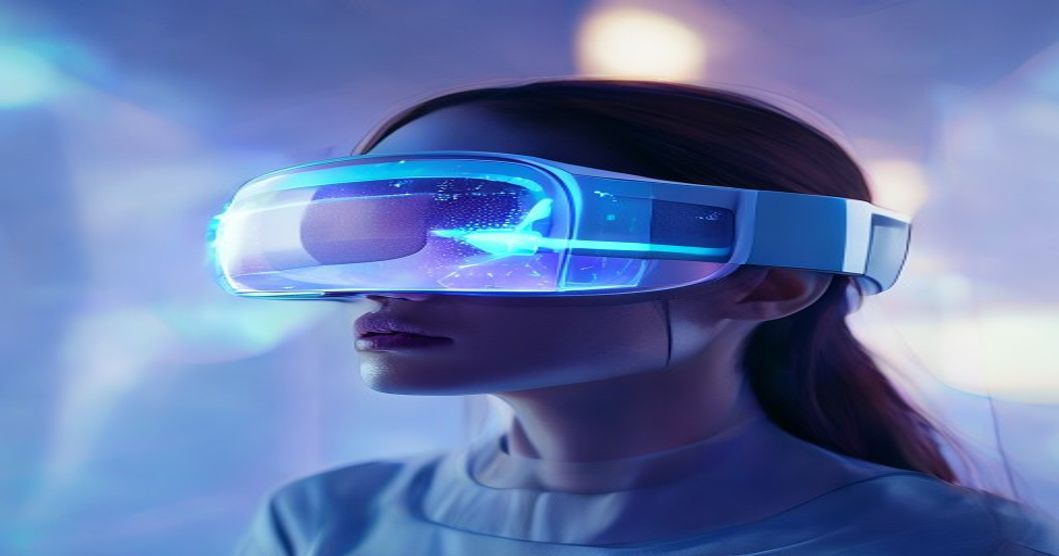
The world of technology is constantly evolving, pushing the boundaries of what’s possible and redefining our interaction with digital content. Among the most talked-about innovations recently is the Apple Vision Pro, a device Apple refers to as a “spatial computer.” Far from being just another virtual reality headset, the Vision Pro introduces a groundbreaking approach to blending digital information seamlessly with our physical surroundings, promising to revolutionize everything from entertainment to productivity.
Understanding Spatial Computing
At its core, the Apple Vision Pro is a spatial computer, a concept that transcends traditional virtual or augmented reality. While VR immerses you entirely in a digital world and AR overlays digital elements onto the real world, spatial computing aims for a more integrated experience. It allows digital content to exist and interact naturally within your physical space, responding to your environment and your movements. Imagine apps, movies, and photos floating in your living room, scaling and moving as if they were physical objects you could interact with directly.
This paradigm shift positions the Vision Pro not as a screen you look at, but as a window into an expanded reality where digital information is no longer confined to a flat display. It’s about bringing your digital life into your physical space in a truly three-dimensional and intuitive manner, creating an “infinite canvas” for work and play.
Key Innovations and Features
The technological prowess packed into the Vision Pro is truly remarkable, underpinning its spatial computing capabilities:
- Stunning Visuals: Equipped with micro-OLED displays, the Vision Pro delivers more pixels than a 4K TV to each eye, offering an unbelievably sharp and vibrant visual experience. This clarity is crucial for making digital content feel real and integrated.
- Intuitive Input System: Interaction with the Vision Pro is refreshingly natural. You navigate simply by looking at elements, tapping your fingers together to select, and using your voice for commands. There are no controllers, making the experience feel direct and unencumbered.
- EyeSight Display: A unique external display called EyeSight allows others to see your eyes when you’re engaged, indicating your level of immersion. If you’re fully immersed, EyeSight shows a visual cue, enhancing social connection and awareness in shared spaces.
- Powerful Dual-Chip Design: The device boasts Apple’s M2 chip for powerful processing and a new R1 chip specifically designed to process input from the 12 cameras, five sensors, and six microphones in real-time. This ensures a virtually lag-free, seamless experience.
- Digital Persona: For video calls, Vision Pro creates a lifelike digital representation of you, a “Persona,” using advanced machine learning. This allows for immersive FaceTime calls where participants feel truly present in the same space.
Transformative Applications and Use Cases
The potential applications of the Apple Vision Pro span across numerous domains, offering exciting new ways to engage with technology:
- Immersive Entertainment: Watch movies on a screen that feels 100 feet wide, transport yourself to breathtaking landscapes, or play games that blend into your room. The cinematic experience is redefined.
- Enhanced Productivity: Create an infinite workspace by projecting multiple monitors and applications around you. Manage complex tasks, collaborate with colleagues in virtual spaces, and visualize data in three dimensions without being tethered to physical screens.
- Revolutionary Communication: FaceTime calls become more personal and immersive, with participants appearing as digital personas in your space. Share experiences, collaborate on projects, and connect in ways previously unimaginable.
- Education and Training: Imagine anatomy lessons where 3D models float before your eyes, or intricate machinery simulations that allow hands-on learning without risk. The educational possibilities are vast.
- Creative Design: Architects can walk through their building designs, product designers can manipulate 3D models with their hands, and artists can create in a truly spatial medium.
Challenges and the Road Ahead
Despite its revolutionary potential, the Apple Vision Pro faces several hurdles. Its initial high price point positions it as a premium device, making it inaccessible for many. Comfort and weight, along with the external battery pack, are also considerations for extended use. Furthermore, the success of any new platform hinges on its app ecosystem, which will take time to grow and mature.
The journey of spatial computing has just begun. The Vision Pro represents a significant leap forward, but it’s an evolving technology. As developers create more compelling applications and the hardware becomes more refined and affordable, we can expect spatial computing to become an increasingly integral part of our digital lives.
The Apple Vision Pro isn’t just a gadget; it’s a bold statement about the future of personal computing. It challenges our perceptions of how we interact with information and the world around us. While it’s in its early stages, its introduction marks a pivotal moment, inviting us to imagine a future where our digital and physical realities merge into one rich, interactive experience.