
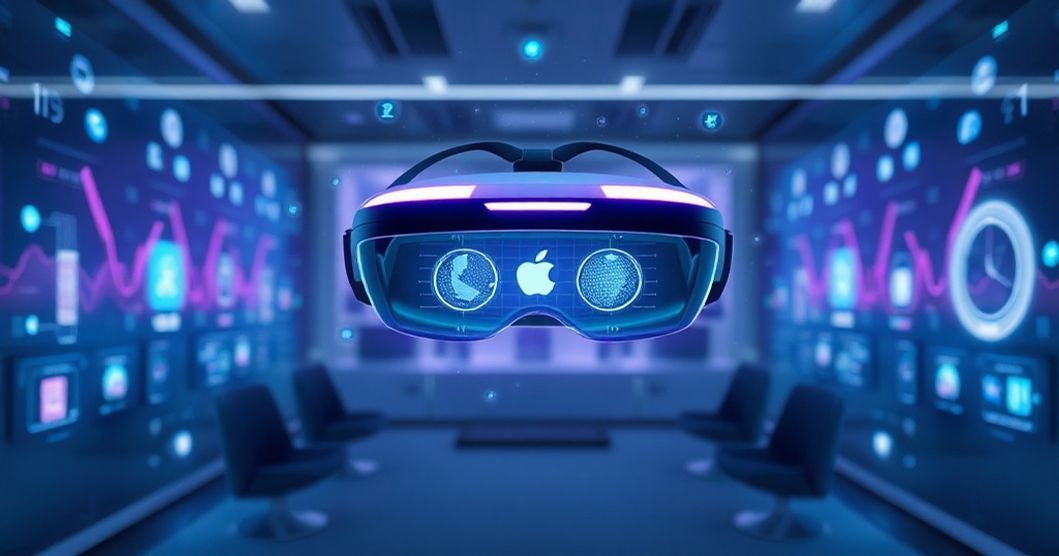
The world of technology is constantly evolving, pushing the boundaries of what we thought possible. Among the most talked-about and potentially transformative innovations in recent memory is the Apple Vision Pro. Unveiled as Apple’s first spatial computer, this groundbreaking device promises to blend digital content with the physical world in a seamless, intuitive manner, signaling a monumental shift in how we interact with technology and our surroundings. It’s not merely a gadget; it’s a bold statement about the future of personal computing.
Redefining Interaction: What is Spatial Computing?
At its core, the Apple Vision Pro introduces the concept of “spatial computing.” This isn’t just augmented reality (AR) or virtual reality (VR); it’s a sophisticated integration that allows digital content to feel present in your physical space, enabling natural interaction. Instead of looking at a screen, you’re looking through a device that overlays apps and information onto your real-world view. Imagine a multitude of virtual screens floating around your living room, responding to your gaze, hand gestures, and voice – that’s the essence of spatial computing, creating an infinitely scalable workspace or entertainment hub.
Unpacking Vision Pro’s Core Innovations
A Revolutionary Operating System: visionOS
Central to the Vision Pro’s experience is visionOS, a purpose-built operating system designed from the ground up for spatial computing. Building on the foundations of iOS, iPadOS, and macOS, visionOS introduces a three-dimensional interface that frees apps from the confines of a display. It allows users to arrange apps anywhere in their physical space and scale them to their desired size, creating a truly personalized and expansive digital environment that adapts to their needs and preferences. This intuitive framework underpins every interaction, making complex tasks feel natural and effortless.
Seamless Interaction: Eyes, Hands, and Voice
One of the Vision Pro’s most remarkable features is its natural and intuitive input system. Users navigate and interact with the interface using only their eyes, hands, and voice. Simply by looking at an element, such as an app icon or a button, and then tapping their fingers together, users can select and manipulate digital content. Voice commands offer an additional layer of control, making tasks like searching or dictating text incredibly efficient. This hands-free, controller-free approach minimizes the learning curve and fosters a more immersive and less cumbersome user experience, distinguishing it from traditional VR headsets.
Stunning Visuals and Immersive Audio
The visual fidelity of the Vision Pro is nothing short of breathtaking. It boasts two micro-OLED displays that pack 23 million pixels, delivering an astounding resolution that makes digital content appear incredibly sharp and vibrant. This pixel density is crucial for preventing the “screen-door effect” often associated with VR headsets, ensuring a crystal-clear view of both the real world and overlaid digital elements. Complementing this visual prowess is an advanced Spatial Audio system that precisely maps sounds to your environment, making digital audio sources sound as if they’re genuinely coming from their virtual locations in your physical space, enhancing immersion dramatically.
EyeSight and Optic ID: Bridging Realities
Apple has also addressed the social isolation often associated with immersive headsets through features like EyeSight. When someone approaches a Vision Pro user, the device subtly displays the user’s eyes on an external screen, making them appear “present” and approachable. Conversely, when fully immersed, EyeSight indicates to others that the user is focused on their digital content. For security, Optic ID utilizes unique iris recognition to quickly and securely authenticate users, similar to Face ID or Touch ID, ensuring privacy and personal data protection in this new computing paradigm.
Transforming Everyday Experiences
Entertainment Reimagined
Imagine watching a movie on a colossal virtual screen that extends far beyond the confines of your living room TV, or stepping into a fully immersive 3D environment for gaming. The Vision Pro transforms entertainment by allowing users to create their ultimate personal cinema or arcade, complete with spatial audio that makes you feel part of the action. It also supports spatial photos and videos, capturing moments with incredible depth and realism, allowing you to relive memories as if you were truly there again.
Productivity Unleashed
For professionals, the Vision Pro offers an unprecedented level of productivity. Users can ditch physical monitors and instead project an infinite number of virtual displays anywhere they choose. Imagine having multiple Safari windows, a Mail app, and a Pages document all open and arranged around you, effortlessly accessible with a glance and a tap. This ability to create a personalized, expansive workspace can significantly enhance workflow and multitasking capabilities, especially for those working remotely or in dynamic environments.
Connecting in New Dimensions
Communication also gets a spatial upgrade. FaceTime calls on the Vision Pro allow participants to appear life-size in your room, while creating incredibly realistic digital personas that mirror your facial expressions and hand gestures in real-time. This level of presence aims to make virtual interactions feel more personal and engaging, blurring the lines between physical and digital presence and offering a richer way to connect with friends, family, and colleagues across distances.
Navigating the Early Road Ahead
While the Apple Vision Pro is undeniably a marvel of engineering and innovation, it’s also a first-generation product facing several initial challenges. Its premium price point places it firmly in the early adopter category, making it inaccessible to many. Questions surrounding its weight and long-term comfort for extended wear are also prominent, along with battery life concerns given its tethered external battery pack. Furthermore, the success of any new computing platform heavily relies on the richness of its app ecosystem, which will take time to mature and fully realize the device’s potential. Social acceptance and finding appropriate contexts for its use in public spaces will also be critical hurdles to overcome.
The Dawn of a New Computing Era
The Apple Vision Pro represents more than just a new gadget; it’s a bold step into what Apple terms “the era of spatial computing.” It challenges our traditional notions of screens and interfaces, offering a glimpse into a future where digital content is seamlessly woven into the fabric of our physical world. While the journey ahead will undoubtedly involve refinements and adaptations, the Vision Pro lays a compelling foundation for how we might work, play, and connect in the coming decades, setting a new benchmark for immersive and intuitive technological interaction.