
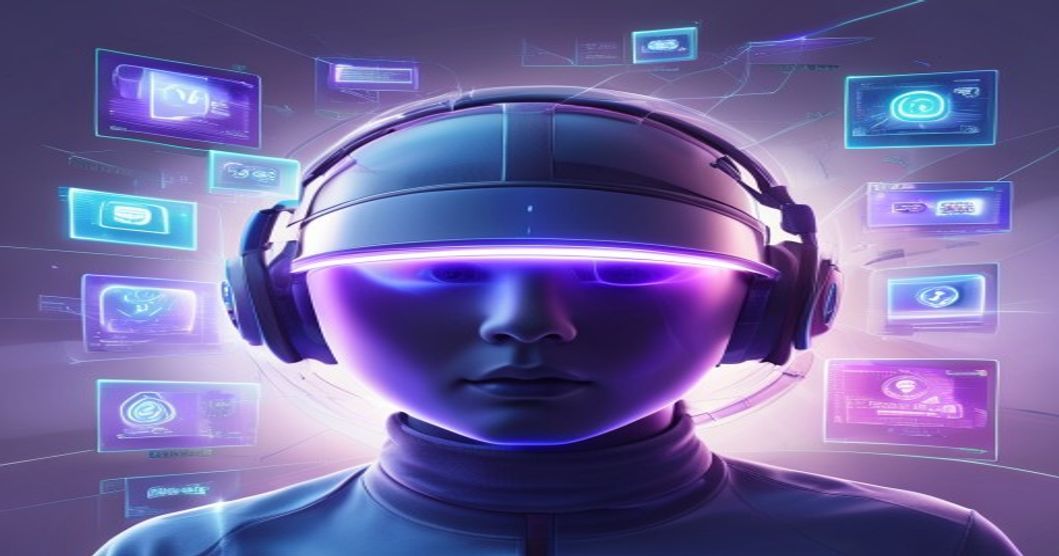
The world of technology is in a constant state of evolution, and every so often, a device emerges that promises to redefine how we interact with digital content. Apple’s entry into the spatial computing arena, the Apple Vision Pro, is precisely one such innovation. Unveiled as a groundbreaking mixed-reality headset, it’s not just another gadget; it’s a bold vision for the future of personal computing, blending the digital and physical worlds in an unprecedented way. This article delves into what makes the Vision Pro a significant leap forward and how it might reshape our daily lives.
Redefining Interaction: What is Spatial Computing?
At its core, the Apple Vision Pro introduces us to the concept of spatial computing. Unlike traditional devices that confine digital content to a flat screen, spatial computing allows applications and interfaces to exist and interact within your physical environment. Imagine your favorite apps floating freely around your living room, or a massive virtual display extending beyond the boundaries of any monitor. The Vision Pro transforms any space into a personalized canvas for digital experiences, making computing feel more intuitive and immersive than ever before.
Key Technological Innovations Driving the Vision Pro
Apple has packed the Vision Pro with an array of cutting-edge technologies, meticulously engineered to deliver a seamless and powerful spatial computing experience. These innovations are crucial to understanding its potential impact.
Ultra-High-Resolution Displays and Optic ID
One of the most striking features of the Vision Pro is its display system. Each eye is presented with more pixels than a 4K TV, thanks to custom micro-OLED displays that house 23 million pixels across two panels. This incredible pixel density virtually eliminates the “screen door effect” often associated with VR headsets, delivering razor-sharp text and breathtaking visuals. Furthermore, the device incorporates Optic ID, an iris-based authentication system that offers enhanced security and convenience, similar to Face ID for your eyes.
The Power of Dual-Chip Architecture
To handle the immense computational demands of spatial computing, the Vision Pro is powered by a unique dual-chip design. The familiar M2 chip provides incredible standalone performance, running visionOS and handling complex graphics. Complementing it is the new R1 chip, specifically designed to process input from the 12 cameras, five sensors, and six microphones in real-time. This dedicated chip ensures that content feels like it’s happening instantaneously, minimizing latency and creating a truly immersive experience.
EyeSight: Connecting with the Outside World
A common critique of VR headsets is their isolating nature. Apple addresses this with EyeSight, an innovative feature that visually communicates your level of immersion to those around you. When you are fully immersed in an application, EyeSight presents an opaque, glowing display on the front of the device. However, when someone approaches or you are in a less immersive mode, EyeSight makes your eyes visible through the front display, fostering a sense of connection and reducing social barriers. It’s a clever way to bridge the gap between digital immersion and real-world interaction.
Intuitive Control: Eyes, Hands, and Voice
The Vision Pro introduces a remarkably intuitive control system that leverages your natural interactions. There are no external controllers; instead, you navigate and interact using your eyes to look at elements, subtle hand gestures to select or scroll, and your voice for commands. This “zero-controller” approach aims to make the technology disappear, allowing users to focus entirely on the content and their experience rather than learning complex button layouts.
Transforming User Experiences and Applications
The potential applications of the Apple Vision Pro span across various aspects of daily life, promising to transform how we work, play, and connect.
Entertainment Reimagined
Imagine watching movies on a screen that feels 100 feet wide, or playing games where the characters interact with your physical environment. The Vision Pro offers unparalleled entertainment experiences, from cinematic movie viewing with spatial audio to immersive gaming that blurs the lines between reality and virtual worlds. Disney, for instance, has already showcased unique experiences tailored for the platform, promising new ways to enjoy beloved stories.
Productivity in a Virtual Workspace
For professionals, the Vision Pro could revolutionize productivity. Users can create an infinite workspace, placing multiple virtual displays of any size anywhere they desire. This eliminates the limitations of physical monitors, allowing for unparalleled multitasking and data visualization. Collaborative tools could also become more immersive, with virtual meetings feeling more like in-person interactions.
Communication and Augmented Reality
FaceTime calls on Vision Pro take on a new dimension, with participants appearing as “spatial personas” in your room. This aims to create a more engaging and personal communication experience. Furthermore, its advanced augmented reality (AR) capabilities allow digital objects to seamlessly blend into your real-world view, offering practical applications from interior design previews to interactive learning tools.
Challenges and the Road Ahead
Despite its impressive capabilities, the Apple Vision Pro faces several challenges. Its premium price point makes it inaccessible for many, positioning it as a niche product for early adopters and developers. The weight and comfort of the device for prolonged use are also key considerations. Additionally, the success of any new platform hinges on its app ecosystem, which will take time to mature. Social acceptance and integration into daily routines will also be crucial factors in its long-term viability.
The Vision Pro represents a significant first step into a new era of personal technology. It’s not just a device; it’s an invitation to explore a new paradigm of computing that promises to make our digital lives more integrated, intuitive, and immersive. As the technology evolves and becomes more accessible, spatial computing has the potential to fundamentally change how we interact with information and each other, blurring the lines between the physical and digital worlds in ways we are only just beginning to imagine.