
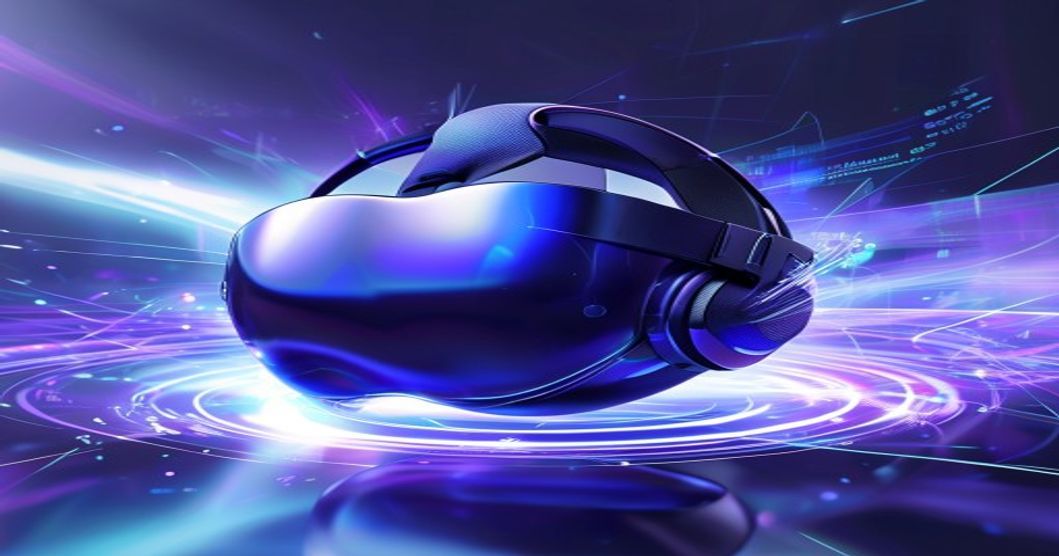
In a world increasingly defined by digital interfaces, Apple has once again made a bold statement, stepping into the realm of what it calls “spatial computing.” The launch of the Apple Vision Pro isn’t just about a new gadget; it represents a significant leap towards seamlessly blending our digital lives with the physical world around us. Far from being just another virtual reality headset, the Vision Pro aims to redefine how we interact with technology, opening up new possibilities for work, entertainment, and connection.
Since its unveiling, the Vision Pro has ignited conversations, debates, and excitement among tech enthusiasts and industry experts alike. It’s a device that promises to transform the conventional screen experience into an immersive, three-dimensional canvas, offering a tantalizing peek into the future of personal computing.
What is Apple Vision Pro?
At its core, the Apple Vision Pro is an innovative mixed-reality headset that Apple refers to as a “spatial computer.” Unlike traditional virtual reality (VR) headsets that aim to fully immerse users in a digital world, or augmented reality (AR) devices that merely overlay digital information onto the real world, the Vision Pro strives for a seamless integration. It runs on VisionOS, Apple’s first-ever spatial operating system, designed from the ground up to enable intuitive interaction with digital content that feels present in your physical space.
The device leverages advanced sensors, cameras, and processors to understand your environment and overlay apps, videos, and other digital elements directly into your field of view. This means you can have multiple virtual screens floating around your living room, watch movies on a cinema-sized display in your bedroom, or collaborate with colleagues in a shared virtual space, all while remaining aware of your physical surroundings.
Key Innovations and Features
The Vision Pro is packed with groundbreaking technology that sets it apart:
- VisionOS: This new operating system is built on the foundations of iOS, iPadOS, and macOS, offering a familiar yet entirely new experience. It allows for natural, intuitive interactions, making digital content feel responsive and dynamic within your space.
- Eye and Hand Tracking: Forget controllers. The Vision Pro uses highly precise eye tracking for selection and subtle hand gestures for navigation. Simply look at an app icon to select it and pinch your fingers to click, scroll, or interact. This natural interface enhances the feeling of direct manipulation.
- Ultra-High-Resolution Displays: Boasting more pixels than a 4K TV for each eye, the custom micro-OLED displays deliver stunning clarity, vibrant colors, and incredibly sharp text. This level of visual fidelity is crucial for both immersive experiences and detailed productivity tasks.
- Seamless Passthrough Video: One of its most remarkable features is its ability to blend the digital and physical worlds. High-resolution cameras on the outside stream a real-time view of your surroundings, allowing you to see and interact with people and objects in your space even while wearing the device.
- Spatial Audio: Custom-designed audio pods positioned near your ears deliver personalized spatial audio. This technology creates a truly immersive soundscape, making sounds appear to come from the specific direction of digital objects in your environment, enhancing realism.
- EyeSight: A unique outward-facing display shows a digital representation of your eyes when someone approaches you, maintaining a sense of connection and awareness with others in your physical space.
Redefining User Experience
The true power of the Apple Vision Pro lies in its potential to redefine our daily interactions with digital content. Imagine moving beyond the confines of a laptop screen or a television. With Vision Pro, your workspace expands infinitely, allowing you to place documents, browser windows, and communication apps wherever you need them, creating an unparalleled level of multitasking freedom.
For entertainment, the device transforms any room into a personal movie theater, delivering an incredibly immersive cinematic experience with dynamic lighting and spatial audio. Gaming is also elevated, with titles that seamlessly integrate into your surroundings or transport you to entirely new virtual worlds.
Potential Applications and Future Impact
The implications of spatial computing extend far beyond personal use:
- Productivity and Collaboration: Teams could collaborate in virtual meeting rooms with shared 3D models and documents, fostering a sense of co-presence for remote workforces. Engineers and designers could visualize and manipulate prototypes in real-time.
- Education and Training: Students could explore historical sites, dissect virtual organs, or simulate complex experiments, making learning more engaging and interactive. Professionals could undergo realistic training simulations without leaving the classroom.
- Healthcare: Surgeons could practice complex procedures with 3D anatomical models, and therapists could use immersive environments for patient rehabilitation.
- Entertainment and Arts: Beyond movies and games, imagine interactive art installations, virtual concerts, or storytelling that unfolds around you.
Challenges and the Road Ahead
While the Apple Vision Pro is undeniably a marvel of engineering, it’s also a first-generation product facing several challenges. The significant price tag positions it as a premium device, making it inaccessible to the average consumer. Its weight and external battery pack raise questions about comfort and practicality for extended use.
Furthermore, the success of any new computing platform hinges on its content ecosystem. Apple is banking on developers to create compelling apps and experiences that truly leverage the Vision Pro’s unique capabilities. Building out this robust library of spatial apps will be critical for its long-term viability.
The Vision Pro is not a finished product in the evolutionary sense, but rather a powerful foundation. It’s a bold declaration of Apple’s vision for the future of computing, inviting us to imagine a world where digital content is no longer confined to flat screens but becomes an integral, interactive part of our physical reality. It’s a significant step into the uncharted territory of spatial computing, and its journey has only just begun.