
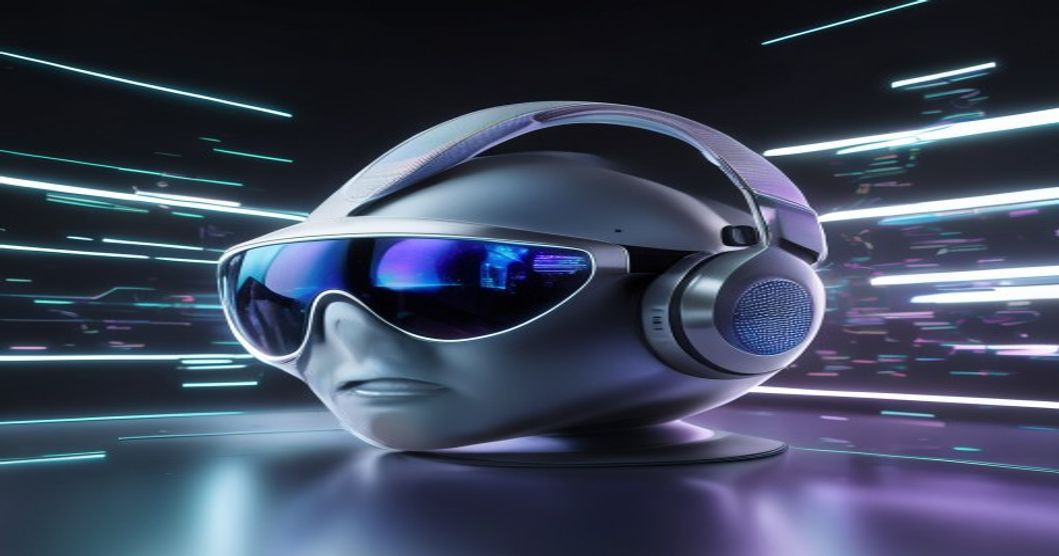
In a world constantly pushing technological boundaries, Apple has once again captured global attention with its groundbreaking innovation: the **Apple Vision Pro**. Heralded as the dawn of **spatial computing**, this revolutionary device promises to blend digital content seamlessly with your physical space, redefining how we interact with technology, entertainment, and each other. It’s a bold vision, inviting us into an entirely new dimension of digital experience.
What is Spatial Computing?
Before delving into the Vision Pro, understanding spatial computing is key. Unlike traditional computing, which confines digital information to flat screens, spatial computing liberates it into three dimensions. Users interact with digital content that feels like it exists in the real world – be it a virtual screen above your desk or a holographic character in your living room. The Vision Pro is Apple’s ambitious entry into this nascent, yet promising, field.
A Glimpse into the Vision Pro’s Core
At its heart, the Apple Vision Pro is a mixed-reality headset offering an “infinite canvas” for apps. It’s a sophisticated blend of virtual reality (VR) and augmented reality (AR), allowing users to switch between full immersion and seeing their real surroundings with digital overlays. This seamless integration is powered by **visionOS**, a custom operating system built for spatial computing, ensuring intuitive and responsive interactions.
Revolutionary Display and Input
One of the Vision Pro’s most talked-about features is its display technology. It boasts micro-OLED displays, packing an astonishing 23 million pixels across two screens – more than a 4K TV for each eye. This delivers unparalleled clarity and vibrant colors, making digital content appear incredibly realistic. Interaction is equally innovative, relying primarily on your eyes, hands, and voice. Users navigate by looking at an app icon, tapping fingers to select, and dictating text, eliminating traditional controllers for a truly hands-free experience.
EyeSight and Optic ID: Privacy and Presence
Addressing concerns about VR isolation, Apple introduced **EyeSight**. When someone approaches, the device subtly reveals the user’s eyes on an external display, making them appear less isolated. When fully immersed, the display shows an ethereal visual cue, signaling their focus. For security, **Optic ID** uses iris recognition to authenticate users, ensuring personal data and purchases remain private.
Transformative Applications and Use Cases
The potential applications of the Vision Pro are vast, extending across various aspects of daily life and promising to transform how we work, play, and connect.
- Entertainment Redefined: Imagine watching a movie on a screen that feels 100 feet wide, or playing games where virtual characters interact with your living room furniture. The Vision Pro turns any space into a personal cinema or an immersive gaming arena.
- Unleashing Productivity: Professionals can create an “infinite desktop,” arranging multiple virtual monitors around them, accessing apps like Safari, Mail, and Pages, all within their physical workspace. This could revolutionize remote work and collaborative environments.
- Enhanced Communication: FaceTime calls become more personal with “Persona,” a realistic digital avatar that mimics your facial expressions and hand gestures, making remote interactions feel more present and engaging.
- Learning and Creativity: From interactive educational experiences to designing 3D models directly in your environment, the Vision Pro offers new avenues for learning, training, and creative expression.
Navigating the Challenges Ahead
Despite its revolutionary potential, the Vision Pro faces hurdles. Its premium price places it firmly in the high-end market, limiting initial accessibility. Comfort and weight, crucial for extended use, will be closely scrutinized. The external battery pack, while allowing for a lighter headset, introduces a tether. Furthermore, the success of any new platform hinges on developer adoption and compelling applications. Privacy and ethical considerations around data collection and the blurring of digital and physical realities will require careful navigation.
The Dawn of a New Era
The Apple Vision Pro isn’t just another gadget; it’s a significant leap towards a future where technology is more integrated, intuitive, and personal. While still in its early stages, it represents Apple’s bold statement on the direction of computing, moving beyond the two-dimensional screen into a rich, three-dimensional digital canvas. It invites us to reimagine our interactions with information and entertainment, paving the way for innovations shaping the technological landscape.
As developers unlock its full potential and the technology becomes more refined and accessible, spatial computing, spearheaded by devices like the Vision Pro, promises to fundamentally alter our relationship with the digital world, making it an inseparable, yet often invisible, part of our everyday reality.