
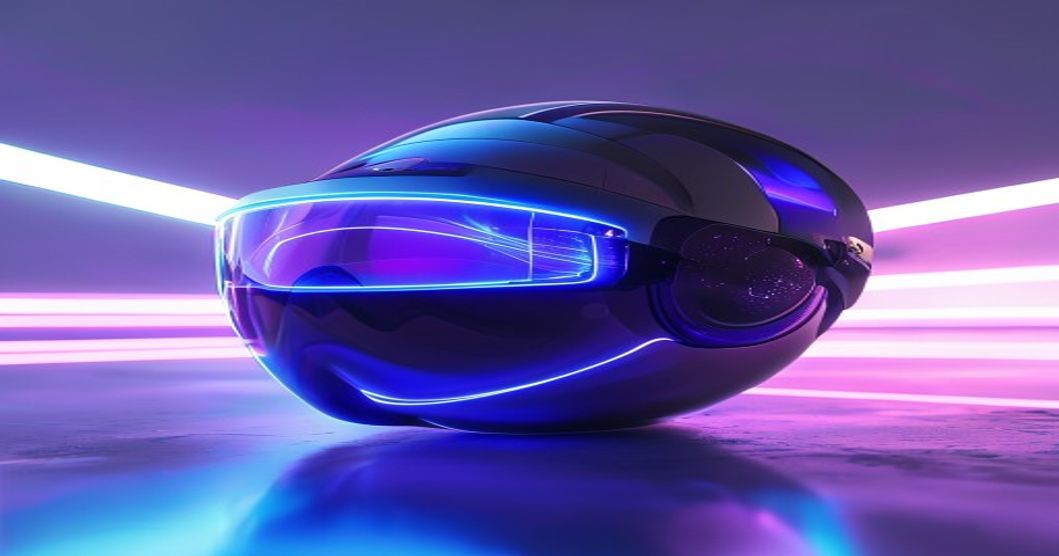
In the rapidly evolving landscape of technology, certain innovations stand out, promising to redefine how we interact with the digital world. Apple’s much-anticipated Vision Pro headset is undoubtedly one such breakthrough. Launched to significant fanfare, this device isn’t merely another VR headset; it’s Apple’s bold entry into what they term “spatial computing,” aiming to seamlessly blend digital content with your physical space.
The Vision Pro represents a culmination of years of research and development, building upon Apple’s expertise in hardware, software, and user experience design. It’s pitched not as an escape from reality, but as an enhancement of it, offering a unique approach to augmented and virtual reality that could potentially set a new benchmark for the industry.
Understanding Spatial Computing
At its core, the Vision Pro introduces us to the concept of spatial computing. Unlike traditional computing, which is confined to screens, spatial computing allows digital content to exist and interact within your physical environment. Imagine your favorite apps, photos, or videos floating seamlessly in your living room, scaling to any size, and responding to your gaze and gestures.
This isn’t just about putting a screen in front of your eyes; it’s about making digital elements feel like they are part of your world. The Vision Pro achieves this by creating an infinite canvas where apps aren’t restricted by the boundaries of a display. You can arrange multiple app windows around you, creating a personalized workspace that adapts to your surroundings, whether you’re at home, in the office, or even on a plane.
Pioneering Hardware and Design
Apple’s meticulous attention to design and engineering is immediately apparent in the Vision Pro. The device features a sophisticated array of sensors, cameras, and displays, all integrated into a sleek, goggle-like form factor. The front of the Vision Pro is crafted from a single piece of three-dimensionally formed laminated glass, which flows into an aluminum alloy frame.
Crystal-Clear Displays and Advanced Optics
One of the Vision Pro’s most impressive features is its display system. Each eye is presented with a micro-OLED display packing more pixels than a 4K TV, totaling 23 million pixels across two displays. This delivers an incredibly sharp, vibrant, and lifelike visual experience. Custom-designed three-element lenses ensure that the images are clear and distortion-free, covering a wide field of view. For users with vision correction needs, custom optical inserts (ZEISS Optical Inserts) magnetically attach to the lenses.
Dual-Chip Powerhouse: M2 and R1
Under the hood, the Vision Pro is powered by two formidable Apple silicon chips: the M2 and the brand-new R1. The M2 chip handles the core computing tasks, running VisionOS and delivering exceptional performance for demanding applications. The R1 chip, specifically designed for spatial computing, processes input from the 12 cameras, five sensors, and six microphones, ensuring virtually no lag between the real world and the digital content projected onto it. This combination is crucial for creating a truly immersive and responsive experience.
Intuitive Interaction and VisionOS
Interaction with the Vision Pro is designed to be as natural and intuitive as possible. Apple has moved away from traditional controllers, opting for a system controlled by your eyes, hands, and voice. You navigate by simply looking at elements, tap your fingers together to select, and swipe to scroll. Siri is also integrated for voice commands.
The operating system, VisionOS, is built on the foundations of iOS, iPadOS, and macOS, but tailored for spatial computing. It features a new three-dimensional interface that makes apps feel tangible and responsive. A core feature, EyeSight, allows the device to display your eyes to people in the room when you are interacting with them, or show visual cues when you are fully immersed, fostering a sense of connection rather than isolation.
Revolutionizing Productivity and Entertainment
The potential applications of the Vision Pro are vast. For productivity, it transforms any space into a personalized, infinite workspace. Imagine having multiple monitor-sized screens for your Mac applications, all floating around you, without needing physical displays. Video conferencing takes on a new dimension with realistic Personas, making remote collaboration feel more personal.
In entertainment, the Vision Pro offers an unparalleled cinematic experience. You can watch movies and TV shows in a personal theater, complete with spatial audio, feeling fully immersed in the content. Gaming is also reimagined, with games that can interact with your physical environment, blurring the lines between the digital and the real. Apple Immersive Video, with 180-degree high-resolution recordings and Spatial Audio, transports viewers to new places and experiences.
Challenges and the Road Ahead
Despite its groundbreaking features, the Vision Pro faces challenges. Its premium price point makes it an aspirational device for many. The weight and battery life are also areas of discussion, as users adapt to wearing a device for extended periods. However, these are often common hurdles for first-generation products in nascent categories.
The Vision Pro represents a significant leap forward in personal technology. It’s a testament to Apple’s vision for the future, offering a compelling glimpse into what spatial computing can be. While it’s still early days, the device has undoubtedly ignited conversations and spurred innovation across the tech industry, paving the way for a future where digital and physical realities merge in fascinating new ways. Its influence will likely be felt for years to come, shaping how we work, play, and connect in an increasingly digital world.