
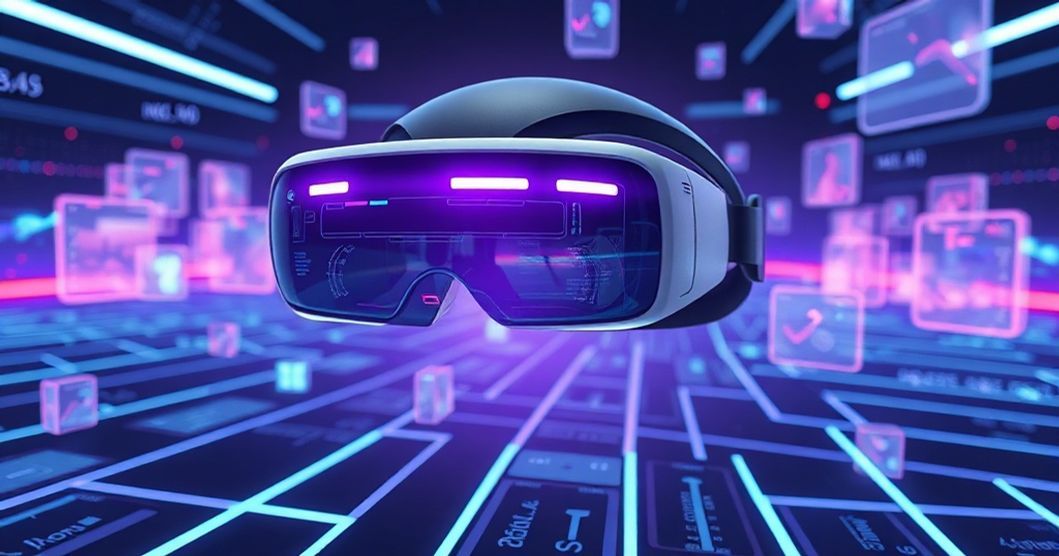
The world of technology constantly evolves, pushing the boundaries of what’s possible. Every so often, a device emerges that promises to redefine our interaction with digital content and the physical world. Apple’s recent unveiling and subsequent launch of the Vision Pro headset marks one such pivotal moment, introducing a concept they term “spatial computing.” This isn’t just another VR headset; it’s an ambitious attempt to seamlessly blend our digital lives with our physical environments, creating an entirely new computing paradigm.
Understanding Spatial Computing
At its core, spatial computing with the Apple Vision Pro means digital content no longer lives within the confines of a screen but integrates directly into the space around you. Imagine apps floating in your living room, movies projected onto your wall, or virtual collaborators appearing to sit across from you at a conference table. This innovative approach aims to make computing more intuitive and immersive, moving beyond the traditional two-dimensional interfaces we’ve been accustomed to for decades.
The Convergence of Digital and Physical
Unlike virtual reality (VR), which often aims to transport you entirely to another world, or augmented reality (AR), which overlays digital information onto your view, the Vision Pro strives for a true mixed reality experience. It allows users to fluidly switch between full immersion and a blend of digital elements with their surroundings. This seamless transition is key to its “spatial” promise, letting you decide how much of the digital world you want to bring into your real one, or vice-versa.
Unpacking the Hardware Excellence
To deliver on its grand vision, the Vision Pro is packed with an array of cutting-edge hardware components that power its extraordinary capabilities. It’s a testament to Apple’s engineering prowess, integrating complex systems into a wearable device.
- Stunning Displays: The Vision Pro features micro-OLED displays that pack 23 million pixels across two panels, delivering more pixels than a 4K TV for each eye. This results in incredibly sharp text, vibrant colors, and an unparalleled visual fidelity that makes digital content feel remarkably real.
- Powerful Silicon: At its heart are two custom Apple silicon chips: the familiar M2 chip for processing power, and the brand-new R1 chip. The R1 is specifically designed to process input from 12 cameras, five sensors, and six microphones, virtually eliminating lag between the real world and what the user sees, ensuring a real-time, fluid experience.
- Advanced Sensor Array: A sophisticated network of cameras and sensors continuously maps the user’s environment, tracks eye movements, and interprets hand gestures. This intricate system is crucial for enabling the intuitive interaction model of VisionOS.
VisionOS: A New Paradigm for Interaction
Hardware is only half the story; the software dictates the user experience. VisionOS, the operating system powering the Vision Pro, is specifically designed for spatial computing. It takes familiar elements from iOS and iPadOS and reimagines them for a three-dimensional canvas.
Eye Tracking and Hand Gestures
Interaction with VisionOS is remarkably intuitive, relying primarily on natural eye movements and subtle hand gestures. Users simply look at an app icon or an element to select it, and then perform a gentle tap or pinch gesture in the air to activate it. There’s no controller to hold, no complex button combinations to memorize. This hands-free approach aims to make the technology feel less like a gadget and more like an extension of your natural movements.
Beyond Entertainment: Practical Applications
While the initial appeal might be for immersive entertainment, the Vision Pro’s potential extends far beyond movies and games. Its capabilities hint at a future where our professional and personal lives are significantly enhanced by spatial computing.
- Productivity Reinvented: Imagine having multiple large virtual monitors for work, arranged around you in your office or even on a plane. Collaborating with colleagues could involve sharing 3D models or documents that appear right in front of everyone, regardless of their physical location.
- Immersive Entertainment: Beyond watching movies on a giant virtual screen, the Vision Pro can transport you into immersive environments, making you feel like you’re in the center of the action. Experiences could range from interactive documentaries to virtual concerts that put you on stage.
- Revolutionizing Communication: FaceTime calls on Vision Pro become “spatial,” with participants appearing as lifelike personas in your space. This could bridge geographical distances in a more personal and engaging way than traditional video calls.
Navigating the Hurdles: Criticisms and Considerations
Despite its groundbreaking innovations, the Apple Vision Pro is not without its challenges and criticisms. As with any nascent technology, there are significant hurdles to overcome for widespread adoption.
Price and Accessibility
Perhaps the most significant barrier is its steep price point, starting at $3,499. This positions the Vision Pro as a premium, niche product, far from an everyday consumer gadget. The cost makes it inaccessible for many, limiting its initial market to early adopters, developers, and enterprises.
Ergonomics and Social Integration
While Apple has focused on design and comfort, the device’s weight and external battery pack can still be cumbersome for extended use. Furthermore, the social aspect of wearing a headset, which obscures a user’s eyes (even with the EyeSight feature), raises questions about social acceptance and integration in public spaces. The current design, while futuristic, can still feel isolating.
The Future of Spatial Computing
The Apple Vision Pro is undeniably a first-generation product, a bold declaration of intent for a new era of computing. It’s a foundational device that will likely evolve significantly in future iterations, becoming lighter, more affordable, and more integrated into our daily lives. While it faces considerable challenges, its arrival has ignited a renewed interest in mixed reality and spatial computing, pushing other tech giants to accelerate their own efforts in this exciting domain. The Vision Pro may not be for everyone today, but it offers a tantalizing glimpse into a future where our digital and physical realities are beautifully and functionally intertwined.