
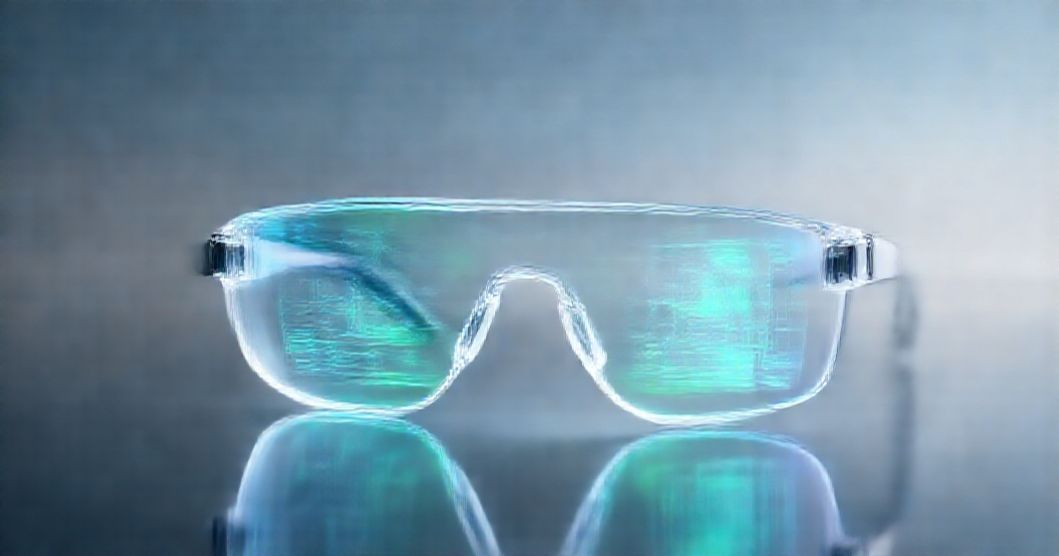
Imagine digital information seamlessly overlaying your physical surroundings, enhancing your reality without fully replacing it. This isn’t science fiction; it’s the rapidly evolving promise of augmented reality (AR) glasses. Recent technological leaps are bringing truly immersive and practical AR eyewear closer to mainstream adoption.
What Are AR Glasses?
At its core, augmented reality superimposes computer-generated images onto a user’s view of the real world. Unlike virtual reality (VR), which fully immerses you digitally, AR keeps you grounded in actual surroundings. AR glasses are wearable devices for hands-free, natural interaction, displaying holographic interfaces, interactive maps, or virtual objects directly within your line of sight. They augment, not obscure, your perception.
The Promise of AR: Enhancing Everyday Life
The potential of AR glasses is transformative. From simple tasks to complex professional operations, these devices promise to reshape how we interact with information and our environment. Think instant language translation over a foreign menu, or step-by-step navigation floating above the street. This convenience and contextual relevance could make many current digital interactions feel cumbersome, offering a more intuitive, less intrusive way to consume digital content directly in your field of view.
Recent Breakthroughs and Key Players
AR glasses have faced significant challenges: form factor, display quality, and processing power. Early prototypes were bulky, had limited battery life, and projected dim visuals. However, recent years saw accelerated innovation, driven by miniaturization, improved micro-LED and waveguide display technologies, and powerful, energy-efficient processors.
Companies like Apple, with its Vision Pro, have pushed boundaries, demonstrating high-resolution “spatial computing” experiences, albeit at a premium. Other players, such as Meta (Quest line) and dedicated AR companies like XREAL and Vuzix, focus on lighter, more glasses-like designs. These innovations tackle wider fields of view, better color reproduction, and reduced latency, making digital overlays feel more integrated. The convergence of powerful mobile chipsets and advanced optical engineering creates new AR devices that are not only more capable but also increasingly stylish and comfortable.
Beyond Entertainment: Practical Applications
While early AR concepts leaned into gaming, AR glasses’ most compelling impact lies in practical utility across various sectors:
- Productivity and Work: Multiple virtual monitors; collaborating with remote colleagues as digital avatars. Engineers overlay blueprints; surgeons access patient data.
- Navigation and Information: Display turn-by-turn routes on the road, highlight points of interest, or provide real-time information about landmarks.
- Education and Training: Students interact with 3D models, exploring complex concepts. Trainees practice intricate procedures with digital guidance, reducing risks.
- Healthcare: Assisting surgeries, helping visually impaired individuals. Profound medical applications, also providing crucial information to first responders.
- Retail and Shopping: Try on virtual clothes, visualize furniture in your living room, or get instant product information as you browse.
Challenges and The Road Ahead
Despite rapid progress, hurdles remain: battery life, cost, social acceptance, and privacy concerns. Powering sophisticated displays and processors in a compact form factor for an entire day is challenging. Developers also need robust tools to create compelling AR experiences beyond novelty. Addressing these requires continued innovation, strategic partnerships, and a clear vision for how AR enhances human experience.
The Future is Transparent
We are at the precipice of a new era of personal computing. Augmented reality glasses represent a fundamental shift in how we interact with digital information and the world. As the technology becomes smaller, more powerful, and affordable, these transparent displays could soon become an indispensable part of our daily lives, seamlessly blending the digital and physical into a richer, more informative reality. The future isn’t just digital; it’s augmented.