
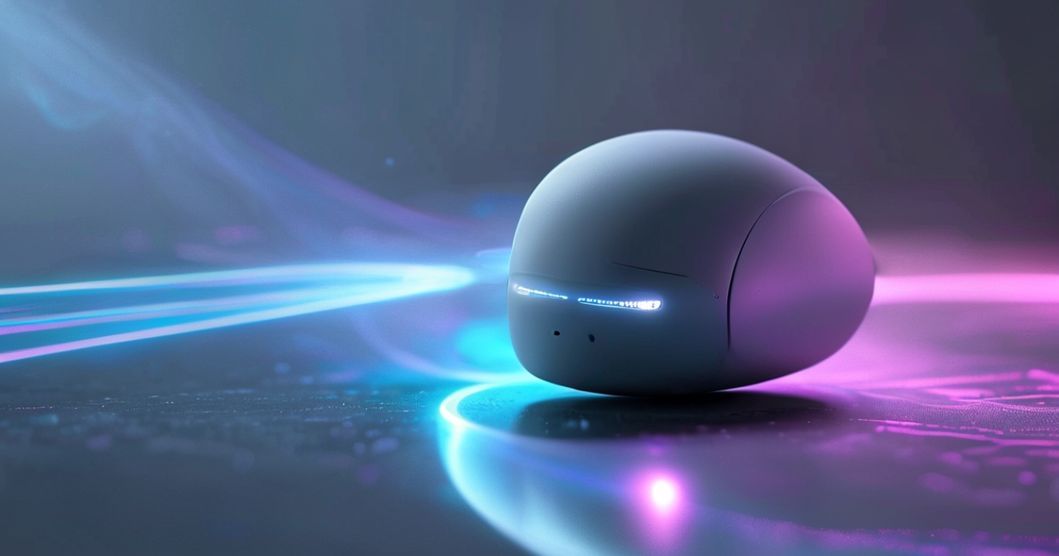
In a world increasingly dominated by glowing screens, a new contender has emerged, promising a radical shift towards a more ambient, screenless interaction with technology. The Humane AI Pin isn’t just another gadget; it’s an ambitious statement, a wearable device that aims to redefine our relationship with artificial intelligence, moving it from our pockets and desktops directly onto our clothing. Developed by ex-Apple design and engineering leads Imran Chaudhri and Bethany Bongiorno, this device has sparked immense curiosity and debate, challenging conventional notions of what a personal assistant can be.
For years, we’ve relied on smartphones to connect us to information, communication, and entertainment. The AI Pin seeks to disrupt this paradigm by offering a discreet, voice-first, and gesture-driven experience that integrates seamlessly into daily life, rather than demanding our constant visual attention. It’s a bold vision, one that suggests a future where technology serves us unobtrusively, enhancing our natural interactions without the constant pull of a digital display.
What is the Humane AI Pin?
At its core, the Humane AI Pin is a small, standalone wearable device designed to clip onto clothing. Unlike smartwatches or traditional phones, it doesn’t feature a conventional screen. Instead, it projects a laser ink display directly onto your palm, offering a unique, ephemeral interface that appears only when needed. This ingenious projection system allows for basic interaction, such as viewing messages, controlling music, or making selections, all without diverting your gaze from the real world around you.
The device is powered by a custom-built AI operating system called Cosmos, which aims to be a single, intelligent agent capable of understanding context, anticipating needs, and performing tasks across various domains. It ditches traditional apps in favor of what Humane calls “experiences,” which are dynamically generated based on user prompts and the AI’s understanding of the situation. This architectural choice is central to its “screenless” philosophy, as the AI is designed to handle complex requests and provide concise, relevant information without requiring navigation through multiple applications.
Key Features and How It Works
The AI Pin integrates several cutting-edge technologies to deliver its unique functionality:
- AI-Powered Interaction: The primary mode of interaction is through natural voice commands. Users speak to the Pin as they would to a human assistant, and the AI processes these requests using large language models and other AI capabilities.
- Laser Ink Display: A miniature laser projector beams a monochrome interface onto your hand or other surfaces, creating a temporary screen that responds to gestures. This innovative display allows for private viewing of notifications, quick replies, and simple controls.
- Camera and Sensors: Equipped with a camera, depth sensor, and accelerometer, the Pin can perceive its surroundings. This allows it to identify objects, translate languages in real-time, capture photos or videos, and even provide nutritional information for food items.
- Contextual Awareness: Thanks to its array of sensors and AI, the Pin aims to understand your environment and current activity. For instance, it could suggest relevant information about a landmark you’re looking at or help manage your schedule based on your location.
- “Catch Me Up” Feature: One of its marquee capabilities is the ability to summarize your missed notifications, emails, and messages, providing a quick digest of important information without requiring you to scroll through endless feeds.
The Promise Versus Initial Reality
The vision presented by Humane is undeniably compelling: a less intrusive, more intuitive digital companion that frees us from device addiction. However, the initial launch and subsequent reviews have painted a more complex picture. While the innovation behind the laser projection and the ambition of a screenless future are widely praised, the device itself has faced criticism regarding its current performance.
Reviewers have pointed out challenges with battery life, sometimes inconsistent voice recognition, and the speed at which the AI processes requests. The absence of traditional apps means a learning curve for users accustomed to specific functionalities. Furthermore, the device requires a monthly subscription for cellular connectivity and access to Humane’s AI services, adding to its overall cost. Many found it to be a fascinating glimpse into the future but perhaps not yet a polished, daily driver capable of replacing a smartphone for most users.
Potential Use Cases and Advantages
Despite the initial hurdles, the Humane AI Pin holds significant promise for specific scenarios:
- Hands-Free Productivity: For professionals needing quick access to information without interruption, such as surgeons, mechanics, or chefs, the Pin offers a way to retrieve data or set reminders using only voice and gestures.
- Digital Detox: Its design naturally encourages less screen time. By providing information only when requested and without a persistent display, it could help users reduce their reliance on constant notifications.
- Augmented Awareness: Imagine walking through a foreign city and having the Pin instantly translate signs or provide historical facts about buildings you point to. Its camera and AI capabilities could offer powerful real-time contextual awareness.
- Enhanced Accessibility: For individuals with visual impairments or those who struggle with traditional smartphone interfaces, a voice-first, projection-based system could offer a more accessible way to interact with digital services.
Challenges and Future Outlook for AI Wearables
The journey for the Humane AI Pin is far from over. Significant challenges lie ahead, including refining the AI’s speed and accuracy, improving battery efficiency, and expanding the range of “experiences” it can offer. Privacy concerns are also paramount, given the device’s constant listening and visual capabilities. Building user trust and establishing robust data protection protocols will be crucial for widespread adoption.
Regardless of its immediate commercial success, the AI Pin represents a pivotal moment in technology. It’s a bold experiment that pushes the boundaries of wearable AI, showing us what’s possible when designers dare to imagine a world beyond rectangular screens. It forces us to reconsider how we interact with information and whether our current digital habits truly serve our well-being. Whether the AI Pin itself becomes a mainstream device or merely a significant stepping stone, it has undeniably opened up vital conversations about the future of human-computer interaction and the role of intelligent agents in our daily lives. Its influence on upcoming AI wearables and next-gen gadgets will undoubtedly be felt for years to come.