
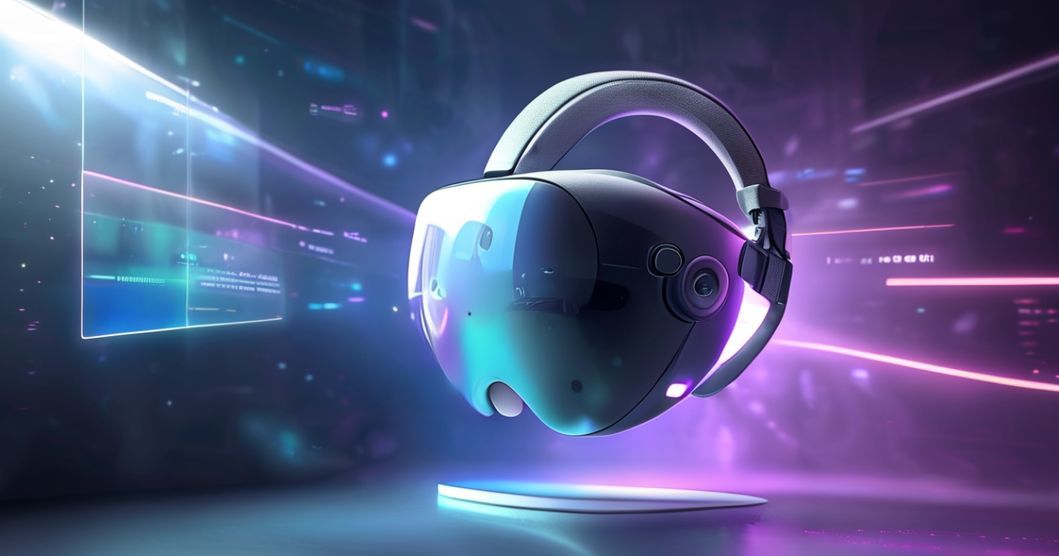
In a world rapidly advancing towards more immersive and intuitive technological experiences, Apple has once again captured global attention with its audacious entry into spatial computing: the Apple Vision Pro. Unveiled as a revolutionary device, it promises to blend digital content with the physical world, offering an entirely new way to interact with applications, entertainment, and communication. Far from being just another gadget, the Vision Pro represents a significant leap forward, redefining what we expect from personal technology and inviting us into an era where our digital lives seamlessly overlay our physical reality.
What Exactly is Spatial Computing?
At its core, spatial computing refers to technology that allows computers to understand and interact with the physical world, creating a dynamic environment where digital objects can coexist and interact with real-world spaces. The Apple Vision Pro embodies this concept by enabling users to navigate a three-dimensional interface using their eyes, hands, and voice. It’s not just virtual reality (VR) that isolates you from your surroundings, nor is it purely augmented reality (AR) that overlays simple digital elements. Instead, it’s a sophisticated blend, creating a “mixed reality” where digital content feels present in your physical space, and you remain aware of your surroundings.
This innovative approach moves beyond traditional screens, offering an infinite canvas where apps are no longer confined to a single display. Imagine watching a movie on a screen that feels 100 feet wide, positioned perfectly in your living room, or having multiple virtual monitors floating around your workspace, all while still seeing your environment and interacting with people around you.
Key Innovations and Features of Vision Pro
The Vision Pro is packed with cutting-edge technology that sets it apart. Apple’s meticulous attention to detail is evident in every aspect:
- Ultra-High-Resolution Displays: At the heart of Vision Pro are two micro-OLED displays, each packing more pixels than a 4K TV for each eye. This delivers an astonishing 23 million pixels across both displays, creating incredibly sharp and vivid visuals that are virtually indistinguishable from reality.
- Intuitive Interaction: The device utilizes advanced eye-tracking sensors and sophisticated hand gestures for navigation. Users simply look at an app icon or element to select it and then tap their fingers together to click. Voice commands further enhance this hands-free interaction, making the experience feel natural and fluid.
- visionOS Operating System: Built on the foundation of macOS, iOS, and iPadOS, visionOS is Apple’s first spatial operating system. It’s designed from the ground up to support the unique requirements of spatial computing, enabling dynamic 3D interfaces and seamless integration of digital content into the physical world.
- Passthrough Video: Unlike traditional VR headsets that completely block out the real world, Vision Pro features high-resolution cameras that feed live video of your surroundings to the displays. This “passthrough” capability allows you to see your environment clearly, maintaining awareness and preventing isolation.
- EyeSight Feature: A subtle yet significant innovation, EyeSight is an external display that shows your eyes to people in the room when you are using the device. It also visually indicates when you are fully immersed in an experience. This thoughtful design element aims to maintain social connection even when wearing the headset.
- Dual-Chip Architecture: Powering this complex system are two Apple silicon chips: the M2 chip for raw performance and the brand-new R1 chip, specifically designed to process input from the 12 cameras, five sensors, and six microphones in real-time. This ensures a virtually lag-free experience.
Transformative Applications Across Domains
The potential applications of Apple Vision Pro span far beyond entertainment, hinting at a future where spatial computing integrates into every facet of our lives:
Entertainment and Media
Imagine watching movies on a colossal, personalized screen, or immersing yourself in 3D content that feels truly present. Vision Pro elevates cinematic experiences, bringing a private theater into any room. Gaming also takes on a new dimension, with titles potentially able to blend virtual elements into your physical space.
Productivity and Collaboration
For professionals, Vision Pro could redefine the workspace. Users can create an unlimited number of virtual displays, arranging them anywhere in their environment. This could mean working with multiple applications open simultaneously, collaborating with remote teams in shared virtual spaces, or conducting virtual meetings where participants appear as lifelike personas.
Communication and Social Interaction
FaceTime calls on Vision Pro leverage “Spatial Personas,” which are realistic 3D representations of users. These personas are dynamically rendered, allowing for a more engaging and present communication experience that feels less like a video call and more like sharing a physical space.
Education, Design, and Healthcare
The implications for fields like education are immense, offering interactive 3D models and immersive learning environments. Designers can visualize prototypes in real-world scale, while healthcare professionals might use it for training, remote assistance, or even surgical planning.
The User Experience: Blending Worlds
Using the Vision Pro is designed to be a remarkably intuitive experience. The feeling of digital objects existing in your physical space, responding to your gaze and gestures, creates a profound sense of presence. The high fidelity of the passthrough video means you rarely feel cut off from your surroundings, allowing for fluid transitions between fully immersive content and awareness of your real-world environment. While the device’s weight and the external battery pack present initial ergonomic considerations, the seamlessness of the interaction and the sheer quality of the visuals are often cited as groundbreaking.
Navigating Challenges and Future Prospects
Despite its revolutionary potential, the Apple Vision Pro faces several challenges. The significant price point makes it an aspirational rather than an immediate mainstream device. Developing a robust app ecosystem will be crucial for its long-term success, as will addressing concerns around comfort during extended use and battery life. Privacy and data security in a device that constantly maps and understands your environment will also be paramount.
However, Apple’s entry into spatial computing is undeniably a pivotal moment. It signals a strong belief in a future where screens are no longer static rectangles but dynamic windows into an enhanced reality. As the technology matures, becomes more affordable, and developers unlock its full potential, the Vision Pro and its successors could fundamentally alter how we work, play, learn, and connect, paving the way for a truly integrated digital and physical world.