
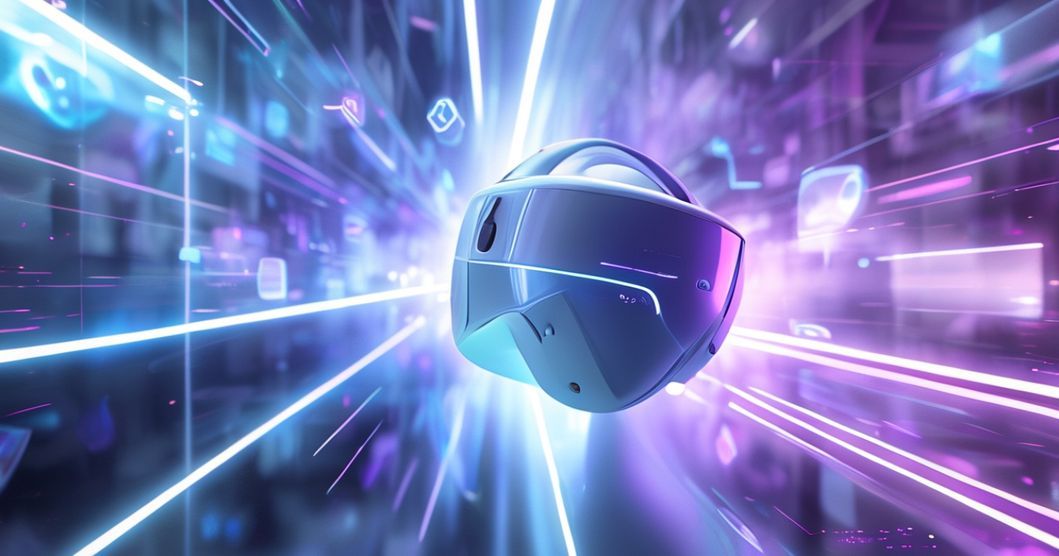
The world of personal technology recently witnessed a groundbreaking shift with the introduction of the Apple Vision Pro. Heralded as Apple’s foray into “spatial computing,” this innovative device doesn’t just promise a new way to interact with digital content; it aims to redefine how we perceive and engage with our digital lives. Far beyond traditional virtual or augmented reality headsets, the Vision Pro integrates digital content seamlessly into your physical space, offering an experience that blurs the lines between the real and the virtual.
What is Spatial Computing?
At its core, spatial computing is about creating an environment where digital information isn’t confined to a flat screen but exists and interacts within your three-dimensional world. Imagine your favorite apps, movies, and photos not just on a tablet, but floating around you, anchored to your room, or extending into a vast virtual landscape. The Apple Vision Pro is designed to make this vision a reality, transforming any room into a canvas for digital experiences. It understands your physical surroundings and places digital objects intelligently within them, allowing for intuitive interaction that feels natural and immersive.
Key Features of Apple Vision Pro
The Vision Pro is packed with cutting-edge technology designed to deliver an unparalleled experience.
Immersive Displays
Central to the Vision Pro’s appeal are its custom micro-OLED displays. Boasting more pixels than a 4K TV for each eye, these screens deliver stunning visual fidelity, making digital content appear incredibly sharp and vibrant. Whether you’re watching a movie or browsing a web page, the clarity is breathtaking, ensuring that the digital world feels as real as your surroundings.
Intuitive Interaction
One of the most revolutionary aspects is the control scheme. The Vision Pro primarily relies on your eyes, hands, and voice. You can navigate by simply looking at an element, select by tapping your fingers together, and dictate text or commands with your voice. This “zero controller” approach makes interaction feel incredibly natural and direct, eliminating the need for cumbersome accessories.
Powerful Performance
Under the hood, the Vision Pro runs on a dual-chip design: the powerful M2 chip handles core processing, while the new R1 chip specifically processes input from the 12 cameras, five sensors, and six microphones. This dedicated chip ensures that content appears in real-time, with virtually no lag, providing a smooth and responsive experience that is crucial for immersion.
VisionOS
The device operates on visionOS, Apple’s first spatial operating system. Built on the foundations of iOS, iPadOS, and macOS, visionOS allows for a familiar yet entirely new way of interacting with apps and content. It dynamically adapts to your environment, making digital elements feel like they belong in your space.
Optic ID
For security, the Vision Pro features Optic ID, a secure authentication system that analyzes your iris. This ensures that your device and personal data remain private, adding a layer of sophisticated protection.
Applications and Use Cases
The potential applications for spatial computing are vast and diverse, promising to transform various aspects of our lives.
Entertainment
Imagine watching movies on a screen that feels 100 feet wide, or stepping into immersive 3D environments that transport you to new worlds. The Vision Pro offers unparalleled entertainment experiences, from cinematic viewing to interactive gaming, where digital characters can interact with your physical room.
Productivity
For professionals, the Vision Pro could revolutionize workspaces. Users can create an infinite canvas for apps, placing multiple monitors virtually around them without the need for physical screens. Collaborate with colleagues in shared virtual spaces, review documents, and multitask with unprecedented flexibility.
Communication
FaceTime on Vision Pro takes communication to a new level. Users appear as “Personas,” digital representations that mirror their facial expressions and hand movements, making video calls feel more personal and engaging, even if participants are in different physical locations.
Education and Training
The device holds immense promise for education, allowing students to explore complex subjects in 3D, whether it’s dissecting a virtual human heart or walking through ancient civilizations. For training, it can simulate real-world scenarios, offering safe and immersive learning environments for fields like medicine or engineering.
The Road Ahead: Challenges and Potential
While the Vision Pro is a marvel of engineering, its journey is just beginning, and several factors will shape its future.
Price and Accessibility
With an initial price tag of $3,499, the Vision Pro is currently a premium product, limiting its accessibility to a broader consumer base. As technology evolves and production scales, future iterations may become more affordable.
Comfort and Design
Wearable technology always faces challenges regarding comfort. The Vision Pro’s weight and the external battery pack are areas that Apple will likely refine in future designs to ensure prolonged, comfortable use.
Developer Ecosystem
The success of any new platform hinges on its developer ecosystem. Apple’s ability to attract developers to create compelling, unique applications for visionOS will be crucial for the device’s long-term viability and appeal.
Future Iterations
Like all first-generation Apple products, the Vision Pro is a foundation. Expect future versions to be lighter, more powerful, and potentially integrate new features based on user feedback and technological advancements.
Impact on the Tech Landscape
The Apple Vision Pro marks a significant milestone in the evolution of personal computing. It sets a new benchmark for mixed reality and spatial computing, pushing the entire industry forward. Its mere existence challenges other tech giants to innovate further in AR/VR, potentially accelerating the development of more sophisticated and accessible spatial computing devices. This device isn’t just a gadget; it’s a bold statement about the future of interaction with digital worlds, promising a profoundly integrated and immersive experience that could redefine our relationship with technology for decades to come.