
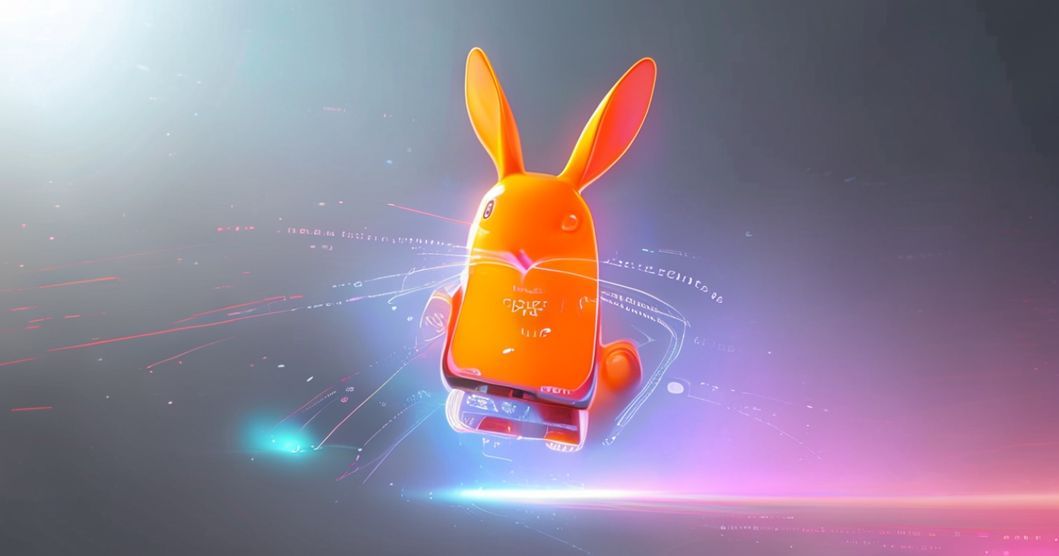
In a world increasingly saturated with smartphones, a new breed of AI-powered gadgets is emerging, promising to simplify our digital lives. Among the most talked-about is the Rabbit R1, a compact, orange device that made waves with its ambitious vision. Billed not as a smartphone replacement but as a dedicated AI companion, the R1 aims to change how we interact with apps and services, offering a fresh perspective on human-computer interaction.
This innovative gadget, unveiled at CES 2024, captures attention with its retro-futuristic design and a bold promise: to execute tasks across various applications using artificial intelligence, freeing users from the endless scrolling and tapping on their phones. But what exactly is the Rabbit R1, and how does it intend to deliver on such a significant claim?
What is the Rabbit R1? A Dedicated AI Device
The Rabbit R1 is a standalone, palm-sized device designed by the startup Rabbit Inc. Its primary goal is to act as a universal controller for your digital services, from ordering takeout to booking travel, all through a natural language interface. Instead of opening multiple apps on your smartphone, the R1 proposes a single point of interaction, powered by its unique Large Action Model (LAM).
Visually, the R1 is distinctive. It features a 2.88-inch touchscreen, a scroll wheel for navigation, a push-to-talk button for voice commands, and a rotating camera called the “Rabbit Eye.” This camera can be used for taking photos or, more intriguingly, for AI-powered vision tasks. Its vibrant orange casing and minimalist design make it stand out from the typical black or silver gadgets dominating the market.
Beyond the Smartphone: The LAM Advantage
At the heart of the Rabbit R1 is its proprietary Large Action Model (LAM). Unlike Large Language Models (LLMs) that understand and generate text, LAMs are trained to understand human intent and perform actions across various applications and services. Think of it as an AI that learns to navigate and operate apps just like a human would, but at lightning speed.
When you ask the R1 to “order a pizza from my favorite place,” the LAM doesn’t just generate a text response. Instead, it understands the context, identifies your preferred pizza service, navigates its interface, places the order, and confirms it – all without you having to touch your phone. This fundamental difference is what Rabbit Inc. believes will set the R1 apart and simplify complex digital tasks.
How Does the Rabbit R1 Work in Practice?
Interacting with the Rabbit R1 is designed to be intuitive. You press and hold the side button, speak your command, and release. The device then processes your request using the LAM, often providing a visual confirmation on its small screen. For more complex tasks, you might use the scroll wheel or the touchscreen to refine your request.
For the LAM to function, users must connect their existing accounts (e.g., Spotify, Uber, DoorDash) to the Rabbit Hole web portal. This is where the R1 gains the “permissions” to act on your behalf. The company emphasizes security and privacy, stating that the R1 does not store your credentials directly but rather uses secure, token-based authentication.
- Voice Commands: The primary mode of interaction, allowing natural language requests.
- Rabbit Eye Camera: Can be used for visual queries, such as identifying objects or translating text.
- Teaching Mode: Users can “teach” the R1 new tasks by demonstrating them in the Rabbit Hole, extending its capabilities.
Practical Applications: Simplifying Everyday Tasks
The potential applications for the Rabbit R1 are broad, aiming to reduce friction in common digital activities:
- Music Control: “Play my chill playlist on Spotify.”
- Food Delivery: “Order my usual coffee from Starbucks,” or “Find a highly-rated sushi place nearby.”
- Transportation: “Book an Uber to the airport.”
- Travel Planning: “Find flights to Tokyo for next month.”
- Information Retrieval: “What’s the weather like in Paris?”
The promise is a seamless experience, minimizing the cognitive load of switching between apps and navigating different user interfaces. It’s about getting things done efficiently, often with just a voice command.
Challenges and Criticisms Facing the R1
Despite the excitement, the Rabbit R1 faces several hurdles and has drawn its share of skepticism. Key concerns include:
- Privacy and Security: Entrusting an AI with access to multiple personal accounts raises questions about data privacy and the security of stored tokens. Rabbit Inc. has addressed these, but user trust will be paramount.
- Dependence on Internet: The R1 is heavily reliant on an internet connection to perform its functions, limiting its utility in areas with poor connectivity.
- “Smartphone Killer” or Niche Device?: While not positioned as a smartphone replacement, many wonder if its functions could simply be integrated into existing smartphone operating systems or smart assistants. Is it a solution looking for a problem that a phone couldn’t solve?
- App Support and Integration: The effectiveness of the LAM hinges on its ability to integrate with a vast array of services. Expanding this ecosystem will be a continuous challenge.
- Battery Life: Like any portable electronic device, battery longevity will be a critical factor for daily usability.
The success of the R1 will ultimately depend on its performance, the breadth of services it can effectively control, and how well it integrates into users’ daily routines without adding unnecessary complexity.
The Future of AI Companions and the Rabbit R1’s Place
The Rabbit R1 represents a significant step in the evolution of AI-powered personal assistants. It challenges the smartphone-centric paradigm by proposing a dedicated device optimized for AI interaction. Its Large Action Model is an intriguing technological advancement that could pave the way for more intuitive and powerful AI agents.
Whether the R1 becomes a mainstream success or remains a fascinating niche gadget, it undeniably pushes the boundaries of what a personal AI can be. It encourages us to rethink our relationship with technology, moving from active app management to simply stating our intentions and letting AI handle the execution. As AI continues to advance, devices like the Rabbit R1 offer a glimpse into a future where technology is not just smart, but truly proactive and helpful.
The Rabbit R1 is more than just a gadget; it’s an experiment in interaction design and artificial intelligence. Its journey will provide valuable insights into user needs, AI capabilities, and the future form factors of personal technology. It’s an exciting time to witness such bold innovations emerge, shaping how we’ll interact with the digital world in the years to come.