
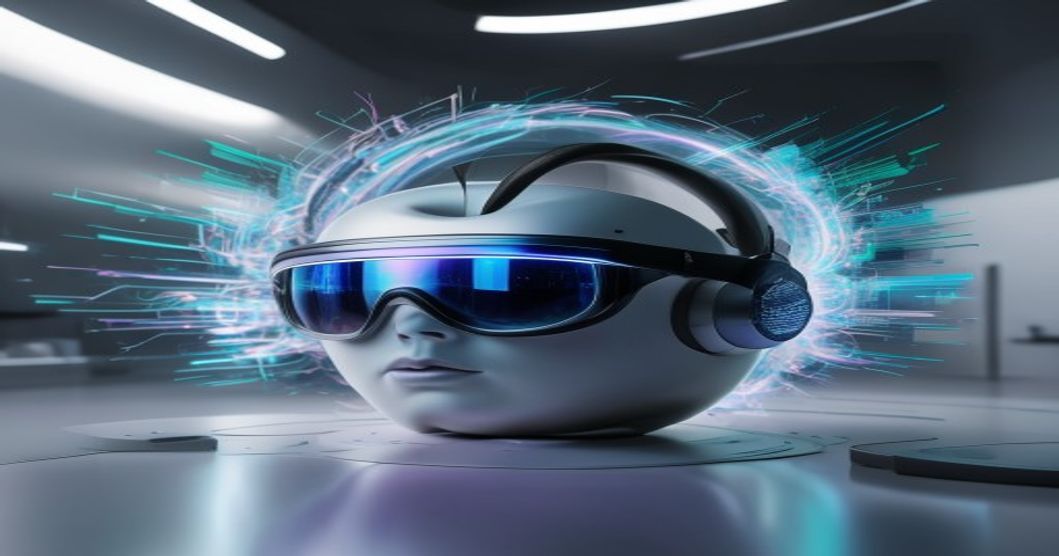
The world of technology is constantly pushing boundaries, and every now and then, a product emerges that promises to fundamentally alter our interaction with digital content. Apple’s Vision Pro is precisely one such innovation, hailed not merely as a virtual or augmented reality headset, but as a “spatial computer.” Launched to significant anticipation, it marks Apple’s ambitious foray into a new frontier, aiming to seamlessly blend the digital with our physical surroundings. This article delves into what makes the Apple Vision Pro a groundbreaking piece of technology, its core innovations, and what it could mean for the future of personal computing and human interaction.
What is Apple Vision Pro? A Leap into Spatial Computing
At its core, the Apple Vision Pro is designed to transform how we perceive and engage with our digital worlds. Unlike traditional VR headsets that fully immerse you in a virtual environment, or AR glasses that overlay digital information onto the real world, Vision Pro introduces the concept of spatial computing. This approach allows digital content to feel present in your physical space, enabling you to interact with apps, photos, and videos as if they were tangible objects floating around you. It’s an operating system, VisionOS, built from the ground up to operate within a three-dimensional canvas, responding intuitively to your eyes, hands, and voice.
Groundbreaking Technologies Under the Hood
The Vision Pro is a marvel of engineering, packed with several cutting-edge technologies that enable its unique experience:
- Micro-OLED Displays: Equipped with two micro-OLED displays, each exceeding 4K TV pixel count for a single eye (23 million pixels total), Vision Pro delivers stunning clarity, vibrant colors, and unparalleled visual fidelity, making digital content sharp and lifelike within your environment.
- Dual-Chip Architecture: Powering this spatial experience are two Apple-designed chips: the M2 chip and the new R1 chip. The M2 chip handles core processing for the OS and apps, while the custom R1 chip dedicates itself to real-time input from 12 cameras, five sensors, and six microphones. This dual-chip architecture ensures virtually no lag, making content appear instantly and smoothly in your field of view.
- EyeSight Feature: One of Vision Pro’s most distinctive features is EyeSight. This innovative external display reveals your eyes to people in the room when you are using the device, and also indicates when you are fully immersed in an experience. It’s Apple’s attempt to address the social isolation often associated with VR headsets, making interactions more natural and transparent.
- Optic ID: For secure authentication, Vision Pro uses Optic ID, a new secure authentication system that analyzes your iris. It offers an advanced level of security, similar to Face ID or Touch ID, ensuring your data and purchases are protected.
- VisionOS: The proprietary operating system, VisionOS, is built on the foundations of macOS, iOS, and iPadOS, but specifically designed for spatial computing. It introduces a new paradigm for user interface and interaction, where apps can float anywhere in your room and be manipulated with intuitive gestures.
A New Paradigm for Interaction and Experience
Interacting with the Vision Pro feels remarkably natural. Instead of controllers, users navigate and select items simply by looking at them, tapping their fingers together, or using voice commands. This hands-free interaction removes a significant barrier to entry, making the technology accessible and intuitive. Users can open multiple app windows, arrange them in their physical space, and even resize them. Whether it’s browsing the web, watching a movie on a colossal virtual screen, or collaborating with colleagues in a shared digital workspace, the Vision Pro aims to redefine how we engage with digital content.
The device also offers immersive environments that can transport you to different locations, from serene landscapes to bustling cityscapes, all while maintaining awareness of your physical surroundings if desired. This blend of immersion and presence is a hallmark of its spatial computing philosophy.
Potential Applications and Societal Impact
The implications of spatial computing extend far beyond mere entertainment. For productivity, imagine having multiple monitors spanning your entire room, or collaborating on 3D designs with colleagues across the globe as if they were in the same room. In education, students could explore historical sites, dissect virtual organs, or visualize complex scientific concepts in 3D. Healthcare professionals might use it for surgical planning or remote diagnostics. The creative industries stand to benefit immensely, enabling artists and designers to work with their creations in a truly three-dimensional space.
However, the Vision Pro also brings forth important discussions about its societal impact. Will it enhance human connection by offering new forms of shared experiences, or further isolate individuals in their digital bubbles? The EyeSight feature is an early attempt to bridge this gap, but the long-term effects on social interaction remain a subject of active debate and observation.
Challenges and the Road Ahead
Despite its revolutionary potential, the Apple Vision Pro faces several hurdles. Its premium price tag of $3,499 positions it as a high-end, niche product rather than a mainstream device for the average consumer. Battery life, currently limited to about two hours with an external pack, is another practical consideration. The physical comfort and weight over extended periods of use will also be crucial factors for adoption. Furthermore, the success of any new platform heavily relies on developer support and the creation of compelling applications that truly leverage its unique capabilities.
Apple Vision Pro is more than just a gadget; it’s a bold statement about the future of computing. It signals a shift from interacting with screens to interacting with digital content *within* our physical world. While the initial iteration might be a luxury item for early adopters and developers, it lays the groundwork for a future where digital interfaces are seamlessly integrated into our daily lives, blurring the lines between the physical and the virtual in ways we are only just beginning to imagine. Its impact is undoubtedly poised to reshape the technological landscape for decades to come.