
“`html
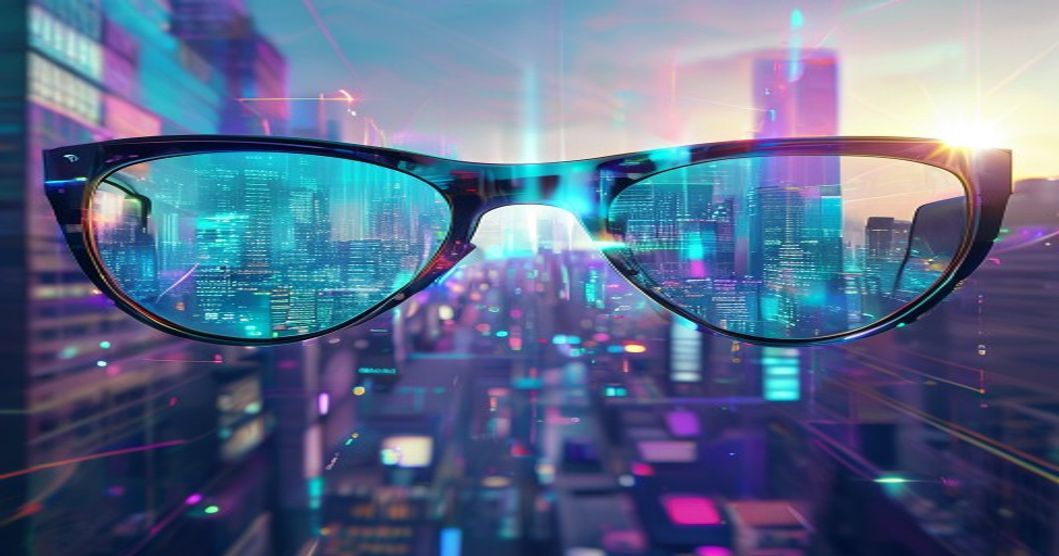
Imagine a world where digital information seamlessly blends with your physical surroundings, enhancing your view rather than replacing it. This isn’t science fiction anymore; it’s the evolving reality of Augmented Reality (AR) glasses. Once confined to concept art and futuristic films, these innovative wearables are rapidly moving from niche enterprise tools to a burgeoning consumer market, promising to redefine how we interact with technology and the world around us.
AR glasses overlay digital content onto your real-world view, offering everything from navigational cues floating above streets to interactive holograms in your living room. Unlike Virtual Reality (VR), which immerses you in a completely simulated environment, AR aims to augment your existing reality, making technology less intrusive and more integrated into daily life. Recent advancements in miniaturization, display technology, and processing power are pushing AR glasses closer to becoming an everyday accessory, much like smartphones became indispensable devices.
The Evolving Landscape of AR Wearables
The market for AR glasses is dynamic, with several major tech players investing heavily. We’re seeing a spectrum, from smart glasses offering subtle notifications to full-fledged spatial computing devices capable of complex 3D interactions. Each approach caters to different user needs and stages of technological maturity.
Current Offerings and Approaches
- Assistive Smart Glasses: Devices like Ray-Ban Meta Smart Glasses prioritize discreet design, featuring cameras for capturing content, integrated speakers, and AI assistants. Their AR capabilities are subtle, enhancing communication without a direct visual overlay.
- Enterprise & Developer Headsets: Microsoft HoloLens serves industrial, medical, and educational sectors. These robust headsets offer powerful spatial computing for training, remote assistance, and design visualization. Their high cost and specialized nature target professional applications.
- High-Fidelity Consumer AR: Exemplified by devices like the Apple Vision Pro, this segment aims for a premium, high-resolution AR experience. While blending AR and VR, these “spatial computers” promise immersive digital content anchored in the real world, from entertainment to productivity, marking a significant step towards mainstream adoption.
Breakthrough Innovations Driving AR Forward
The journey from clunky prototypes to sleek, functional AR glasses has been paved by numerous technological breakthroughs. Miniaturization and efficiency are paramount, as these devices must be lightweight, comfortable, and power-efficient for true wearability.
Display and Optics
At the heart of AR glasses is the ability to project digital images without obstructing sight. Technologies like waveguides and micro-LED displays are critical. Waveguides efficiently direct light from tiny projectors to the eyes, allowing for thin, transparent lenses. Micro-LEDs offer incredible brightness, contrast, and power efficiency, creating vibrant digital overlays visible even outdoors.
Spatial Computing and AI
Modern AR glasses are sophisticated spatial computers. Equipped with multiple cameras, depth sensors, and accelerometers, they precisely map the environment, understand gestures, and track eye movements. Onboard AI processors enable real-time object recognition, scene understanding, and predictive interactions. This ensures digital objects appear naturally anchored to real-world locations and respond intuitively.
Power Management and Ergonomics
Battery life remains a persistent challenge. Powerful processors and bright displays demand significant energy. Innovations in low-power chip design and advanced battery chemistries are crucial. Ergonomics is equally vital; AR glasses must be comfortable for extended wear, stylish, and durable. Manufacturers are exploring lightweight materials and balanced designs to minimize user fatigue.
Transformative Applications Across Industries
The potential applications of AR glasses are vast, promising to revolutionize how we work, play, and learn.
Enhancing Daily Life for Consumers
- Navigation & Information: Turn-by-turn directions projected onto the street, or instant data about landmarks.
- Entertainment & Gaming: Digital characters interacting with your physical environment, or interactive overlays during live events.
- Social Interaction: Real-time translation as subtitles, or instant caller ID without pulling out a phone.
- Productivity: Virtual monitors floating in your workspace, enabling multi-screen setups anywhere.
Revolutionizing Professional Fields
- Healthcare: Surgeons overlaying patient data onto the operating field, or students practicing procedures on holographic models.
- Manufacturing & Field Service: Technicians receiving step-by-step assembly or repair guides superimposed onto machinery.
- Education: Immersive lessons with interactive 3D models of artifacts or scientific structures.
- Architecture & Design: Visualizing building designs or interior layouts in real-time within the physical space.
Challenges on the Path to Ubiquity
Despite exciting advancements, AR glasses face significant hurdles. High manufacturing costs translate to premium prices. Making them truly inconspicuous and stylish remains an ongoing challenge.
Privacy concerns regarding always-on cameras and microphones are paramount, demanding robust ethical frameworks and user controls. Furthermore, a rich and compelling content ecosystem is essential to justify widespread adoption. Without compelling applications, even the most advanced hardware will struggle.
The Future is Transparently Digital
The journey of AR glasses is still in its early chapters, but the momentum is undeniable. As technology continues to miniaturize, become more powerful, and less expensive, AR glasses are poised to become the next major computing platform. They promise a future where digital information is no longer confined to screens but interwoven with our physical reality, creating a more intuitive, informed, and interactive world.
From subtle enhancements to transformative experiences, AR glasses are set to open up entirely new possibilities, moving us beyond the flat rectangles in our pockets to a truly spatial and contextual digital realm. The next digital window isn’t on your desk or in your hand; it’s right before your eyes.
“`