
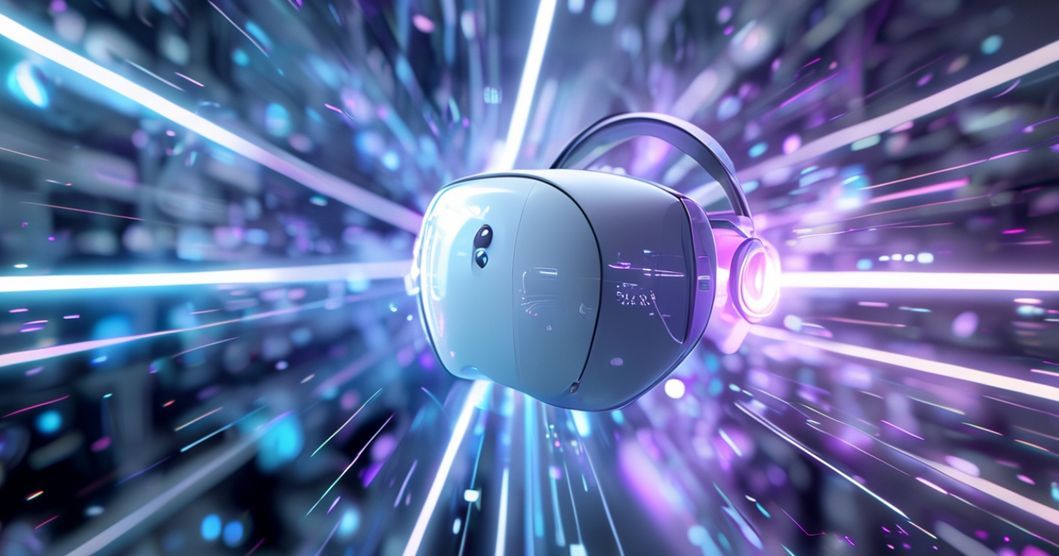
The world of technology is constantly evolving, pushing the boundaries of what we thought possible. Among the most talked-about innovations of recent times is the Apple Vision Pro, a groundbreaking device that has captivated imaginations and sparked discussions about the future of personal computing. Heralded by Apple as its first “spatial computer,” this device marks a significant leap from traditional screens into an immersive, three-dimensional digital canvas that blends seamlessly with our physical surroundings.
Far more than just another gadget, the Vision Pro introduces a new paradigm for interaction and experience. It represents Apple’s ambitious foray into augmented and virtual reality, but with a distinct emphasis on creating a new category of device. Instead of isolating users in a virtual world, it aims to enhance and expand the real world around them, offering a glimpse into what spatial computing truly entails.
Understanding Spatial Computing
At its core, spatial computing is about integrating digital content into our physical space, allowing users to interact with it naturally, as if it were truly there. The Vision Pro achieves this by overlaying digital objects, apps, and interfaces onto the user’s view of the real world. This isn’t just about viewing content; it’s about interacting with it using intuitive gestures, eye movements, and voice commands, eliminating the need for traditional controllers or keyboards.
Imagine having multiple virtual monitors floating around your desk, or watching a movie on a colossal screen that only you can see, perfectly integrated into your living room. This is the promise of spatial computing – a personal, adaptable, and deeply immersive experience that redefines how we work, play, and connect.
Key Innovations and Features
The Vision Pro is packed with cutting-edge technology designed to deliver this seamless spatial experience:
Crystal-Clear Displays
At the heart of the Vision Pro are its micro-OLED displays, each about the size of a postage stamp, yet packing more pixels than a 4K TV for each eye. This incredible pixel density ensures razor-sharp images and text, making digital content appear remarkably real and reducing motion sickness often associated with lower-resolution VR headsets.
Intuitive Eye and Hand Tracking
One of the most revolutionary aspects is its control scheme. Users navigate and interact simply by looking at elements, tapping their fingers together, or using voice commands. An array of cameras and sensors precisely track eye movements and subtle hand gestures, making the interface feel almost telepathic and remarkably natural.
VisionOS: The Spatial Operating System
Apple developed a brand-new operating system, visionOS, specifically for spatial computing. It’s built on the foundation of macOS, iOS, and iPadOS, ensuring a familiar yet entirely new experience. It allows apps to exist in shared spaces, scale to any size, and interact with the real world in dynamic ways.
EyeSight and Passthrough Video
A unique feature called EyeSight allows others to see your eyes when you’re using the device, fostering a sense of connection rather than isolation. When you’re fully immersed in an app, the device subtly obscures your eyes. Conversely, advanced passthrough video technology provides a high-fidelity, real-time view of your surroundings, ensuring you’re always aware of your environment.
Transforming User Experiences
The potential applications of the Apple Vision Pro span a wide range of activities:
- Entertainment: Experience movies, TV shows, and games in entirely new ways, with virtual screens that can adapt to any size or environment, offering unparalleled immersion.
- Productivity: Replace physical monitors with infinite virtual workspaces. Collaborate with colleagues in shared spatial environments, making remote work more engaging and efficient.
- Communication: Engage in FaceTime calls where participants appear as realistic “Personas,” bringing a new dimension to virtual interactions.
- Creativity and Design: Designers and architects can visualize and manipulate 3D models in their actual space, making the design process more intuitive and collaborative.
Challenges and the Road Ahead
While the Vision Pro represents a monumental achievement, it’s not without its challenges. The high price point positions it as a premium device for early adopters and developers. Its physical design, while elegant, comes with considerations around weight and battery life, which is currently external. Furthermore, the development of a robust app ecosystem will be crucial for its long-term success, as will public perception and social acceptance of wearing such a device in various settings.
The Future is Spatial
The Apple Vision Pro is more than just a new gadget; it’s a foundational step towards a future where computing is no longer confined to flat screens. It invites us to rethink our relationship with digital content and our physical environment, promising a more integrated and intuitive way of interacting with information and entertainment.
As the technology evolves and becomes more accessible, spatial computing has the potential to profoundly impact industries from healthcare and education to retail and manufacturing. It could redefine how we learn, how we work, and how we connect with the world around us, blurring the lines between the digital and the physical in ways we are only just beginning to imagine.