
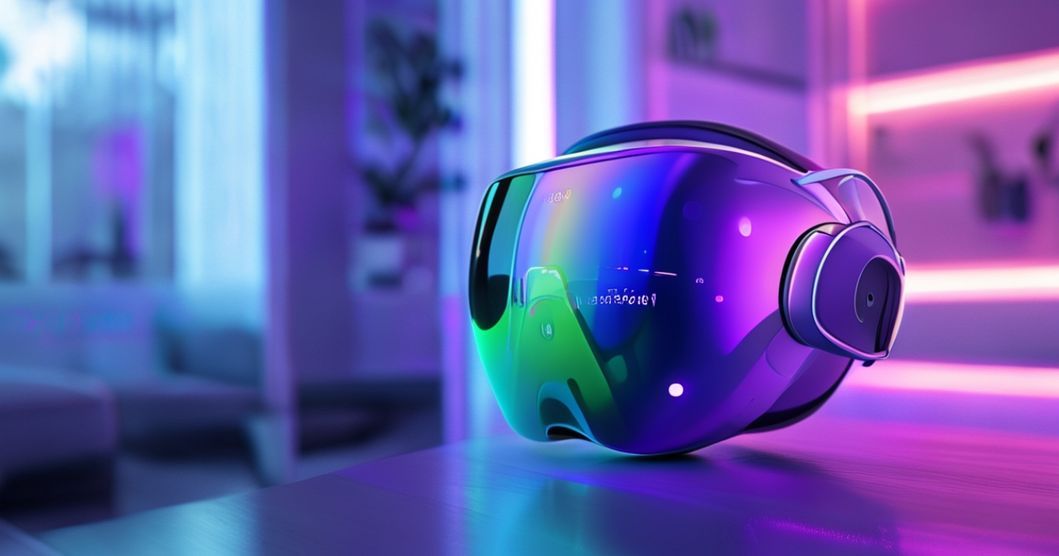
The world of technology constantly evolves, pushing boundaries and reshaping how we interact with information. Among the most talked-about recent innovations is the Apple Vision Pro, a device Apple refers to as a “spatial computer.” This bold step into a future where digital content seamlessly blends with our physical surroundings promises to fundamentally alter our approach to entertainment, productivity, and communication.
Unveiled with much anticipation, this device isn’t merely an upgrade to existing virtual (VR) or augmented reality (AR) headsets. Instead, it positions itself as a personal computer you wear, designed to deliver an intuitive and immersive experience. With its advanced sensors, high-resolution displays, and innovative operating system, visionOS, the Vision Pro aims to make spatial computing a tangible reality.
Core Innovation: Spatial Computing and visionOS
At the heart of the Vision Pro’s appeal is its commitment to spatial computing. This concept moves beyond flat screens, allowing users to interact with digital content that feels truly present in their physical space. Imagine placing multiple app windows around your room or watching a movie on a 100-foot screen, all while remaining aware of your real-world environment.
This seamless integration is powered by visionOS, Apple’s first spatial operating system. Built on macOS, iOS, and iPadOS, visionOS is engineered for spatial interaction. It intelligently tracks your eye movements, hand gestures, and voice commands for unparalleled intuitive control. This isn’t about escaping reality but enhancing it, overlaying digital information and experiences directly into your line of sight.
Design, Displays, and Comfort
Apple’s meticulous attention to design is evident. Crafted from lightweight materials like an aluminum alloy frame and an adjustable head band, the device aims for comfort. The front features a single, three-dimensionally formed laminated glass piece, giving it a sleek, futuristic appearance. EyeSight, an external display, shows your eyes to people in the room when you are not fully immersed, fostering connection.
Internally, the Vision Pro boasts revolutionary display technology. Each eye receives a micro-OLED display with more pixels than a 4K TV, delivering stunning clarity and vibrant colors. This phenomenal pixel density makes digital content look incredibly sharp and lifelike, eliminating the “screen door effect.” Custom optical inserts from ZEISS ensure precise vision correction for users.
Revolutionary User Experience
Interacting with the Vision Pro is designed to be natural. Forget controllers; primary input methods are your eyes, hands, and voice. Users simply look at an app icon to select it, then tap their fingers together to activate. A pinch gesture can scroll or resize windows, while Siri provides voice control. This controller-free interaction aims to break down barriers, making the experience truly intuitive.
The Vision Pro’s applications span a wide range of activities:
- Entertainment: Experience movies and TV shows in an immersive “Theater Environment” with dynamic lighting, or watch sports with real-time statistics floating alongside the action.
- Productivity: Transform any space into a personalized workspace with an infinite canvas for apps, offering multiple monitor-sized screens for documents, emails, and web browsing without physical limitations.
- Communication: Engage in “spatial FaceTime” calls where participants are represented by realistic digital personas, making remote interactions feel more present and personal.
- Gaming: Its capabilities open doors for immersive gaming experiences that blend digital worlds with your physical surroundings.
A seamless transition between full immersion and augmented reality, controlled by the Digital Crown, allows users to choose their desired level of presence, making the Vision Pro adaptable to various contexts.
Building a Developer Ecosystem
For any new computing platform to thrive, a robust developer ecosystem is crucial. Apple provides comprehensive tools and frameworks to create compelling apps for visionOS. Leveraging existing Swift and SwiftUI knowledge, developers can adapt current applications or build entirely new spatial experiences. This strategic move aims to quickly populate the App Store with diverse and innovative applications, from educational tools and creative suites to entertainment and professional utilities.
The immense potential for new categories of apps that take full advantage of spatial computing promises to further define the utility and appeal of this new platform.
Challenges and the Road Ahead
Despite its remarkable innovation, the Apple Vision Pro faces challenges. Its premium price point positions it as a luxury item rather than a mass-market device, at least initially. The weight and external battery pack, while engineered for comfort, still represent hurdles for all-day wearability. Social acceptance of wearing a device on one’s face in public remains an open question, though EyeSight aims to mitigate potential isolation.
However, like many pioneering technologies, the Vision Pro’s initial iteration serves as a foundation. Future generations will undoubtedly address these concerns, offering lighter designs, improved battery life, and more accessible price points. Its true success will hinge on its ability to demonstrate indispensable utility in everyday life, much like the original iPhone revolutionized mobile computing.
The Apple Vision Pro marks a significant milestone in the evolution of personal technology. It’s a powerful statement about where Apple believes computing is heading – away from static screens and into a dynamic, immersive digital canvas that blends with our reality. While its journey is just beginning, the Vision Pro has undoubtedly ignited discussions and imaginations about the possibilities of spatial computing. It invites us to rethink how we work, play, and connect, offering a tantalizing glimpse into a future where technology is not just in our hands, but all around us, waiting to be intuitively explored.