
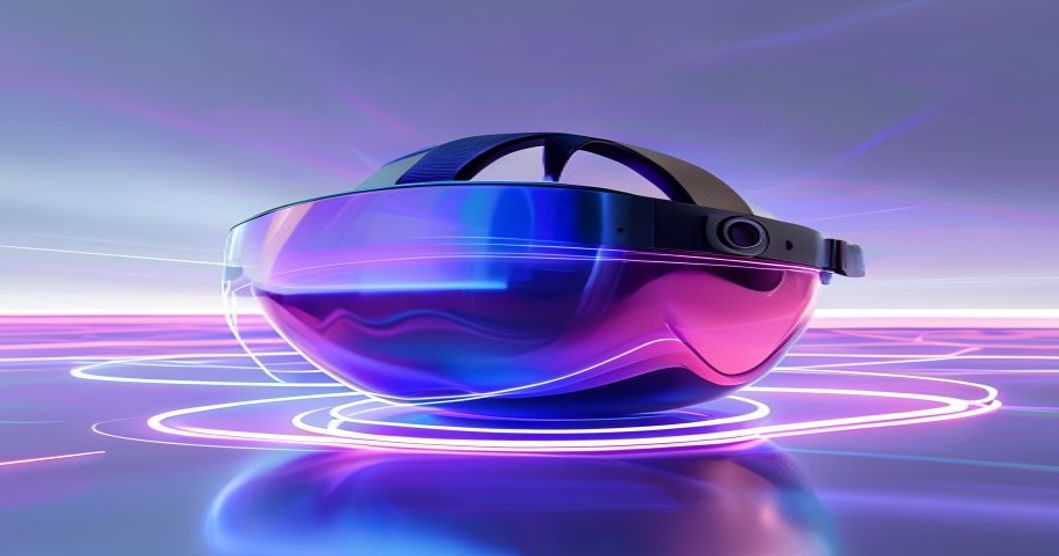
The world of technology is constantly evolving, pushing the boundaries of what we thought possible. Among the most talked-about innovations recently is the Apple Vision Pro, a device that Apple itself describes not as a VR headset, but as a “spatial computer.” Launched with immense anticipation, this groundbreaking device aims to blend digital content with the physical world, offering an immersive experience unlike any before. It represents a significant leap forward in how we interact with technology, moving beyond traditional screens to an entirely new paradigm.
The Vision Pro isn’t just another gadget; it’s a bold statement about the future of personal computing. By integrating advanced hardware with a sophisticated operating system, visionOS, Apple seeks to redefine productivity, entertainment, and communication. This article delves into the core aspects of the Vision Pro, exploring its technological prowess, user experience, potential applications, and the challenges it faces as it paves the way for a new era of interaction.
The Technological Marvel Behind the Vision Pro
At the heart of the Vision Pro lies an astonishing array of cutting-edge technology. Apple has packed this device with features designed to deliver an unparalleled spatial computing experience. The visual fidelity is paramount, and the Vision Pro delivers with micro-OLED displays that contain 23 million pixels, offering more pixels than a 4K TV for each eye. This results in incredibly sharp text and stunning visuals, making digital content feel truly present in your environment.
Powering this visual feast are two Apple silicon chips: the M2 chip, which handles the main processing, and the brand-new R1 chip, dedicated to processing input from the 12 cameras, five sensors, and six microphones. The R1 chip virtually eliminates lag, ensuring that content streams to the displays within 12 milliseconds – eight times faster than a blink of an eye. This seamless integration of real-world input and digital output is crucial for preventing motion sickness and creating a truly immersive mixed reality experience.
Designing for Immersion and Comfort
The physical design of the Vision Pro also showcases Apple’s meticulous attention to detail. Crafted from a single piece of three-dimensionally formed laminated glass, the front surface acts as a lens for the advanced camera and sensor system. The frame is made from an aerospace-grade aluminum alloy, curving gently to wrap around the user’s face. The modular design includes Light Seals that conform to individual face shapes and head bands for comfort, ensuring a personalized and secure fit. While its weight has been a point of discussion, the engineering aims to distribute it as evenly as possible for extended use.
Navigating the Spatial Canvas: User Experience
One of the most revolutionary aspects of the Vision Pro is its intuitive user interface and interaction model. Unlike traditional devices that rely on controllers or touchscreens, the Vision Pro is controlled by the most natural inputs: your eyes, hands, and voice. Users simply look at an app icon or an element to select it, tap their fingers together to click, and flick their wrist to scroll. Siri is also integrated for voice commands.
This “eyes, hands, and voice” interaction creates a truly magical experience. There are no physical barriers between you and your digital content. Windows and applications can be placed anywhere in your physical space, scaled to any size, and remain there until you move them. This creates an infinite canvas for productivity and entertainment, blurring the lines between the digital and physical worlds.
A Glimpse into Augmented Reality
The Vision Pro excels in augmented reality (AR), allowing users to remain present and connected to their surroundings. The device features EyeSight, an innovative display on the front that subtly reveals the user’s eyes when someone approaches, making interactions more natural. When fully immersed in an environment or using an app, the display dims, signaling to others that the user is engaged. This clever feature addresses one of the common social challenges of immersive head-mounted displays.
Applications and the Future of Work and Play
The potential applications for the Apple Vision Pro are vast and extend across numerous industries. For productivity, imagine having multiple large monitors anywhere you go, whether on a plane, in a coffee shop, or at home. Collaborative work can be transformed with virtual meeting spaces where digital avatars interact within shared spatial environments.
- Entertainment: Experience movies and TV shows on a massive virtual screen, or dive into immersive 3D content and games that envelop your senses.
- Education: Explore historical sites, dissect virtual organs, or simulate complex experiments in a highly interactive and engaging manner.
- Healthcare: Surgeons could overlay patient data during operations, or medical students could practice procedures with realistic digital models.
- Design and Engineering: Architects can walk through virtual buildings, and engineers can collaborate on 3D models in real-time.
These are just a few examples, and as the visionOS ecosystem matures, developers will undoubtedly unlock even more creative and impactful uses for spatial computing.
Challenges and the Road Ahead
Despite its remarkable capabilities, the Apple Vision Pro faces several challenges. The most prominent is its premium price point, which positions it as a high-end device for early adopters and professionals rather than a mass-market product. Battery life, with an external battery pack lasting only about two hours, also presents a limitation for extended use. The weight and the learning curve for a completely new interaction model are further considerations.
However, the Vision Pro should be viewed as a first-generation product – a foundational step into a new computing paradigm. Like the original iPhone or Apple Watch, its initial iteration sets the stage for future improvements, cost reductions, and a burgeoning app ecosystem. Apple’s entry into this space lends significant credibility to spatial computing, potentially accelerating its development and adoption across the industry.
The Apple Vision Pro stands as a testament to human ingenuity and technological ambition. It’s more than just a gadget; it’s a portal to a new way of interacting with information, entertainment, and each other. While its journey has just begun, it has undeniably opened a new chapter in the story of personal computing, inviting us to imagine a future where our digital lives seamlessly merge with our physical realities.